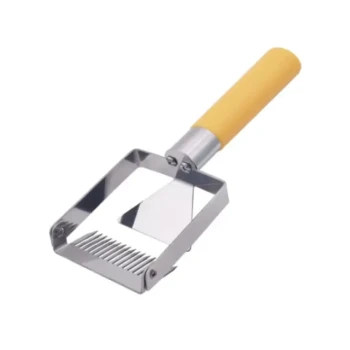
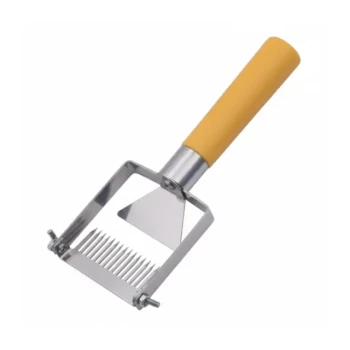
The technical mechanism of manual harvesting sticks relies on the precise, controlled puncturing of individual cerumen honey pots. By manually breaching the wax-based storage units, harvesters utilize gravity to facilitate the downward flow of honey into collection vessels. This method is specifically designed to bypass the limitations of traditional scraping, ensuring the delicate internal architecture of the stingless bee hive remains intact.
Core Takeaway: Manual harvesting sticks provide a high-precision, low-impact solution for extracting stingless bee honey, prioritizing the structural integrity of the colony and the purity of the yield over the raw volume of industrial extraction.
The Mechanical Logic of Puncture-Based Extraction
Precision Control of the Puncture Point
Manual harvesting sticks allow for a high degree of accuracy that mechanical systems often lack. The operator identifies the optimal location on the wax honey pot to ensure the breach does not cause the pot wall to collapse.
This targeted approach prevents the mixing of honey with brood or pollen, which is essential for maintaining the hygienic quality required by premium distributors.
Utilizing Gravity and Downward Flow
Once the stick punctures the cerumen wall, the honey is released through a controlled opening. The technical design of these sticks often facilitates a guided downward flow, allowing the honey to be collected without contaminating the rest of the hive environment.
Minimizing Structural Stress
Unlike traditional honeybees that build hexagonal combs, stingless bees store honey in delicate, irregular cerumen pots. Manual sticks exert minimal force on the surrounding hive structure, significantly reducing the "repair time" required by the colony post-harvest.
The Role of Harvesting in Colony Diagnostics
Evaluating Honey Quality and Maturity
Manual harvesting serves a dual purpose as a diagnostic tool for professional beekeepers. As the stick enters the pot, the harvester can immediately assess the viscosity and clarity of the honey, providing real-time data on the production quality of that specific colony.
Monitoring Colony Health
The manual process requires a close inspection of the internal hive frames. This allows for the identification of potential pests or diseases that automated, large-scale vacuum systems might overlook, ensuring a healthier supply chain for wholesalers.
Adaptability for Different Nesting Types
For ground-nesting species, specialized manual tools allow for the gradual removal of soil layers. This prevents soil contamination of the honey pots, a critical factor for maintaining food-safe standards in international trading.
Understanding the Trade-offs
Manual Precision vs. Industrial Efficiency
While manual sticks offer superior protection for the hive, they are inherently slower than negative pressure suction pumps or medical-grade syringes. For large-scale operations, the labor-intensive nature of manual sticks can increase the "time-to-market" for the final product.
Skill Dependency
The effectiveness of manual sticks depends heavily on the expertise of the harvester. An unskilled operator may still cause structural damage, whereas high-precision injectable tools provide a more standardized, though often more expensive, alternative.
Hygiene and Environmental Exposure
Manual harvesting opens the hive to the environment for longer periods than suction-based methods. This increases the risk of airborne contaminants entering the honey pots unless the harvesting is conducted in a strictly controlled, clean environment.
How to Apply This to Your Sourcing Strategy
Making the Right Choice for Your Goal
- If your primary focus is premium, artisanal quality: Prioritize suppliers who utilize manual or high-precision toolsets to ensure the highest purity and minimal hive damage.
- If your primary focus is rapid order fulfillment and volume: Seek out partners who utilize automated negative pressure systems that maintain hygiene while maximizing extraction speed.
- If your primary focus is sustainable and ethical branding: Choose products harvested via manual sticks or non-destructive suction, as these methods protect colony vitality and long-term honey production.
By understanding these technical nuances, distributors can better curate a comprehensive product portfolio that meets the diverse needs of the global honey market.
Summary Table:
| Technical Feature | Manual Harvesting Stick Mechanism | Impact on Honey Quality |
|---|---|---|
| Extraction Method | Controlled cerumen pot puncturing | Maximizes purity; avoids brood/pollen mix |
| Flow Logic | Gravity-assisted downward flow | Reduces risk of environmental contamination |
| Hive Impact | Minimal force on internal architecture | Faster colony recovery and sustainable yields |
| Diagnostics | Manual viscosity and clarity checks | Ensures consistent, premium-grade supply |
Scale Your Honey Business with HONESTBEE’s Professional Sourcing Solutions
At HONESTBEE, we understand the technical requirements of commercial apiaries and B2B resellers. Whether you are seeking precision manual tools for artisanal yields or industrial honey-filling machinery for high-volume fulfillment, we provide a comprehensive wholesale offering tailored to your needs.
- Full-Spectrum Portfolio: From specialized hive-making hardware to essential beekeeping consumables and honey-themed merchandise.
- B2B Reliability: Benefit from ultra-fast delivery, rapid response times, and deep industry expertise to keep your supply chain moving.
- Global Support: We cater to distributors with competitive margins, OEM/ODM support, and a commitment to exceptional customer service.
Ready to optimize your supply chain and maximize profit margins? Contact HONESTBEE today to access our premium beekeeping equipment and wholesale catalogs.
References
- Adrián de Jesús Cetina-Catzin, Alberto Carlos Velázquez Solís. Meliponicultura y Dilemas de la Bioculturalidad. Análisis Diacrónico desde la Región del Camino Real Campechano. DOI: 10.24836/es.v35i66.1637
This article is also based on technical information from HonestBee Knowledge Base .
Related Products
- Stainless Steel Pivoting Honey Uncapping Fork with Plastic Handle
- All-Stainless Steel Pivoting Honey Uncapping Fork for Beekeeping
- HONESTBEE 3-Frame Manual Acrylic Honey Extractor
- Adjustable Stainless Steel Honey Uncapping Fork with Plastic Handle for Beekeeping
- Plastic Hand Crank 2 Frame Honey Extractor Low Price
People Also Ask
- What is the design purpose of honey uncapping forks and honey uncapping tanks? Maximize Your Harvest Efficiency
- How does a honey uncapping fork supplement the use of an uncapping knife? Boost Your Honey Yield and Extraction Efficiency
- What are the essential tools for uncapping honey frames? Choose the Right Tool for Your Apiary
- What other tools are available for honey uncapping besides knives? Find the Right Tool for Your Apiary's Scale
- What tools are used for honey uncapping? Choose the Right Knife for Your Harvest