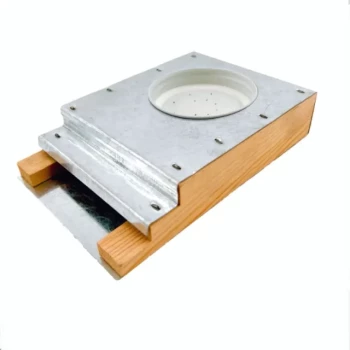
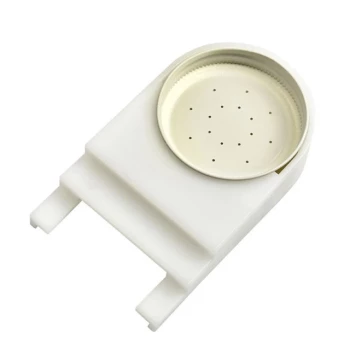
A colony feeder serves as the primary mechanism for introducing specific, measurable pesticide loads to a honeybee population under controlled conditions. It allows researchers to deliver sugar water or nectar substitutes containing known chemical concentrations directly to the hive, creating a reliable dietary exposure model that assesses impact without requiring individual dosing.
The Core Utility By utilizing a colony feeder, researchers bridge the gap between laboratory precision and field reality. This method ensures that the entire colony is exposed to contaminants in a way that mimics natural resource consumption, providing critical data on collective health and survival.
The Mechanics of Controlled Exposure
Precision in Dosing
The primary function of the colony feeder is to eliminate variability in chemical exposure. Unlike wild foraging, where pesticide intake fluctuates, a feeder provides a fixed source of sugar water or nectar substitute with a scientifically determined concentration of contaminants.
Mimicking Natural Consumption
Frame-type in-hive feeders are specifically designed to replicate the natural process of feeding. By placing the food source directly within the hive environment, researchers can simulate a scenario where bees are bringing contaminated nectar back to the colony.
Non-Disruptive Integration
A critical advantage of this method is its ability to function without disturbing the hive's routine. The feeder integrates into the colony's infrastructure, allowing the bees to continue their natural activities while the assessment takes place.
Achieving Uniform Distribution
Leveraging Social Food Exchange
The feeder relies on the honeybee's natural behavior of trophallaxis, or social food exchange. Once the foragers or nurse bees consume the solution from the feeder, they distribute it among other colony members.
Ensuring Collective Exposure
This method ensures that the pesticide is not isolated to a few individuals but is distributed uniformly throughout the population. This creates a realistic model for studying how toxins move through a superorganism.
Measuring Comprehensive Impacts
Assessing Long-Term Survival
The data derived from colony feeder studies is vital for understanding chronic effects. Researchers use this exposure model to evaluate critical metrics such as overwintering survival rates, which indicates the colony's ability to sustain itself through resource-scarce periods.
Monitoring Brood-Rearing Behavior
Beyond adult survival, the feeder allows for the observation of developmental impacts. Researchers can track changes in brood-rearing behavior to determine if the pesticide exposure affects the next generation of bees.
Evaluating Cognitive Abilities
Supplementary applications of this method focus on the collective mind of the hive. By ensuring widespread exposure, researchers can assess potential deficits in the collective cognitive abilities of the population.
Methodological Considerations
The Reality of the Model
It is important to recognize that a colony feeder creates a model of exposure, not a wild scenario. While it mimics natural consumption, it controls the variable of food availability, effectively replacing the unpredictability of foraging with a guaranteed food source.
The Scope of Assessment
This method is designed specifically for "dietary" exposure. It isolates ingestion as the primary pathway of toxicity, distinguishing it from contact toxicity or respiratory exposure that might occur during crop spraying.
Making the Right Choice for Your Research
To determine if a colony feeder is the correct tool for your toxicological assessment, consider your specific endpoints.
- If your primary focus is Colony Viability: Use the feeder to test long-term metrics like overwintering survival and colony strength, as it delivers the consistent exposure required for chronic toxicity data.
- If your primary focus is Behavioral Toxicology: Use the feeder to evaluate collective cognitive abilities and brood-rearing, relying on the social distribution mechanism to ensure the entire population is affected.
The colony feeder is the definitive tool for translating chemical concentration data into actionable insights regarding hive-level health.
Summary Table:
| Feature | Role in Pesticide Assessment | Benefit to Research |
|---|---|---|
| Dosing Precision | Delivers fixed chemical concentrations in sugar water | Eliminates variability found in wild foraging |
| Natural Mimicry | Uses frame-type feeders to replicate nectar storage | Simulates realistic resource consumption within the hive |
| Social Distribution | Leverages trophallaxis (food exchange) | Ensures uniform exposure across the entire population |
| Impact Metrics | Monitors overwintering and brood-rearing behavior | Provides data on chronic toxicity and colony viability |
| Pathway Isolation | Focuses exclusively on dietary ingestion | Distinguishes ingestion from contact or respiratory toxicity |
Elevate Your Apiary Research and Productivity with HONESTBEE
At HONESTBEE, we understand the critical intersection of honeybee health and high-performance equipment. Whether you are a commercial apiary conducting vital toxicological research or a distributor looking to supply professional-grade tools, we provide the full spectrum of solutions you need.
Our extensive portfolio includes everything from precision in-hive colony feeders and specialized beekeeping hardware to advanced honey-filling machines and hive-making equipment. We are committed to empowering our partners with durable, industry-leading consumables and cultural merchandise that drive growth and sustainability.
Ready to scale your beekeeping operations?
Contact us today to discover how HONESTBEE’s wholesale machinery and professional equipment can optimize your results.
References
- Pauline Adriaanse, Domenica Auteri. Revised guidance on the risk assessment of plant protection products on bees (Apis mellifera, Bombus spp. and solitary bees). DOI: 10.2903/j.efsa.2023.7989
This article is also based on technical information from HonestBee Knowledge Base .
Related Products
- In-Hive Dual Compartment Frame Bee Feeder for Targeted Colony Nutrition
- HONESTBEE Entrance Bee Feeder Professional Hive Nutrition Solution for Beekeeping
- White Plastic 0.5L Beekeeping Entrance Feeder for Bees
- Professional Hive Front Entrance Bee Feeder
- HONESTBEE Entrance Bee Feeder Efficient Hive Front Liquid Feeding Solution for Beekeeping
People Also Ask
- What are the advantages of using a frame feeder for bee colonies? Boost Growth and Prevent Robbing Efficiently
- Why should sugar syrup or dry sugar not be left out in the open when feeding bees? Avoid a Dangerous Feeding Frenzy
- What precautions should be taken when feeding bees inside the hive? Safeguard Your Colony from Robbing and Leaks
- How do in-hive feeders support honey bee colonies during autumn? Ensure Overwintering Success for Your Apiary
- Why is an in-hive feeder necessary for stimulatory feed? Protect Nano-Particle Integrity and Dosage Accuracy