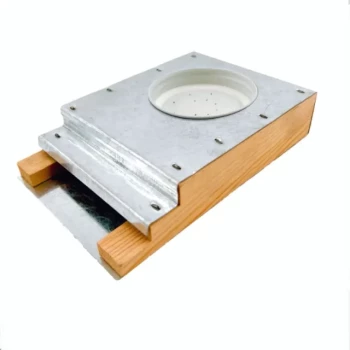
High-quality in-hive feeders serve as a critical defense mechanism by enabling beekeepers to sustain colonies internally without exposing them to external hazards. By delivering supplemental nutrition directly inside the hive, these feeders allow you to confine bees during pesticide application periods or times of residual toxicity, effectively cutting off their access to contaminated forage.
When environmental sources are compromised by pesticides, the ability to control the food source is the ability to control survival. In-hive feeders decouple the colony from its toxic environment, ensuring continuous nutrition while preventing fatal exposure to contaminated nectar and pollen.
The Mechanics of Colony Protection
Breaking the Foraging Cycle
The primary danger during pesticide events is the worker bee’s instinct to forage.
High-quality in-hive feeders suppress this instinct by bringing the resource source inside the colony. When food is readily available internally, the drive to exit the hive and collect nectar from potentially toxic fields is significantly reduced.
Enabling Safe Confinement
During active spraying or peak toxicity windows, simple avoidance is not enough; physical exclusion is often required.
In-hive feeders allow beekeepers to close hive entrances for limited periods without risking starvation. Because the nutrition is internal, the colony maintains its energy levels and brood rearing activities even while "locked down" from the outside world.
Preventing Resource Contamination
Bees foraging on sprayed crops do not just risk death in the field; they bring toxic substances back to the hive.
By substituting local nectar with clean sugar syrup or pollen substitutes via an in-hive feeder, you prevent the accumulation of pesticides in the colony's food stores. This protects the queen and developing larvae from ingesting tainted resources.
Integrating Feeders with Hive Infrastructure
The Role of High-Precision Sealing
A feeder is only effective if the hive itself is secure.
Modern, mechanized hive production ensures tight seals and uniform specifications. When using in-hive feeders during a pesticide event, this structural integrity prevents chemical drift from penetrating the hive, ensuring the internal air and food supply remain pure.
Standardized Distribution
Effective feeding relies on consistent access for the bees.
Standardized 10-frame body hives provide a uniform baseline for distributing feed. This internal consistency ensures that the clean nutrition provided by the feeder is accessible to the nurse bees and effectively distributed to the larval areas, maintaining colony strength despite the external threat.
Understanding the Trade-offs
Moisture Accumulation
Internal feeding, particularly with liquid syrup, introduces significant moisture into the hive environment.
If the hive lacks proper ventilation or if the feeder leaks, this can lead to condensation and mold. While trying to protect bees from pesticides, you must ensure you do not inadvertently create a damp environment that promotes fungal diseases.
Nutritional Complexity
While necessary for survival during toxic periods, sugar syrup lacks the micronutrients found in diverse natural pollen and nectar.
Long-term reliance on feeders can lead to nutritional deficits. It is a management tool for specific windows of risk, not a permanent replacement for a diverse natural landscape.
Making the Right Choice for Your Colony
To effectively manage pesticide risks, your feeding strategy must align with your immediate environmental context.
- If your primary focus is Acute Protection: Prioritize high-capacity internal feeders that allow you to completely close hive entrances during scheduled spraying events without starving the colony.
- If your primary focus is Product Purity: Use feeders to substitute forage during minor contamination events to prevent pesticides from entering the honey and beeswax harvest.
Ultimately, a high-quality in-hive feeder is not just a nutrition device; it is a biosecurity tool that grants you control over what your bees consume and where they travel.
Summary Table:
| Feature | Protection Mechanism | Benefit to Colony |
|---|---|---|
| Foraging Suppression | Provides internal food sources | Reduces the drive to forage in contaminated fields |
| Safe Confinement | Supports nutrition during lockdown | Allows closing of hive entrances during active spraying |
| Resource Purity | Substitutes toxic nectar/pollen | Prevents the accumulation of pesticides in honey stores |
| Precise Integration | Fits standardized hive bodies | Ensures uniform feed distribution and hive structural integrity |
Secure Your Apiary Against Environmental Risks with HONESTBEE
At HONESTBEE, we understand that commercial success in beekeeping depends on the survival and health of your colonies. We offer a comprehensive wholesale range of high-quality beekeeping tools, machinery, and equipment—from precision hive-making machines that ensure perfect seals to advanced honey-filling equipment and specialized in-hive feeders.
Whether you are a commercial apiary protecting your livelihood or a distributor seeking reliable hardware and essential industry consumables, our products provide the biosecurity and efficiency you need to thrive. Contact us today to enhance your apiary infrastructure and let us help you deliver pure, pesticide-free results for your customers.
References
- José Nunes Pinheiro, Breno Magalhães Freitas. EFEITOS LETAIS DOS PESTICIDAS AGRÍCOLAS SOBRE POLINIZADORES E PERSPECTIVAS DE MANEJO PARA OS AGROECOSSISTEMAS BRASILEIROS. DOI: 10.4257/oeco.2010.1401.16
This article is also based on technical information from HonestBee Knowledge Base .
Related Products
- In-Hive Dual Compartment Frame Bee Feeder for Targeted Colony Nutrition
- Professional In-Hive Frame Bee Feeder by HONESTBEE
- Professional In-Hive Bee Feeder HONESTBEE Frame for Beekeeping
- 3.5L Plastic Beehive Frame Feeder Deep Frame Water Feeder for In Hive Use
- HONESTBEE Entrance Bee Feeder Professional Hive Nutrition Solution for Beekeeping
People Also Ask
- What are the advantages of using a frame feeder for bee colonies? Boost Growth and Prevent Robbing Efficiently
- Why should sugar syrup or dry sugar not be left out in the open when feeding bees? Avoid a Dangerous Feeding Frenzy
- What precautions should be taken when feeding bees inside the hive? Safeguard Your Colony from Robbing and Leaks
- How do in-hive feeders support honey bee colonies during autumn? Ensure Overwintering Success for Your Apiary
- Why is an in-hive feeder necessary for stimulatory feed? Protect Nano-Particle Integrity and Dosage Accuracy