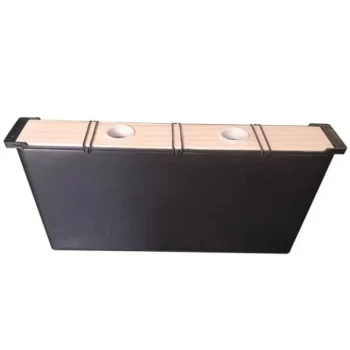
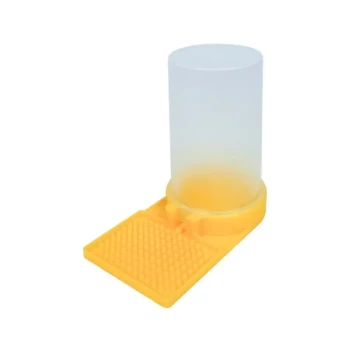
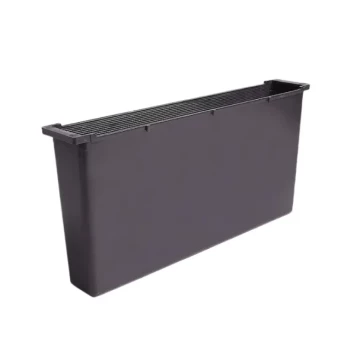
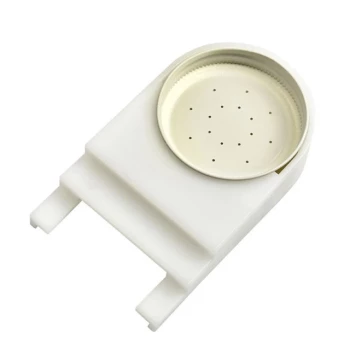
Professional hive feeders serve as a critical safety system for bee colonies receiving liquid nutrition. They primarily function to prevent bee mortality through anti-drowning structural designs, while simultaneously sealing the liquid algae supplements to protect against contamination from external pests and degradation caused by oxidation.
Professional feeders do more than hold food; they engineer the feeding environment to ensure colony safety and preserve the chemical integrity of the algae supplement.
Preserving Colony Safety
When introducing liquid supplements, the physical safety of the bees is the immediate priority. Without specialized equipment, the feeding process can become a hazard.
The Controlled Feeding Interface
Liquid algae syrup can be dangerous if bees have unrestricted access to the bulk liquid. Professional feeders utilize specific structural designs to mitigate this risk.
These designs create a controlled interface where bees can access the nutrient without submerging themselves. This mechanism effectively prevents bees from drowning while they consume the syrup.
Maintaining Nutritional Integrity
Beyond physical safety, professional feeders play a vital role in maintaining the quality of the supplement. Liquid algae is sensitive to environmental factors.
Preventing External Contamination
Open feeding sources often attract unwanted attention. Sealed or semi-sealed equipment acts as a physical barrier.
This isolation prevents external insects and robbers from contaminating the food source. It ensures the supplement is consumed exclusively by the intended colony.
Inhibiting Oxidation
Exposure to air can rapidly degrade the quality of nutritional supplements. Professional feeders are designed to restrict airflow to the liquid reservoir.
This design feature inhibits the oxidation of supplements. By reducing air exposure, the equipment ensures the liquid algae feed remains fresh and biologically accessible for the bees.
Understanding the Trade-offs
While professional feeders offer superior protection, it is important to understand the operational implications of using sealed systems.
Maintenance Requirements
Because these systems are sealed to prevent oxidation and contamination, they can trap moisture. Regular monitoring is required to ensure the internal environment remains clean.
Accessibility vs. Protection
The "controlled interface" restricts how many bees can feed simultaneously. While this prevents drowning, it may slow down the total uptake rate compared to open feeding, requiring better timing for supplement delivery.
Making the Right Choice for Your Goal
Selecting the appropriate feeder depends on balancing colony safety with the specific chemical needs of your supplement.
- If your primary focus is colony population protection: Prioritize feeders with advanced anti-drowning interfaces to minimize accidental mortality during feeding.
- If your primary focus is maximimizing nutrient potency: Select fully sealed models that offer the highest level of protection against oxidation and spoilage.
Investing in professional feeding infrastructure ensures that your nutritional strategy supports the hive rather than endangering it.
Summary Table:
| Feature | Protective Function | Primary Benefit |
|---|---|---|
| Anti-drowning Design | Creates a controlled feeding interface | Prevents bee mortality during liquid intake |
| Sealed Reservoir | Acts as a barrier against air and pests | Inhibits oxidation and prevents contamination |
| Isolation Structure | Restricts access to intended colony only | Stops robbery and external insect intrusion |
| Chemical Preservation | Maintains supplement freshness | Ensures maximum nutrient potency and bioavailability |
Elevate Your Apiary's Nutritional Management with HONESTBEE
Maximize the effectiveness of your liquid supplements while safeguarding your bee populations. HONESTBEE specializes in serving commercial apiaries and distributors with a comprehensive range of high-performance beekeeping tools and machinery.
From advanced hive feeders designed to prevent drowning and oxidation to industrial-grade honey-filling machines and specialized hive-making equipment, we provide the hardware you need to scale your operations efficiently. Whether you are looking for wholesale supply of essential consumables or custom machinery, our expertise ensures your business thrives.
Ready to upgrade your equipment? Contact HONESTBEE today to explore our wholesale offerings and find out how we can streamline your honey production.
References
- Benjamin Nichols, Vincent Ricigliano. Uses and benefits of algae as a nutritional supplement for honey bees. DOI: 10.3389/fsufs.2022.1005058
This article is also based on technical information from HonestBee Knowledge Base .
Related Products
- Professional Hive Top Bee Feeder for Beekeeping
- HONESTBEE Professional Hive Top Bee Feeder Feeding Solution
- HONESTBEE Entrance Bee Feeder Professional Hive Nutrition Solution for Beekeeping
- Professional Hive Front Entrance Bee Feeder
- Professional In-Hive Frame Bee Feeder by HONESTBEE
People Also Ask
- What is a hive top feeder? A Guide to Efficient, Low-Stress Beekeeping
- Do I need an inner cover with a hive top feeder? Optimize Your Hive Setup for Healthy Bees
- What is a hive top feeder, and how does it work? A Complete Guide to Efficient In-Hive Feeding
- What are the characteristics, advantages, and disadvantages of hive top feeders? Optimize Your High-Volume Feeding
- How does a hive top feeder work? Optimize Your Apiary's Nutrition and Security