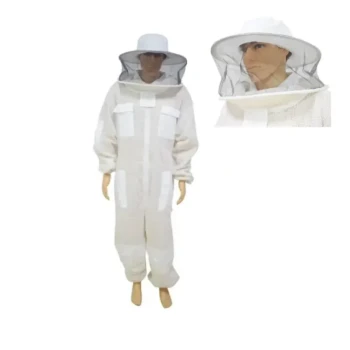
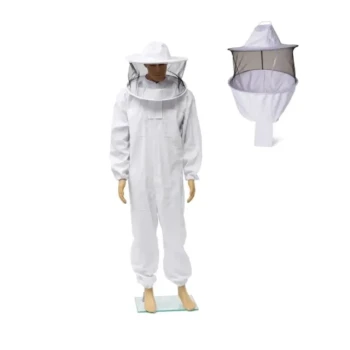
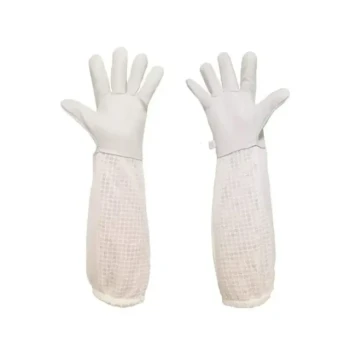
Full-coverage bee suits and face veils serve as the primary physical defense system in the management of defensive bee species. By establishing a comprehensive barrier between the operator and the colony, this gear effectively blocks stings from penetrating the skin, ensuring the physical safety of beekeepers facing aggressive behaviors typical of species like Africanized honeybees.
Core Insight While the immediate function of protective gear is injury prevention, its deeper operational role is to enable continuity and precision. By neutralizing the threat of stings, these tools allow operators to maintain the composure necessary for complex hive manipulations, directly reducing colony stress and bee mortality.
The Mechanics of Physical Protection
The Sting Barrier
The primary function of professional-grade bee suits is to create an impenetrable shield against stings. This is particularly critical when managing genotypes with heightened defensiveness, such as Africanized honeybees.
The gear—comprising overalls, boots, and gloves—prevents the stinger from reaching the skin. This capability is non-negotiable for high-risk apiaries where mass stinging events can cause serious injury to personnel.
Protection Against Non-Stinging Defense
Not all defensive behavior involves venom. Certain stingless bee species exhibit aggression through biting or entangling themselves in the operator's hair.
In these scenarios, the face veil provides a critical barrier for the head and face. It prevents the disorientation and distress caused by bees swarming the eyes or tangling in hair, reducing operational difficulty during colony transfers.
Enabling Operational Continuity
Facilitating High-Risk Tasks
Without full-coverage protection, essential management tasks would be impossible in defensive colonies. This includes hive inspections, colony splitting (dividing), and swarm prevention.
Protective gear allows these operations to proceed during peak nectar flows or even at night—times when defensive colonies may be most active or difficult to manage.
Ensuring Data Accuracy
For research and commercial operations, consistency is key. Protective clothing allows technicians to collect accurate data and measurements regardless of the colony's temperament.
When the risk of pursuit or stinging is mitigated, personnel can focus on the details of the inspection rather than their immediate safety, ensuring that research or production workflows remain uninterrupted.
The Impact on Colony Welfare
Promoting Calm Handling
There is a direct link between operator safety and colony health. High-specification gear allows the beekeeper to remain calm, even when surrounded by aggressive bees.
This lack of fear facilitates gentle, precise movements. Jerky, fear-driven movements often provoke further aggression; therefore, the confidence provided by the suit creates a feedback loop that lowers the overall stress of the intervention.
Reducing Bee Mortality
Aggressive interventions often lead to crushed bees and chaotic hive conditions. By enabling deliberate and steady handling, protective gear minimizes accidental bee mortality.
This precision preserves the integrity of the colony structure, ensuring that necessary interventions do not inadvertently damage the workforce or the queen.
Understanding the Trade-offs
The Necessity of Professional-Grade Materials
Not all protective gear is suitable for defensive species. The "trade-off" here is that standard hobbyist gear may fail against highly aggressive genotypes.
To achieve the safety levels described, the equipment must be professional-grade and reinforced. Relying on lower-specification gear in high-risk apiaries can lead to barrier failure, compromising both operator safety and the success of the harvest.
Making the Right Choice for Your Goal
To select the appropriate level of protection, you must align your gear with your specific operational objectives.
- If your primary focus is managing Africanized or aggressive honeybees: Prioritize reinforced, full-body suits and thick gloves to create an absolute barrier against mass stinging events.
- If your primary focus is managing stingless bees: Focus on high-visibility face veils and hair protection to prevent biting and entanglement, which are the primary defensive tactics of these species.
- If your primary focus is scientific research or data collection: Select gear that balances maximum protection with dexterity, allowing for the precise handling of instruments required for accurate measurement.
Ultimately, protective gear is not just a shield for the beekeeper, but a tool that permits the gentle, precise, and sustainable management of the colony.
Summary Table:
| Feature | Role in Defensive Management | Key Benefit |
|---|---|---|
| Full-Body Barrier | Blocks stings from Africanized honeybees | Ensures physical safety and operator composure |
| Fine Mesh Face Veil | Prevents biting and hair entanglement | Eliminates facial distress and disorientation |
| Reinforced Material | Withstands mass stinging events | Enables high-risk tasks like splitting and night inspections |
| Operator Confidence | Facilitates calm, precise movements | Reduces colony stress and accidental bee mortality |
Elevate Your Beekeeping Operations with HONESTBEE
Managing defensive bee species requires equipment that never fails. HONESTBEE specializes in providing commercial apiaries and distributors with high-specification, professional-grade beekeeping gear designed for durability and maximum protection.
From reinforced full-coverage suits that withstand the most aggressive genotypes to specialized machinery like honey-filling and hive-making units, our comprehensive wholesale portfolio supports every aspect of your business. We empower our partners to maintain operational continuity, protect their workforce, and optimize colony welfare through superior hardware and essential industry consumables.
Ready to secure your apiary's success?
Contact HONESTBEE Today to explore our wholesale solutions and cultural merchandise tailored for your business needs.
References
- J. Christopher Brown. Responding to Deforestation: Productive Conservation, the World Bank, and Beekeeping in Rondonia, Brazil. DOI: 10.1111/0033-0124.00273
This article is also based on technical information from HonestBee Knowledge Base .
Related Products
- Premium Three Layer Ventilated Bee Suit with Round Veil
- Professional Cotton Beekeeper Suit with Round Veil Design for Commercial Apiaries
- Premium Cotton Beekeeper Suit with Reinforced Fencing Veil
- Professional Beekeeper Suit with Square Folding Cotton Veil
- Beekeeping Jacket with Hood and Veil for Beekeepers
People Also Ask
- What are the features of a ventilated bee suit? Stay Cool and Protected in Hot Weather
- What is the function of professional protective consumables? Scale Your Apiary with Ventilated Bee Suits
- What should be considered when purchasing a ventilated bee suit? Ensure Maximum Safety and Comfort
- What is the advantage of ventilated bee suits over traditional ones? Stay Cool and Protected with Mesh Technology
- What materials are used in ventilated bee suits? Choose Between 3-Layer Mesh & Foam for Optimal Protection