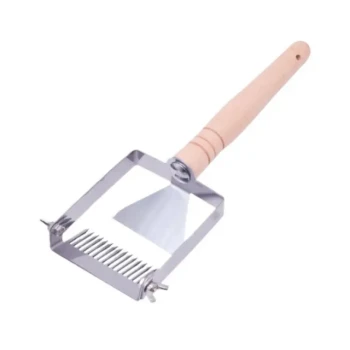
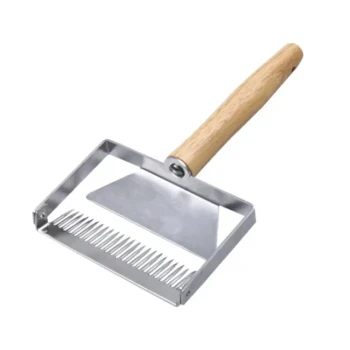
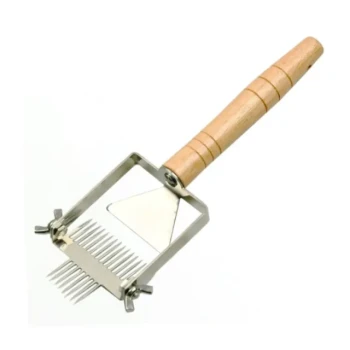
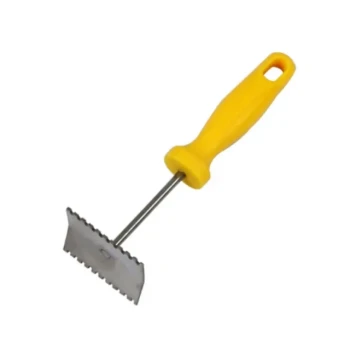
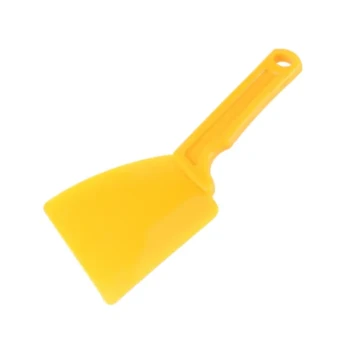
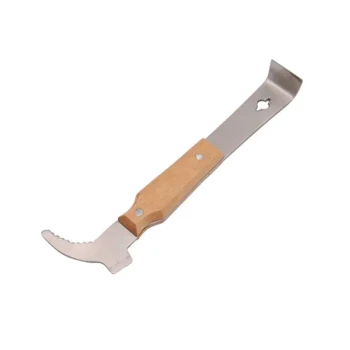
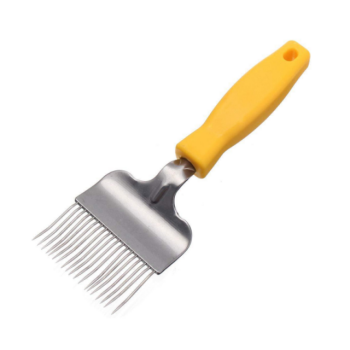
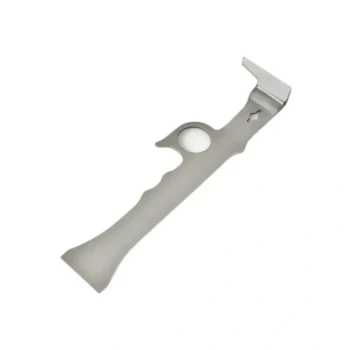
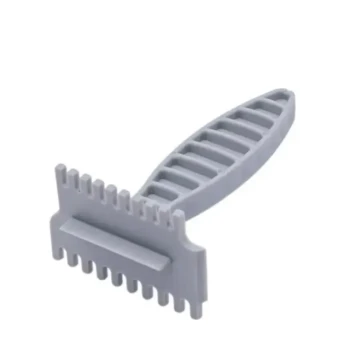
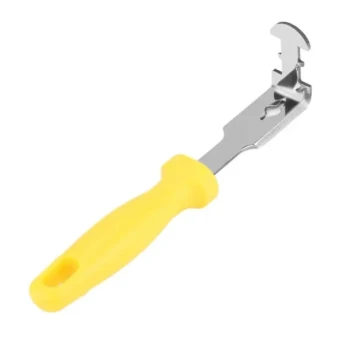
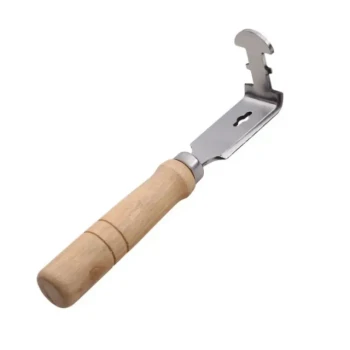
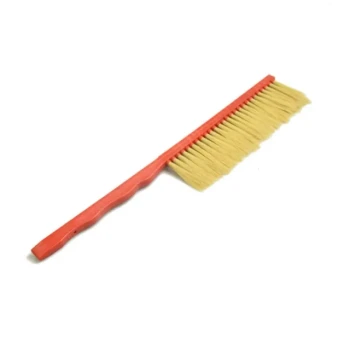
Specialized scrapers and spoons function as surgical instruments for the manual extraction of individual honey pots. Unlike standard beekeeping where frames are spun, harvesting stingless bee honey requires carefully separating specific wax pots from the hive structure. These tools allow the harvester to remove only the honey-filled containers without crushing the surrounding architecture.
Core Takeaway The unique biology of stingless bees, which store honey in clustered pots rather than uniform combs, dictates the use of these precise manual tools. Their primary function is to decouple honey harvesting from brood maintenance, ensuring that the extraction process does not physically damage the colony’s reproductive center or impede its ability to continue production.
The Mechanics of Selective Extraction
Targeted Removal
Stingless bees store honey in distinct, irregular wax pots. Specialized scrapers are used to detach these individual pots from the larger cluster.
Maturity Verification
Because the harvest is manual, beekeepers can assess each pot individually. Spoons and scrapers allow for the selective removal of only fully mature honey pots, leaving unripe nectar behind to ferment and thicken properly.
Preservation of Pot Structure
Unlike crushing the hive, using these specific tools helps maintain the integrity of the wax pots where possible. This precision prevents the chaotic spilling of honey inside the hive, which can drown bees or attract pests.
Preserving Colony Architecture
Protecting the Brood Area
The most critical role of these tools is spatial isolation. The honey pots are often located adjacent to the brood (the developing larvae).
Preventing Structural Collapse
Rough handling can damage the brood cells. Specialized spoons allow the harvester to scoop out honey pots without exerting pressure on the delicate brood comb nearby.
Ensuring Continuous Production
By using scrapers to cleanly sever the connection between honey pots and the hive wall or brood area, the colony is left intact. This "non-destructive" harvesting ensures the bees do not have to waste energy rebuilding the entire nest structure, maintaining their continuous production capacity.
Understanding the Trade-offs
Manual Labor vs. Efficiency
While scrapers and spoons offer maximum protection for the hive, the process is labor-intensive. It requires significant time and manual dexterity compared to mechanized suction methods or the centrifugal extraction used in standard apiculture.
The Geometry of Storage
It is important to note that tools designed for standard honeybees, such as uncapping knives or flat scrapers for wooden frames, are generally unsuitable here. Stingless bee hives lack the uniform "bee space" of a Langstroth hive; therefore, the tools must be smaller and more maneuverable to navigate the irregular arrangement of honey pots.
Making the Right Choice for Your Goal
When determining your harvesting approach, consider the following priorities:
- If your primary focus is Colony Health: Prioritize the use of small, manual scrapers to surgically remove pots, ensuring zero impact on the neighboring brood.
- If your primary focus is Honey Quality: Use spoons to individually select pots, ensuring that only fully ripened, capped honey is harvested to prevent fermentation issues.
By treating the harvest as a precise surgical procedure rather than a bulk extraction, you safeguard the colony’s future while securing a pure product.
Summary Table:
| Tool Feature | Role in Harvesting | Benefit to Colony |
|---|---|---|
| Surgical Precision | Detaches individual wax pots | Prevents damage to the neighboring brood |
| Selective Scooping | Removes only mature, capped honey | Ensures high quality and prevents fermentation |
| Manual Control | Decouples honey pots from hive walls | Maintains structural integrity and prevents spills |
| Maneuverability | Navigates irregular hive geometry | Allows extraction in tight, non-uniform spaces |
Elevate Your Beekeeping Operations with HONESTBEE
At HONESTBEE, we understand that specialized honey extraction requires the right precision tools to protect your colony's future. Whether you are a commercial apiary or a distributor, we provide a comprehensive wholesale range designed for efficiency and hive health.
Our Value to You:
- Complete Equipment Spectrum: From specialized scrapers and spoons for stingless bees to honey-filling machines and hive-making hardware.
- Scalable Solutions: We cater to the needs of large-scale beekeeping operations and global distributors with high-quality consumables.
- Industry Expertise: Beyond tools, we offer machinery and honey-themed cultural merchandise to help you diversify your brand.
Ready to enhance your production capacity with professional-grade tools? Contact us today to explore our wholesale catalog!
References
- Bajaree Chuttong, Michael Burgett. Meliponiculture. DOI: 10.1080/0005772x.2014.11417595
This article is also based on technical information from HonestBee Knowledge Base .
Related Products
- Adjustable Stainless Steel Honey Uncapping Fork with Scraper for Beekeeping
- Extra Wide Stainless Steel Honey Uncapping Fork with Scraper Beekeeping Tool
- Professional Wide Blade Honey Scraper for Beekeeping and Honey Processing
- Professional Long-Handled Silicone Honey Scraper for Beekeeping
- Wide Adjustable Stainless Steel Honey Uncapping Fork with Scraper
People Also Ask
- How does a honey uncapping fork supplement the use of an uncapping knife? Boost Your Honey Yield and Extraction Efficiency
- What is the design purpose of honey uncapping forks and honey uncapping tanks? Maximize Your Harvest Efficiency
- What are the essential tools for uncapping honey frames? Choose the Right Tool for Your Apiary
- What are the tools used for uncapping honeycombs? Expert Guide to Tools & Functions for Maximum Yield
- What tools are used for honey uncapping? Choose the Right Knife for Your Harvest