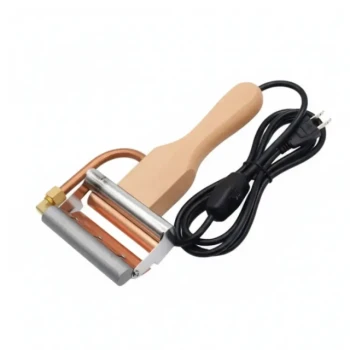
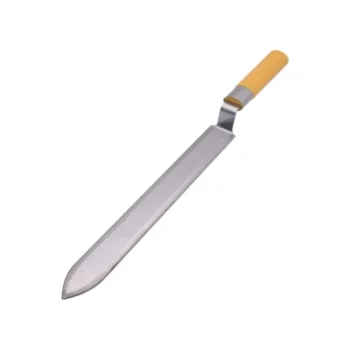
High-hardness sharp blades are essential for maintaining the purity and efficiency of the harvest. These tools are specifically engineered to slice through the raised wax edges on the top of queen cell cups with exact precision. By creating a perfectly flat, clean opening, the blades facilitate the removal of larvae and the subsequent collection of royal jelly. This specific mechanical action is the first line of defense against physical contamination.
Core Insight: The use of high-hardness blades is primarily a contamination control measure. By delivering a clean cut rather than a ragged tear, these tools prevent wax debris from falling into the royal jelly, ensuring the final product remains pure.
Optimizing the Extraction Workflow
Preparing the Queen Cell
The extraction process begins with the physical alteration of the queen cell cup. The blade is used to precisely cut away the raised wax edges at the top of the cell.
Creating a Uniform Opening
The goal of this cut is to create a flat, clean opening. This uniformity is critical because it standardizes the cell height, making the subsequent steps of the process—such as larva removal—predictable and repeatable.
Facilitating Larva Removal
Once the cell is cut flat, the larvae inside become accessible. A clean opening allows for the efficient use of precision tweezers to remove the larvae without obstruction, ensuring the biological material is cleared before the jelly is harvested.
Protecting Product Integrity
Preventing Wax Contamination
The most significant risk during the opening phase is the introduction of foreign matter. A blade with high hardness and sharpness slices through the wax cleanly.
Minimizing Debris
Dull or soft blades tend to crush or tear the wax rather than slice it. This tearing action creates crumbly wax debris that can fall into the cell cup, directly contaminating the royal jelly.
Ensuring Final Purity
By eliminating the creation of debris at the source, the extraction process ensures the purity of the harvested royal jelly. This reduces the reliance on downstream filtering technologies to remove large particulate matter.
Common Pitfalls to Avoid
The Risk of Improper Tooling
Using standard blades or knives for this specific task often results in jagged edges on the cell cup. This increases the likelihood of wax particles mixing with the jelly, which degrades the visual and physical quality of the final product.
Overlooking Systemic Hygiene
While the blade handles wax, it is part of a larger ecosystem of tools including precision tweezers and specialized collection spoons. Relying solely on the blade for quality control is insufficient; the entire toolset must be designed to minimize physical contamination and oxidation.
Making the Right Choice for Your Goal
To maximize the value of your extraction process, choose your tooling based on your specific production priorities:
- If your primary focus is Purity: Prioritize high-hardness blades to ensure a clean slice that prevents wax crumbs from entering the jelly.
- If your primary focus is Efficiency: Use these blades to create a flat surface that speeds up the subsequent use of tweezers and suction tools.
Precision at the cutting stage is the foundation of a contaminant-free final product.
Summary Table:
| Feature | Benefit for Royal Jelly Extraction |
|---|---|
| High-Hardness Edge | Slices cleanly through wax without crushing or crumbling |
| Sharp Precision | Creates a flat, uniform opening for easy larva removal |
| Contamination Control | Prevents wax debris from falling into and polluting the jelly |
| Workflow Efficiency | Standardizes cell height for faster, repeatable harvesting |
Elevate Your Royal Jelly Production with HONESTBEE
Maintaining the highest purity standards is essential for commercial apiaries and distributors. At HONESTBEE, we provide a comprehensive range of professional-grade beekeeping tools, from high-precision extraction blades to advanced honey-filling and hive-making machinery.
Our wholesale solutions are designed to minimize contamination and maximize your operational efficiency. Whether you need specialized hardware or essential industry consumables, our portfolio supports every stage of your business growth.
Ready to upgrade your equipment? Contact us today to discuss your wholesale needs!
References
- Mohammad A.A. Salem Salem, Sohair A Gad Alla. STUDIES ON SOME FACTORS AFFECTING ROYAL JELLY PRODUCTION OF HONEYBEE COLONIES, Apis mellifera L.. DOI: 10.21608/zjar.2021.191284
This article is also based on technical information from HonestBee Knowledge Base .
Related Products
- Plastic Chinese Queen Grafting Tool for Bee Queen Rearing
- Stainless Steel Beekeeping Honey Extractor Lid
- Electric Adjustable Blade Honey Uncapping Plane
- Professional Wide Blade Honey Scraper for Beekeeping and Honey Processing
- Electric Heated Honey Uncapping Knife for Beekeeping
People Also Ask
- Why is it necessary for migratory beekeeping enterprises to utilize professional queen bee rearing tools? Boost Resilience
- What are the benefits of using a queen grafting tool for queen rearing? Master Precision for Superior Bee Genetics
- What is grafting in queen rearing? Take Control of Your Apiary's Genetics
- What are the steps involved in using a queen grafting tool? A Guide to Successful Queen Rearing
- What is the primary function of a queen grafting tool? Master Precise Larval Transfer for High Queen Acceptance