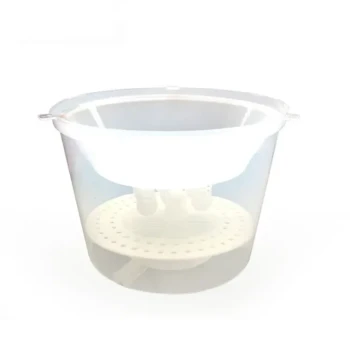
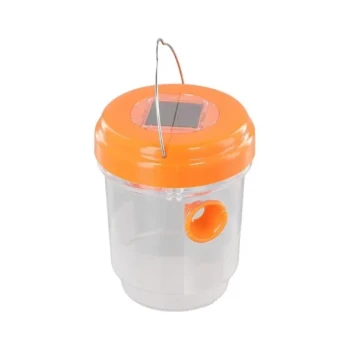
Traps are placed on the outer covers of beehives to directly intersect the specific hunting flight paths of the Oriental Wasp. Because these predators instinctively hover around the hive entrance and perimeter to ambush foraging bees, positioning traps on the cover effectively exploits this behavior for physical interception.
The strategy relies on the wasp's habit of landing on the hive exterior while hunting. By placing traps on the outer covers, beekeepers turn the predator's own vantage point into a capture zone, significantly reducing direct attacks on the colony.
Analyzing the Wasp's Hunting Strategy
To understand why this placement works, you must first understand how the Oriental Wasp hunts. It is a calculated predator that targets high-traffic areas.
Targeting Specific Flight Paths
Oriental Wasps do not fly randomly around an apiary. They utilize specific attack flight paths designed to spot and capture bees.
The Perimeter Patrol
The wasps typically hover around the hive entrance and its perimeter. This allows them to pick off foraging bees as they slow down to land or exit the hive.
The Mechanics of Interception
Placing traps on the outer cover is not a matter of convenience; it is a tactical decision based on physical proximity to the threat.
Exploiting Landing Habits
In addition to hovering, these wasps have a habit of landing on the hive exterior. The flat surface of the outer cover often serves as a staging area for their attacks.
Disruption of the Hunt
By occupying this space with a trap, you create a direct physical interception. The wasp lands or hovers near the cover and is captured before it can successfully attack the colony entrance.
Understanding the Limitations
While strategic placement is effective, it is important to recognize the constraints of this method.
Behavioral Dependence
This method is entirely dependent on the wasp's instinct to hover or land on the cover. If environmental factors alter the wasp's flight path away from the upper perimeter, the trap's efficacy may decrease.
Proximity Risks
Placing attractants directly on the hive requires precision. If the trap is not designed correctly, there is a theoretical risk of drawing more wasps toward the hive rather than intercepting those already present.
Optimizing Your Hive Defense
To make the most of this defensive strategy, align your trap placement with the observed behaviors of the predator.
- If your primary focus is maximizing interception: Ensure traps are securely positioned on the outer covers to overlap with the wasp's natural hovering zones.
- If your primary focus is protecting the entrance: Use the cover placement to divert the wasp's attention away from the vulnerable cluster of foraging bees at the main opening.
Strategic placement transforms the hive cover from a simple lid into an active component of your pest management system.
Summary Table:
| Feature | Strategic Placement on Outer Covers |
|---|---|
| Primary Target | Oriental Wasp (Vespa orientalis) |
| Mechanism | Intercepts wasps on their natural hunting flight paths |
| Key Behavior | Exploits the wasp's habit of landing on the hive exterior |
| Main Advantage | Diverts predator attention away from the hive entrance |
| Efficacy Factor | Directly correlates with proximity to attack zones |
Secure Your Apiary with Professional-Grade Defense
Protecting your colony from Oriental Wasps requires more than just placement; it requires the right equipment. HONESTBEE provides commercial apiaries and distributors with high-quality beekeeping tools and pest management solutions. From specialized hive-making machinery to durable equipment and consumables, we support your business with wholesale-ready products designed for efficiency.
Ready to upgrade your wholesale supply? Contact us today to discover how our comprehensive equipment portfolio can add value to your distribution network.
References
- A. Hussain, Mohammed Mandouh Ismail Elrefaay. SEASONAL FLUCTUATION OF THE ORIENTAL WASP Vespa orientalis L.,( HYMENOPTERA: VESPIDAE ) AND EFFICIENCY OF STICKY TRAPS AS A TOOL FOR ITS CONTROL. DOI: 10.21608/jppp.2009.181737
This article is also based on technical information from HonestBee Knowledge Base .
Related Products
- Gourd Shaped Hanging Wasp Trap Professional Wasp Catcher
- Compact Multi-Funnel Hanging Wasp Trap
- Professional Multi-Component Bucket Wasp Trap
- Professional Bucket Style Wasp and Moth Pheromone Trap
- Solar Powered LED Wasp Trap
People Also Ask
- How do professional wasp traps function? Master Physical Control of Oriental Hornets to Protect Your Apiary
- What are the practical advantages of using professional wasp traps and protective equipment in apiary management? Scale Up
- Why replace sugar syrup bait in wasp traps every three days? Ensure Maximum Attraction and Catch Rates
- What role do specialized wasp traps play in wasp control? Enhance Apiary Security and Pest Monitoring
- How can commercial apiary operators mitigate wasp predation around hives using specialized trapping equipment? Effective strategies for wasp control