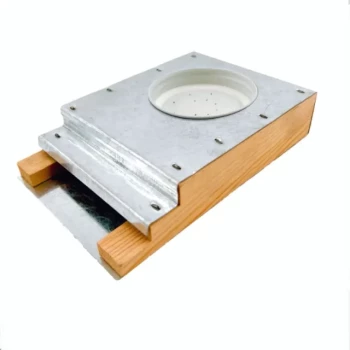
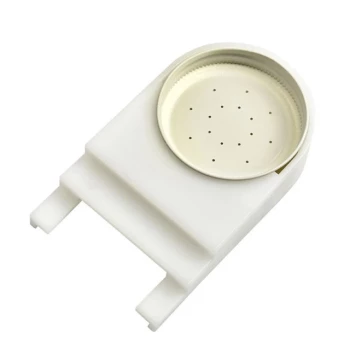
A Boardman entrance feeder serves as a precise control mechanism in honeybee wax production experiments. It facilitates the delivery of a quantitative and consistent supply of sugar syrup, ensuring the colony has a stable energy source independent of environmental conditions. By standardizing the food input, researchers can eliminate variables caused by fluctuating natural foraging, allowing them to attribute any changes in wax yield directly to the specific experimental stimuli being tested.
By decoupling the colony’s energy source from unpredictable natural nectar flows, the Boardman feeder ensures data integrity. It allows technicians to measure exactly how much energy is consumed relative to the wax produced, enabling the precise calculation of energy conversion efficiency.
Ensuring Experimental Rigor
Eliminating Environmental Noise
In a natural setting, a honeybee colony's food supply fluctuates wildly based on weather, season, and local flora. Relying on natural foraging introduces uncontrollable variables that can skew experimental data.
Using a Boardman feeder provides a steady baseline of energy. This ensures that if wax production increases or decreases, the change is a result of the experimental parameters, not because the bees found a particularly rich patch of clover.
Enabling Quantitative Analysis
To understand wax production, researchers must analyze the "input-output" ratio of the colony. This requires knowing exactly how much fuel (sugar syrup) the bees consumed.
Because the feeder allows for controlled replenishment, technicians can accurately record the volume of syrup consumed over specific intervals. This data is essential for calculating the energy conversion efficiency of the colony during the wax secretion process.
Operational Advantages
Minimizing Nest Disruption
Honeybees are sensitive to disturbances; opening a hive disrupts the colony’s temperature and social order, which can temporarily halt work.
The Boardman feeder is an external device installed at the hive entrance. This allows technicians to monitor levels and replenish feed without opening the hive body. This non-intrusive approach maintains the colony’s internal stability, ensuring that stress does not become a confounding variable in the experiment.
Consistent Resource Availability
Wax production is metabolically expensive and requires a constant flow of carbohydrates.
The feeder ensures that the "raw materials" for wax synthesis are always available. This prevents production gaps that might occur if the colony were forced to rely on intermittent natural sources.
Understanding the Trade-offs
External Exposure Risks
While the external nature of the Boardman feeder is excellent for easy access, it places the food source at the perimeter of the colony's defense.
This can potentially attract robber bees from other hives or pests like wasps, especially during a nectar dearth. Researchers must monitor the entrance to ensure the test colony is not expending energy defending the feeder rather than producing wax.
Temperature Sensitivity
Because the feeder sits outside the main hive body, the syrup is more exposed to ambient temperature changes than it would be in an internal frame feeder. In extreme cold, the syrup may become too viscous for the bees to consume efficiently, potentially impacting the consistency of the data.
Optimizing Data Collection Strategies
To maximize the value of a Boardman feeder in your research, align your usage with your specific data goals:
- If your primary focus is Data Precision: Ensure strict recording of every refill volume to calculate the exact caloric input relative to wax weight.
- If your primary focus is Colony Stability: Utilize the external access feature to refill syrup only during low-activity windows to minimize defensive reactions.
The Boardman feeder transforms the complex biological variable of "nutrition" into a fixed constant, providing the scientific foundation required for accurate wax production analysis.
Summary Table:
| Feature | Benefit in Research | Experimental Impact |
|---|---|---|
| Quantitative Feed | Standardizes caloric input | Enables precise energy conversion calculations |
| External Placement | Minimizes nest disruption | Prevents stress-related variables and hive instability |
| Controlled Supply | Decouples from nectar flow | Eliminates environmental noise and foraging fluctuations |
| Visual Monitoring | Easy resource tracking | Facilitates accurate data collection on syrup consumption |
Elevate Your Apiary Operations with HONESTBEE
Precision is the backbone of successful beekeeping, whether you are conducting scientific research or managing a commercial honey production line. HONESTBEE specializes in supporting commercial apiaries and distributors with a robust portfolio of high-quality tools and machinery.
From industrial hive-making and honey-filling machines to essential consumables and specialized hardware, we provide the equipment you need to maximize efficiency and wax yield. Our comprehensive wholesale offerings ensure you have the "raw materials" and technology to grow your business and serve your customers effectively.
Ready to scale your production? Contact our expert team today to discuss how our professional-grade beekeeping solutions can benefit your enterprise.
References
- Renata Leonardo Lomele, Ricardo de Oliveira Orsi. Essential Oils in Beeswax Production by <i>Apis mellifera</i>. DOI: 10.1080/0972060x.2016.1141064
This article is also based on technical information from HonestBee Knowledge Base .
Related Products
- Boardman Entrance Bee Feeder Durable Galvanized Steel and Wood Construction for Beekeeping
- Classic Boardman Entrance Bee Feeder Hive Front Feeding Solution
- Professional Hive Front Entrance Bee Feeder
- HONESTBEE Entrance Bee Feeder Efficient Hive Front Liquid Feeding Solution for Beekeeping
- HONESTBEE Entrance Bee Feeder Professional Hive Nutrition Solution for Beekeeping
People Also Ask
- What types of bee feeders are available for beginners? Start with the Simple Entrance Feeder
- How does a bee entrance feeder work? A Simple Guide to Convenient Hive Feeding
- What is a bee entrance feeder and what are its drawbacks? Essential Guide to Hive Security and Feeding Efficiency
- What are the advantages and disadvantages of using an entrance feeder for bees? Balance Convenience and Hive Security.
- How to make an entrance feeder for bees? A DIY Guide for Safe & Effective Feeding