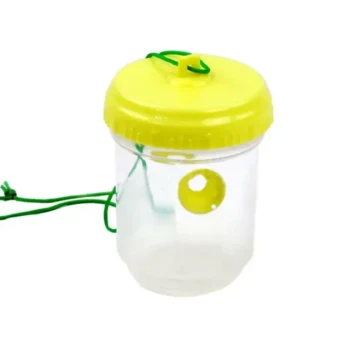
A plastic separation net acts as a critical physical barrier designed to isolate captured hornets from the liquid attractant. By creating a division between the capture chamber and the fluid reservoir, the net ensures that insects cannot touch the bait. This forces the hornets to expire from exhaustion within a dry environment rather than drowning in the mixture.
Core Insight: The primary value of the separation net is not just capture, but preservation of the bait. By keeping decomposing carcasses out of the liquid, the trap prevents contamination, significantly extending the time the attractant remains potent and effective.
The Mechanics of Separation
Isolating the Liquid Reservoir
The net physically divides the trap's internal volume into two distinct zones.
The lower zone holds the liquid attractant, while the upper zone serves as the main capture chamber.
This structure allows the scent to rise and lure the hornet, but strictly prevents the insect from accessing the fluid source.
The Method of Expiration
In traps without nets, hornets typically die by drowning.
The separation net changes the mechanism of elimination to exhaustion.
Trapped in the dry isolation chamber with no escape and no food source, the insect eventually expires without ever contaminating the liquid below.
Preserving Trap Efficiency
Preventing Biological Contamination
When an insect drowns in liquid bait, its body begins to decompose.
This process releases organic matter that spoils the solution and alters its chemical composition.
The separation net eliminates this variable, ensuring the liquid remains pure and chemically stable.
Extending the Maintenance Cycle
A spoiled attractant quickly loses its ability to lure pests.
By preventing contact with dead hornets, the device maintains its attraction efficiency for a significantly longer duration.
This reduces the labor required for maintenance, as the liquid does not need to be replaced as frequently as it would in a standard drowning trap.
Understanding the Trade-offs
Elimination Speed vs. Longevity
It is important to note that death by exhaustion is generally slower than immediate drowning.
Captured hornets may remain alive inside the dry chamber for a period of time before expiring.
However, this delay is a calculated trade-off to prioritize the long-term hygiene and operational consistency of the trap over instantaneous elimination.
Making the Right Choice for Your Goal
When selecting or maintaining hornet traps, the presence of a separation net dictates how you should manage the device.
- If your primary focus is Low Maintenance: Select traps with separation nets, as they prevent bait spoilage and require less frequent refilling.
- If your primary focus is Consistent Performance: Rely on the separation net design to ensure the attractant's scent remains potent throughout the entire trapping cycle.
The separation net is a professional feature that prioritizes the stability of the system over the speed of the kill.
Summary Table:
| Feature | Purpose | Impact on Efficiency |
|---|---|---|
| Physical Barrier | Separates insects from liquid attractant | Prevents bait contamination from decomposing carcasses |
| Dry Chamber | Forces expiration by exhaustion rather than drowning | Keeps the attractant pure and chemically stable |
| Scent Permeability | Allows attractant vapors to rise through the net | Ensures a consistent lure without fluid contact |
| Longevity Design | Reduces the frequency of liquid replacement | Lowers labor costs and extends the maintenance cycle |
Maximize Your Apiary’s Protection with HONESTBEE
Maintaining a pest-free environment is critical for commercial apiary success. At HONESTBEE, we specialize in supporting commercial beekeepers and distributors by providing a comprehensive range of professional-grade beekeeping tools, specialized machinery, and essential consumables.
Whether you need advanced hornet management solutions or high-capacity honey-filling machines, our portfolio is designed to enhance your operational efficiency and protect your hives. Partner with us to access wholesale-ready equipment and expert industry insights.
Ready to scale your beekeeping operations? Contact us today to explore our full catalog!
References
- Sandra V. Rojas‐Nossa, Josefina Garrido. Comparison of Effectiveness and Selectiveness of Baited Traps for the Capture of the Invasive Hornet Vespa velutina. DOI: 10.3390/ani14010129
This article is also based on technical information from HonestBee Knowledge Base .
Related Products
- Compact Multi-Funnel Hanging Wasp Trap
- Plastic Beetle Blaster Trap Beekeeping Tools and Supplies
- Black Plastic Beetle Barn Hive Beetle Trap for Beehives
- Removable Plastic Pollen Trap With Ventilated Tray for Bees Pollen Collector
- Plastic Bee Pollen Trap Strips Comb Catcher Collector
People Also Ask
- What are the practical advantages of using professional wasp traps and protective equipment in apiary management? Scale Up
- Why replace sugar syrup bait in wasp traps every three days? Ensure Maximum Attraction and Catch Rates
- What is the importance of deploying hornet traps around an apiary for maintaining colony stability? Protect Your Yields.
- What are the advantages of placing hornet traps on the tops of beehives? Maximize Hive Defense Against Predators
- What trapping methods and equipment setups protect commercial apiaries against seasonal hornet predation?