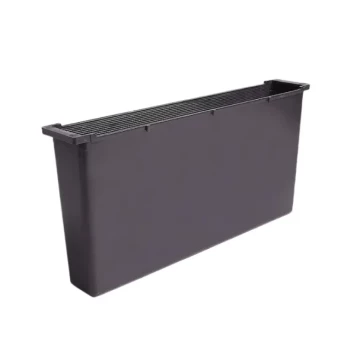
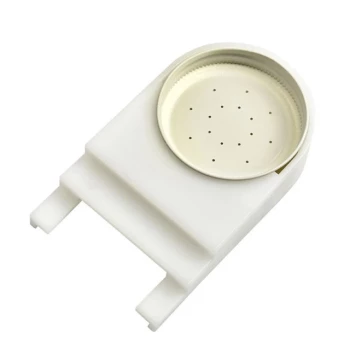
Specialized plastic injection-style feeders provide a controlled environment for precise nutrition. They are primarily used to deliver exact amounts of syrups or probiotic solutions to caged worker bees through specific aperture sizes, such as 3mm. This design solves the dual challenge of maintaining continuous food access while eliminating the risks of leakage and accidental drowning common in laboratory settings.
By standardizing how food is delivered, these feeders allow researchers to decouple bee survival from the mechanics of feeding, ensuring that nutrient intake data is accurate and not skewed by environmental failures.
The Engineering Behind the Design
Precision in Aperture Sizing
The effectiveness of these feeders lies in the specific aperture size, often calibrated around 3mm.
This dimension is critical because it is large enough for a bee to access the liquid but small enough to maintain surface tension. This prevents the liquid from flowing out uncontrollably.
Preventing Accidental Mortality
In a confined cage environment, open liquids pose a significant drowning hazard to honeybees.
The injection-style design restricts the bee's interaction with the fluid to feeding only. By removing physical entry to the liquid reservoir, the feeder ensures the survival of the test subjects.
Continuous Nutrient Access
Bees require a steady supply of carbohydrates to survive, particularly in high-stress cage environments.
This feeder style allows for a reservoir of liquid that is constantly available. It ensures that the bees do not face periods of starvation between manual feedings.
The Research Advantage
Eliminating Variable Leakage
For a researcher, a leaking feeder is a data disaster. It makes it impossible to distinguish between what was consumed and what was lost to the environment.
By utilizing a specialized plastic construction designed to prevent leaks, researchers can trust that the volume missing from the feeder represents actual consumption.
Enabling Precise Monitoring
Scientific studies often require the administration of specific dosages of nutrients or probiotics.
Because the supply is controlled and contained, researchers can accurately monitor intake levels. This allows for precise adjustments to the diet based on the experimental protocol.
Understanding the Trade-offs
Maintenance of Apertures
While the small aperture prevents drowning, it can become a point of failure if the solution changes consistency.
Syrups that crystallize or solutions with particulate matter may clog the 3mm opening. This requires researchers to verify flow regularly to prevent accidental starvation.
Equipment Specificity
Unlike general feeding methods, such as sugar cubes or soaked cotton, this method requires specific hardware.
The dependency on specialized plastic injection equipment means the setup is less flexible and requires higher upfront preparation than rudimentary feeding methods.
Making the Right Choice for Your Research
If you are setting up a study involving caged honeybees, consider your primary data requirements:
- If your primary focus is Subject Survival: Use this feeder to eliminate drowning risks and ensure constant access to calories.
- If your primary focus is Quantitative Data: Rely on this design to prevent leakage, ensuring that every drop of liquid measured is attributed to bee consumption.
The injection-style feeder is the standard for transforming bee feeding from a variable risk into a controlled, reliable constant.
Summary Table:
| Feature | Benefit | Importance in Research |
|---|---|---|
| 3mm Precision Aperture | Maintains surface tension to prevent leaks | Ensures accurate consumption data |
| Closed Reservoir | Eliminates drowning hazards in cages | Maximizes test subject survival rates |
| Continuous Access | Provides constant nutrient supply | Prevents starvation-induced stress |
| Plastic Construction | Easy to clean and durable | Maintains hygiene and experimental consistency |
Elevate Your Bee Nutrition Management with HONESTBEE
At HONESTBEE, we understand that precision is the backbone of successful commercial beekeeping and apiary research. As a leading global supplier for commercial apiaries and distributors, we provide a comprehensive wholesale range of professional-grade beekeeping tools, from specialized honey-filling machines to advanced feeding equipment designed for maximum efficiency.
Whether you are scaling up your operations or outfitting a large-scale research facility, our portfolio covers everything from heavy-duty machinery to essential consumables and honey-themed merchandise. Partner with us to access the high-quality hardware your bees deserve.
Ready to optimize your apiary’s performance? Contact HONESTBEE Today for Wholesale Solutions
References
- Ashwak Abdel-Moneim Hassan, Yasser Essam Elenany. Influence of Probiotics Feed Supplementation on Hypopharyngeal Glands Morphometric Measurements of Honeybee Workers Apis mellifera L.. DOI: 10.1007/s12602-023-10107-0
This article is also based on technical information from HonestBee Knowledge Base .
Related Products
- White Plastic 0.5L Beekeeping Entrance Feeder for Bees
- 3.5L Plastic Beehive Frame Feeder Deep Frame Water Feeder for In Hive Use
- HONESTBEE Entrance Bee Feeder Efficient Hive Front Liquid Feeding Solution for Beekeeping
- HONESTBEE Round Hive Top Bee Feeder for Syrup
- Professional In-Hive Bee Feeder HONESTBEE Frame for Beekeeping
People Also Ask
- How do you make an entrance feeder for bees? A Guide to Safe & Effective Hive Feeding
- How to make an entrance feeder for bees? A DIY Guide for Safe & Effective Feeding
- How does a bee entrance feeder work? A Simple Guide to Convenient Hive Feeding
- What is a bee entrance feeder and what are its drawbacks? Essential Guide to Hive Security and Feeding Efficiency
- What are the advantages and disadvantages of using an entrance feeder for bees? Balance Convenience and Hive Security.