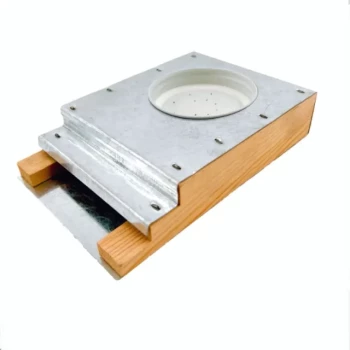
A top feeder drastically reduces colony disturbance because it physically isolates the feeding process from the colony's living quarters. By positioning the feeder in an empty upper box, you can monitor or refill syrup by simply lifting the outer cover, leaving the sensitive brood nest completely sealed and undisturbed.
Core Insight By shifting food storage to the "attic" of the hive, top feeders allow for maintenance without intrusion. This separation eliminates the need to dismantle the main hive body, significantly lowering stress for the bees and safety risks for the beekeeper.
The Mechanics of Isolation
The Structural Advantage
A top feeder sits inside an empty upper box placed above the main hive bodies. This creates a distinct separation between the colony's core activities and the supplementary food source.
Avoiding the Brood Nest
To access a frame feeder, you must open the main brood nest and remove frames. This exposes the heart of the colony to light, wind, and temperature changes.
The "Lid-Only" Access
With a top feeder, your interaction is limited to the very top of the stack. You only need to remove the inner cover and lid to pour in syrup, ensuring the bees below remain unaware of your presence.
Operational Benefits
Reducing Defensive Behavior
Because the brood nest remains closed, the colony does not feel threatened. This significantly minimizes the risk of bee stings, making the interaction safer for the beekeeper.
Eliminating Smoke Dependency
Standard inspections require smoke to calm bees before pulling frames. Since top feeders allow the colony to remain undisturbed, the need for a smoker is largely reduced or eliminated during feeding trips.
Understanding the Trade-offs
Equipment Volume
While less invasive, top feeders add bulk to the hive. They require an additional empty box to house the unit, which can make the hive taller and slightly more cumbersome to move if full.
The Risk of Complacency
Because top feeders are so easy to fill without looking at the bees, there is a risk of neglecting actual inspections. Using a top feeder allows you to feed without checking, but it should not replace regular brood nest health checks.
Making the Right Choice for Your Goal
The decision between feeder types often comes down to how much interaction you want to have with the colony during feeding times.
- If your primary focus is rapid maintenance: Choose a top feeder to refill syrup in seconds without gearing up fully or lighting a smoker.
- If your primary focus is deep management: A frame feeder may be acceptable if you plan to inspect the brood nest deeply every time you feed, as the invasion is already occurring.
Ultimately, a top feeder offers the path of least resistance, keeping the colony calm and your workflow efficient.
Summary Table:
| Feature | Top Feeder | Frame Feeder |
|---|---|---|
| Access Point | Above the hive (Lid-only) | Inside the brood nest |
| Colony Disturbance | Very Low (Isolated) | High (Requires frame removal) |
| Protective Gear | Often minimal required | Full gear recommended |
| Refill Speed | Rapid & Simple | Slower (Requires hive opening) |
| Impact on Bees | Keeps brood nest sealed | Exposure to light/temp changes |
Scale Your Apiary Operations with HONESTBEE
Are you looking to streamline your commercial honey production or expand your wholesale distribution? At HONESTBEE, we specialize in empowering professional beekeepers and distributors with the high-performance tools they need to succeed.
Our comprehensive range includes everything from top-tier feeders and hive-making machinery to advanced honey-filling systems and industry-essential consumables. We don't just supply equipment; we provide the specialized hardware and cultural merchandise that help your business stand out in a competitive market.
Ready to upgrade your workflow? Contact us today to explore our wholesale catalog and expert solutions.
Related Products
- Professional Hive Top Bee Feeder for Beekeeping
- HONESTBEE Round Hive Top Bee Feeder for Syrup
- HONESTBEE Professional Hive Top Bee Feeder Feeding Solution
- HONESTBEE Square Top Hive Bee Feeder Top Bee Feeder
- Rapid Bee Feeder White Plastic 2L Round Top Feeder for 8 or 10-Frame Bee Hives
People Also Ask
- Do I need an inner cover with a hive top feeder? Optimize Your Hive Setup for Healthy Bees
- What is a hive top feeder? A Guide to Efficient, Low-Stress Beekeeping
- What is a hive top feeder, and how does it work? A Complete Guide to Efficient In-Hive Feeding
- What are the characteristics, advantages, and disadvantages of hive top feeders? Optimize Your High-Volume Feeding
- How does a hive top feeder work? Optimize Your Apiary's Nutrition and Security