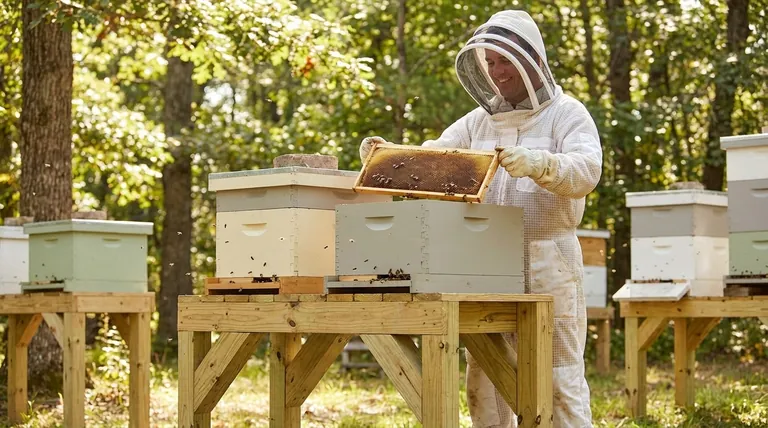
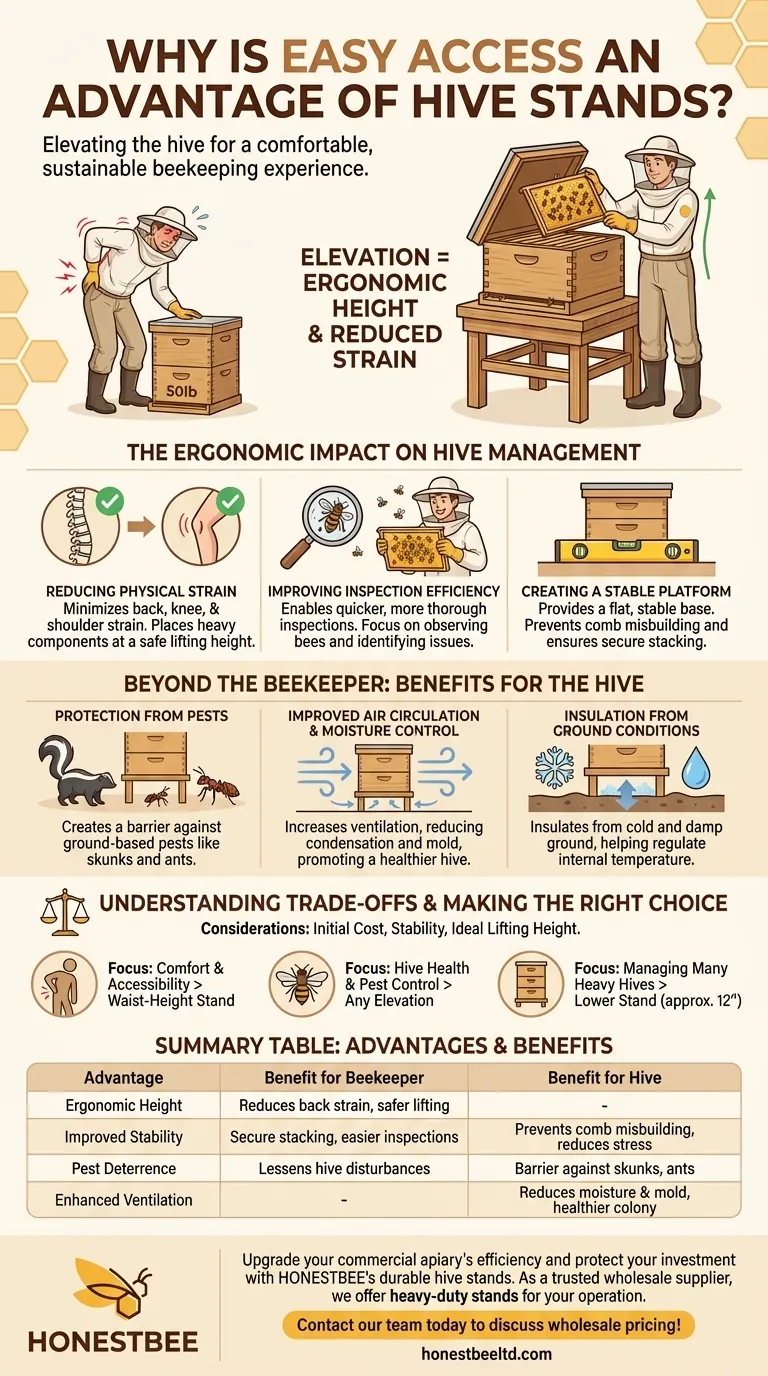
At its core, easy access is an advantage of hive stands because they elevate the hive to a comfortable working height. This simple change significantly reduces the need for constant bending and crouching, which is critical when lifting hive boxes that can weigh over 50 pounds. For beekeepers, especially those with back issues, this makes the entire process more sustainable and physically manageable.
The real value of a hive stand isn't just about convenience; it's a fundamental ergonomic tool. By transforming hive management from a physically taxing chore into an accessible activity, it enables a broader range of people to practice beekeeping successfully and for longer.
The Ergonomic Impact on Hive Management
Beekeeping is a hands-on activity that requires frequent interaction with the colony. A hive's position directly impacts the efficiency and physical toll of these interactions.
Reducing Physical Strain
The most immediate benefit of a hive stand is the reduction of strain on your back, knees, and shoulders. Traditional Langstroth hives are managed in vertical sections, or "supers," which must be lifted and inspected.
When a hive sits on the ground, every inspection requires you to bend deeply to lift the lower boxes. Elevating the hive by just 16-18 inches places the heaviest components at a much safer lifting height, closer to your body's center of gravity.
Improving Inspection Efficiency
When you aren't physically strained or uncomfortable, you can perform more thorough and effective hive inspections. A comfortable working height allows you to focus your attention on observing the bees, checking the brood pattern, and identifying potential issues.
This ergonomic advantage means inspections can be quicker and more precise, minimizing the time the hive is open and reducing stress on the colony.
Creating a Stable and Level Platform
A dedicated hive stand provides a flat, stable base for the hive. This is crucial for hive health, as an unlevel hive can cause combs to be built incorrectly, making them difficult to remove without damaging them or harming bees. A stable platform ensures the hive components stack securely.
Beyond the Beekeeper: Benefits for the Hive
While easy access primarily benefits the beekeeper, elevating a hive also creates a healthier and safer environment for the bee colony itself.
Protection from Pests
Raising a hive off the ground creates a significant barrier against ground-based pests. Skunks, for example, can disturb hives at night by scratching at the entrance, but they are less likely to bother an elevated hive. It also makes it more difficult for ants and other crawling insects to gain access.
Improved Air Circulation and Moisture Control
Lifting a hive improves airflow around and underneath it. This increased ventilation helps reduce condensation and moisture buildup inside the hive, especially during winter. A drier hive is a healthier hive, less prone to mold and disease.
Insulation from Ground Conditions
The ground can be a source of cold and dampness, particularly during wet seasons or winter. A hive stand insulates the colony from these harsh conditions, helping the bees better regulate their internal temperature and conserve energy.
Understanding the Trade-offs
While highly beneficial, hive stands are not without considerations. Objectivity requires acknowledging their potential downsides.
Initial Cost and Setup
A manufactured hive stand is an additional piece of equipment with an associated cost. While simple stands can be built from cinder blocks or wood, a purpose-built stand requires an initial investment of time and money.
Stability and Placement
The stand itself must be placed on firm, level ground. A poorly placed or constructed stand can be less stable than the ground itself, posing a risk of the hive tipping over in high winds or if bumped.
Lifting Height for Supers
While a stand makes inspecting the lower boxes easier, a stand that is too high can make it more difficult to lift heavy, honey-filled supers onto the top of the hive stack. The ideal height is a balance between comfortable inspection and manageable lifting.
Making the Right Choice for Your Goal
The decision to use a hive stand should be based on your physical needs, your local environment, and your management style.
- If your primary focus is personal comfort and accessibility: A stand that raises the bottom box to your waist height is ideal for minimizing bending during routine inspections.
- If your primary focus is hive health and pest control: Any elevation off the ground is beneficial; even simple cinder blocks will improve airflow and deter many pests.
- If you are managing many heavy hives: Consider a slightly lower stand (around 12 inches) to make it easier to add and remove heavy honey supers from the top of the stack.
Ultimately, using a hive stand is a strategic choice that makes beekeeping a more physically sustainable and efficient practice for years to come.
Summary Table:
| Advantage | Benefit for Beekeeper | Benefit for Hive |
|---|---|---|
| Ergonomic Height | Reduces back strain, makes lifting heavy boxes safer | - |
| Improved Stability | Ensures secure stacking for easier inspections | Prevents comb misbuilding, reduces stress on colony |
| Pest Deterrence | Lessens hive disturbances | Creates barrier against skunks, ants, and crawling insects |
| Enhanced Ventilation | - | Reduces moisture & mold, promotes a healthier colony |
Upgrade your commercial apiary's efficiency and protect your investment with HONESTBEE's durable hive stands.
As a trusted wholesale supplier for commercial apiaries and distributors, we understand the physical demands of managing multiple hives. Our heavy-duty hive stands are engineered to provide the stability and ergonomic height your operation needs to minimize physical strain and maximize inspection efficiency.
Let HONESTBEE help you create a safer, more productive beekeeping environment. Contact our team today to discuss wholesale pricing and find the perfect hive stand solution for your business.
Visual Guide
Related Products
- Metal Hive Feet Bee Hive Stand for Ant Protection
- Plastic Bee Hive Stand for Beekeeping
- Metal Bee Hive Stand Bee Box Stand for Beekeeping
- Professional Ant-Proof Beehive Stand with Integrated Moat for Beekeeping
- Plastic Bee Frame Beekeeping Hive Frames for Wholesale
People Also Ask
- What are the benefits of elevating a bee hive with a stand or base? Protect Your Colony and Your Back
- How does a beehive stand protect against predators and pests? Essential Strategies for Colony Security
- How should the height of a beehive stand be determined? Find Your Ergonomic Sweet Spot
- What to stand a beehive on? The Best Foundation for a Healthy, Manageable Apiary
- What is the best base for a beehive? Choose the Right Stand for Colony Health