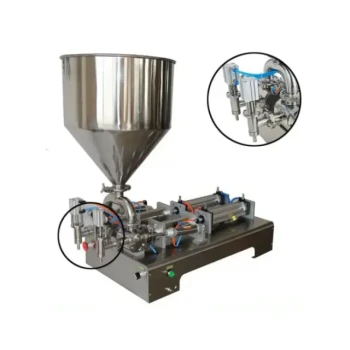
High-precision honey filling machinery is the operational cornerstone of modern commercial apiaries. It is strictly necessary because it ensures exact quantitative control to meet regulatory net weight requirements while creating a sealed environment that prevents moisture absorption and spoilage. Beyond simple volume management, these systems preserve the honey's delicate physical characteristics—such as transparency and viscosity—which is essential for maintaining consumer confidence in premium product lines.
Commercial success in the honey industry relies on balancing volume with biological integrity. High-precision machinery is not just about speed; it is the primary defense against product loss, regulatory non-compliance, and the degradation of honey’s natural chemical properties during the packaging phase.
Ensuring Financial and Regulatory Control
Meeting Strict Net Weight Regulations
In commercial retail, variance is a liability. High-precision machinery utilizes accurate quantitative control to ensure every unit complies with legal net weight standards.
Manual filling often leads to inconsistencies that can result in regulatory fines or consumer distrust. Automated precision eliminates this variable, guaranteeing that the product on the shelf matches the label exactly.
Minimizing Product Loss
Honey is a high-value commodity, and yield can be unstable due to environmental factors. Precision metering systems prevent the "giveaway" of product through overfilling.
These machines also mitigate physical waste, such as overflow or spills, which are common in manual processing. By maximizing the sellable output from a finite harvest, the machinery directly protects profit margins.
Preserving Honey Quality and Chemistry
The Criticality of a Sealed Environment
Honey is hygroscopic, meaning it naturally absorbs moisture from the air. Sealed filling environments are necessary to isolate the honey during the transfer from tank to bottle.
If honey absorbs too much atmospheric moisture, it creates favorable conditions for yeast fermentation, leading to spoilage. High-precision equipment minimizes air contact, ensuring the product remains stable and safe.
Maintaining Viscosity and Transparency
Premium honey varieties are often judged by their visual clarity and texture. Automated filling equipment is designed to handle specific viscosities without altering the physical state of the honey.
Rough handling or improper temperature management during filling can introduce air bubbles or induce premature crystallization. Precision machinery preserves the transparency and flow consumers expect from high-end brands.
Inhibiting Chemical Degradation
Advanced processing machinery often utilizes optimized fluid dynamics and temperature controls. This minimizes heat stress during liquefaction and filtration.
By controlling thermal exposure, these machines inhibit the formation of Hydroxymethylfurfural (HMF), a compound that indicates heat damage. This ensures the final product retains the sensory characteristics present at the time of extraction.
Operational Hygiene and Efficiency
Preventing Secondary Contamination
Moving honey from bulk storage to retail packaging is the stage with the highest risk for contamination. Automated closed systems significantly reduce human contact with the product.
This elimination of manual handling prevents the introduction of microbes or foreign particles. It allows apiaries to meet stringent food safety standards required for broad market distribution.
Handling Seasonal Surges
Honey production is seasonally driven, often resulting in sudden, high-volume processing needs. Industrial-grade automation allows facilities to scale throughput instantly without sacrificing accuracy.
This capability is essential for processing fresh harvests quickly before storage conditions can affect quality.
Understanding the Trade-offs
Capital Intensity and Complexity
High-precision machinery represents a significant upfront capital expenditure. For smaller operations, the ROI may take longer to realize compared to manual or semi-automatic methods.
Additionally, these machines introduce technical complexity. They require consistent calibration, specialized maintenance, and operators trained to manage digital metering systems, which can add to operational overhead.
Flexibility Limitations
While excellent for standardization, some high-speed precision fillers may lack flexibility. Switching between vastly different container shapes or honey varietals (e.g., changing from liquid to creamed honey) may require time-consuming retooling or cleaning cycles.
Making the Right Choice for Your Goal
When evaluating filling machinery, align your choice with your specific operational bottleneck:
- If your primary focus is Regulatory Compliance: Prioritize machines with advanced load cells and automated check-weighing feedback to guarantee net weight accuracy.
- If your primary focus is Brand Positioning (Premium/Raw): Select equipment emphasizing "closed-system" operations and gentle fluid dynamics to preserve viscosity, minimize air incorporation, and prevent HMF formation.
- If your primary focus is Yield Optimization: Look for precision metering systems specifically designed to eliminate overflow and reduce raw material waste.
Ultimately, high-precision filling machinery transforms honey from a raw agricultural harvest into a standardized, safe, and commercially viable consumer good.
Summary Table:
| Key Feature | Benefit for Commercial Apiaries | Impact on Product Quality |
|---|---|---|
| Quantitative Control | Ensures strict net weight regulatory compliance | Eliminates product giveaway/waste |
| Sealed Environment | Prevents moisture absorption and fermentation | Extends shelf life and stability |
| Fluid Dynamics | Minimizes air bubbles and crystallization | Preserves clarity and premium texture |
| Thermal Management | Inhibits HMF (chemical degradation) formation | Maintains natural flavor and enzymes |
| Closed Systems | Reduces human contact and contamination risk | Meets high food safety standards |
Elevate Your Honey Production with HONESTBEE
Transitioning from raw harvest to retail-ready product requires precision you can trust. HONESTBEE specializes in empowering commercial apiaries and distributors with high-performance, industrial-grade solutions.
From high-precision honey-filling machines and automated hive-making hardware to specialized beekeeping tools and essential industry consumables, our comprehensive wholesale portfolio is designed to maximize your yield while preserving the biological integrity of your honey.
Ready to scale your operation and safeguard your margins?
Contact our experts today to find the perfect machinery for your facility.
References
- Titanilla Oravecz, Ildikó Kovács. Qualitative study of preferences and attitudes towards honey consumption in Hungary. DOI: 10.14232/analecta.2019.2.52-58
This article is also based on technical information from HonestBee Knowledge Base .
Related Products
- Precision Durable Efficient HONESTBEE Rotary Honey Filling Machine
- Commercial Rotary Honey Filling Machine for Production
- Precision Automated Packaging Turntable Honey Spoon Filling Sealing Packing Machine
- Fully Automatic Honey Filling Packaging Machine for Processing Line
- Automatic Honey Filling and Filtering Machine for Beekeeping Bottle Filling
People Also Ask
- What quality control role does professional honey filling equipment perform? Ensure Consistency and Product Stability
- What are the common types of bottling machines used for honey? Choosing the Right Solution for Your Apiary
- How do honey filling and processing machines aid native bee product conservation? Boost Value with HONESTBEE Technology
- How do honey filling machines work? Achieve Precision & Speed for Your Apiary
- How do high-precision honey filling machines ensure quality? Optimize Your Commercial Production with HONESTBEE