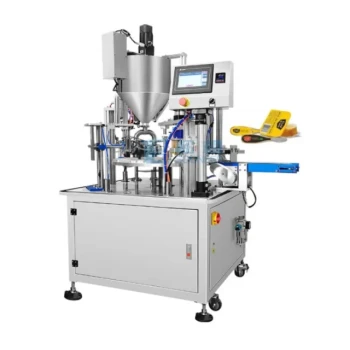
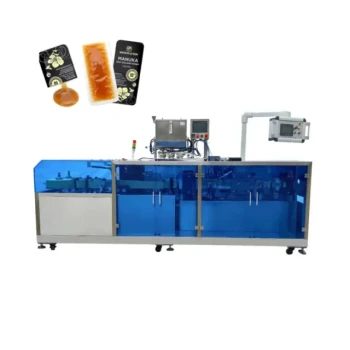
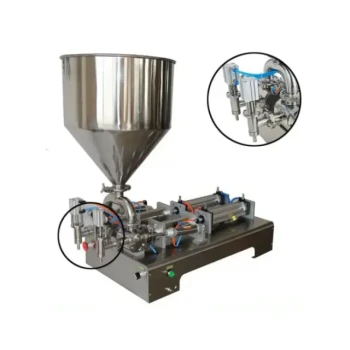
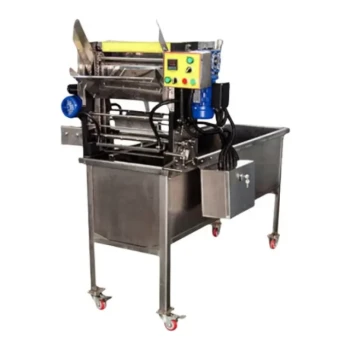
Automated honey-filling machinery acts as the critical bridge between raw agricultural extraction and professional consumer retail. It provides high-precision quantitative filling and hygienic sealing, which allows commercial apiaries to maximize packaging efficiency, significantly reduce material waste, and maintain rigorous product consistency even during periods of unstable honey yields.
By standardizing the final processing stage, automation transforms variable bulk harvests into high-value retail products. It mitigates the economic risks of climate-induced yield fluctuations by ensuring every ounce of harvested honey is packaged efficiently, hygienically, and with maximum market value.
Economic Resilience and Operational Efficiency
Mitigating the Impact of Unstable Yields
Climate change has made honey yields increasingly unpredictable. Automated machinery helps operations adapt to these fluctuations by optimizing the processing phase. When yields are low, the system ensures zero waste and maximum unit production; when yields are high, it scales rapidly to handle the volume without bottlenecks.
Precision and Waste Reduction
Manual filling inevitably leads to overfilling or spillage, which represents lost revenue. High-precision quantitative filling ensures that every jar contains the exact advertised weight. This eliminates product giveaway and reduces material waste, directly improving the bottom line.
Reducing Reliance on Manual Labor
Transitioning to mechanized operations significantly lowers labor intensity. By automating the repetitive tasks of weighing, filling, and sealing, commercial operations reduce their dependence on large manual workforces. This allows human resources to be redirected toward colony management or business development.
Product Quality and Brand Value
Standardization for Retail Markets
To compete in the global market, honey must be transformed from a primary agricultural product into a standardized consumer good. Automated machinery provides the technical foundation for brand development. It ensures uniform packaging, sealing, and labeling, which increases the "added value" of the product and builds consumer trust.
Preserving Bio-Active Properties
Honey contains sensitive compounds, including natural antioxidants and beneficial microorganisms like lactic acid bacteria. Automated systems utilize closed, hygienic processing environments. This minimizes exposure to external contaminants and air, maximizing the retention of these health-promoting properties compared to open manual processing.
Ensuring Hygiene and Food Safety
Manual extraction and filling introduce multiple points where impurities can enter the product. Industrial-grade machinery creates a sealed environment that meets strict food safety standards. This mechanized approach drastically reduces contamination risks, ensuring the final product remains pure and compliant with regulatory requirements.
Understanding the Trade-offs
The Shift to Professionalization
Implementing this technology marks a distinct shift from small-scale traditional operations to professional commercial production. While it boosts efficiency, it requires an operational mindset shift. The focus moves from purely agricultural management to industrial process management, requiring new skills in equipment maintenance and quality control protocols.
Adaptation vs. Tradition
While automation creates a "high-value" derivative, it distances the producer from the traditional, hands-on artisanal process. For ultra-niche, small-batch artisanal sellers, the uniformity of automation might be less desirable than the "hand-packed" appeal. However, for any entity aiming for scale or retail distribution, the trade-off heavily favors the consistency of automation.
Making the Right Choice for Your Goal
When considering the integration of automated filling machinery, assess your primary business objectives:
- If your primary focus is Brand Building: Prioritize machinery that offers advanced sealing and labeling capabilities to ensure a polished, shelf-ready appearance that competes with major retailers.
- If your primary focus is Risk Mitigation: Focus on high-precision systems that minimize waste to ensure you maximize revenue even during seasons with poor harvest yields.
- If your primary focus is Product Quality: Select equipment with closed-loop hygienic processing to guarantee the preservation of natural antioxidants and active enzymes.
Automating your filling line is not just an upgrade in speed; it is a strategic investment in product consistency and economic stability.
Summary Table:
| Key Benefit | Description | Impact on Business |
|---|---|---|
| High-Precision Filling | Eliminates overfilling and spills | Reduces material waste and maximizes revenue |
| Hygienic Sealing | Closed-loop processing environment | Ensures food safety and preserves bio-active properties |
| Operational Scaling | Adapts to variable harvest volumes | Mitigates economic risks from climate fluctuations |
| Professionalization | Uniform packaging and labeling | Increases brand value and retail market competitiveness |
| Labor Efficiency | Automates weighing and sealing | Reduces dependence on manual labor and lowers overhead |
Scale Your Honey Production with HONESTBEE
At HONESTBEE, we understand the unique challenges faced by commercial apiaries and distributors. Our comprehensive wholesale offering is designed to transform your raw harvest into a high-value retail asset.
We provide a full spectrum of industrial-grade solutions, including:
- Advanced Machinery: High-precision honey-filling and specialized hive-making machines.
- Professional Hardware: A complete range of beekeeping tools and equipment.
- Industry Consumables: Essential supplies to keep your production line running smoothly.
- Retail Enhancement: Honey-themed cultural merchandise to diversify your brand.
Whether you are looking to mitigate the risks of unstable yields or seeking to dominate the retail market with superior packaging, HONESTBEE delivers the technical expertise and equipment you need to thrive.
Contact us today to optimize your production line!
References
- Hülya Sayğı. Adverse effects of climate change on agriculture: An evaluation of fruit and honey bee farming. DOI: 10.18488/journal.1005/2020.10.1/1005.1.504.514
This article is also based on technical information from HonestBee Knowledge Base .
Related Products
- Fully Automatic Honey Filling Packaging Machine for Processing Line
- Automatic Honey Filling and Filtering Machine for Beekeeping Bottle Filling
- Precision Durable Efficient HONESTBEE Rotary Honey Filling Machine
- Precision Automated Packaging Turntable Honey Spoon Filling Sealing Packing Machine
- Automatic Single-Dose Snap & Squeeze Honey Sachets Packing Machine
People Also Ask
- Why are fully automatic honey filling and packaging lines essential? Boost Your Honey's Market Value and Quality
- What is a fully-automatic honey filler? Streamline Your Production with High-Precision Automation
- How do automated honey filling and packaging machines affect profitability? Boost Margins with HONESTBEE Technology
- How do automated honey filling and packaging machines contribute to the market value of honey products? Maximize Your ROI
- How do industrial-grade automated honey filling and packaging machines mitigate the risk of physical contamination?