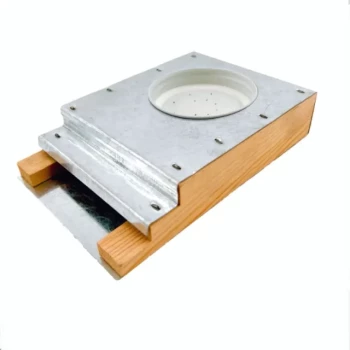
Using top-mounted feeders during the preparation phase is the most efficient method to rapidly supply strong queen bank colonies with large volumes of 2:1 high-concentration sucrose syrup. This specific approach ensures that the colony establishes the substantial food reserves necessary for nurse bees to generate heat and maintain the health of stored queens throughout the dormant winter period.
Success in indoor overwintering relies on maximizing caloric density and storage speed; top-mounted feeders allow colonies to uptake and store energy reserves faster than any other method before entering the controlled environment.
The Strategic Function of Top-Mounted Feeders
Maximizing Uptake Speed
Top-mounted feeders are designed for volume and accessibility. They allow the colony to access large quantities of syrup immediately, without the constraints of smaller internal frame feeders.
This rapid uptake is critical because the preparation window for indoor overwintering is often time-sensitive. The colony must move the syrup from the feeder to the honeycomb storage quickly to establish its winter "pantry."
Supporting High-Value Queen Banks
The primary reference highlights that this method is specifically vital for strong queen bank colonies. These colonies are holding valuable inventory (the queens) rather than just surviving as a standard hive.
Because these colonies are densely populated with nurse bees responsible for caring for the queens, their metabolic energy demands are significantly higher than average.
Ensuring Thermoregulation
Once indoors, the colony relies entirely on stored energy to regulate temperature.
The food provided via top feeders fuels the nurse bees, giving them the calories required to vibrate their wing muscles and maintain the cluster temperature. This warmth is essential for the survival of the banked queens.
The Chemistry of 2:1 High-Concentration Syrup
Energy Density and Efficiency
The use of a 2:1 ratio (approximately 67% w/w sucrose) is not arbitrary. This high concentration closely mimics the characteristics of concentrated nectar.
Because the water content is low, bees expend less energy evaporating moisture to cure the syrup into winter food. This makes the conversion process highly efficient.
Acting as a Medication Delivery System
Beyond simple calories, this syrup serves as a critical delivery vehicle for hive health.
As noted in supplementary data, medications such as Fumagillin can be dissolved directly into this high-concentration syrup.
When the bees store the syrup in the honeycomb, they essentially create a "medicated pantry." As they consume these stores throughout the winter, they receive a continuous dosage, providing long-term suppression of pathogens like Nosema.
Understanding the Trade-offs
The Risk of Low Concentration
Using thinner syrup (like 1:1) during this phase would be a mistake. It introduces excess moisture into the hive that the bees may not be able to eliminate before being moved indoors.
Excess moisture can lead to dysentery and spoilage, compromising the sterile environment needed for overwintering.
The Cost of Inadequate Reserves
If a top-mounted feeder is not used and the colony fails to store enough food, the results are catastrophic.
Unlike an outdoor hive that might take a cleansing flight or forage on a warm day, an indoor colony has zero external resources. If the nurse bees run out of fuel, the temperature drops, and the banked queens will perish.
Making the Right Choice for Your Goal
To ensure your queen banks survive the winter in peak condition, align your feeding strategy with these priorities:
- If your primary focus is Speed of Storage: Utilize top-mounted feeders exclusively to maximize the volume of syrup the bees can access and store in the shortest timeframe.
- If your primary focus is Disease Management: Dissolve Fumagillin into the 67% sucrose solution to ensure the colony receives continuous medicinal protection against Nosema throughout the winter.
- If your primary focus is Energy Efficiency: Stick strictly to the 2:1 syrup ratio to minimize the metabolic work required for bees to cure and cap the food stores.
Proper preparation prevents failure; rapid feeding of high-density syrup is the only way to guarantee the energy budget required for indoor survival.
Summary Table:
| Feature | Top-Mounted Feeder Strategy | Impact on Colony Survival |
|---|---|---|
| Syrup Concentration | 2:1 (67% w/w Sucrose) | High energy density; minimal moisture evaporation required. |
| Uptake Speed | Rapid High-Volume Access | Faster storage completion before indoor movement. |
| Colony Type | Strong Queen Banks | Supports high metabolic demands of nurse bees protecting queens. |
| Health Integration | Medicated Syrup (e.g., Fumagillin) | Creates a 'medicated pantry' for long-term pathogen suppression. |
| Thermoregulation | High Caloric Reserves | Fuels wing muscle vibration to maintain cluster temperature. |
Secure Your Overwintering Success with HONESTBEE
Maximize your apiary's survival rates and protect your valuable queen banks with high-performance equipment. HONESTBEE specializes in supporting commercial apiaries and distributors by providing a comprehensive range of professional-grade beekeeping tools.
From high-capacity top-mounted feeders designed for rapid uptake to advanced honey-filling machines and specialized hardware, we deliver the industrial-strength solutions you need to scale your operations. Ensure your bees have the energy they need to thrive—partner with the experts who understand the demands of large-scale beekeeping.
Ready to upgrade your wholesale supply? Contact HONESTBEE today for a custom quote!
References
- Mireille Lévesque, Pierre Giovenazzo. Impacts of indoor mass storage of two densities of honey bee queens (<i>Apis mellifera</i>) during winter on queen survival, reproductive quality and colony performance. DOI: 10.1080/00218839.2022.2126613
This article is also based on technical information from HonestBee Knowledge Base .
Related Products
- HONESTBEE Square Top Hive Bee Feeder Top Bee Feeder
- HONESTBEE Professional Hive Top Bee Feeder Feeding Solution
- Professional Hive Top Bee Feeder for Beekeeping
- HONESTBEE Round Hive Top Bee Feeder for Syrup
- Rapid Bee Feeder White Plastic 2L Round Top Feeder for 8 or 10-Frame Bee Hives
People Also Ask
- How does a bee hive top feeder work? A Guide to Efficient, Protected Feeding
- How to use a top feeder in a beehive? A Guide to Effective Beehive Feeding
- What is the structural design and placement of a beehive top feeder? Optimize Your Apiary's Feeding Efficiency
- What is a top feeder and how is it designed? Maximize Hive Feeding Efficiency
- How do you use a top feeder for bees? Expert Guide to Installation and High-Volume Hive Feeding