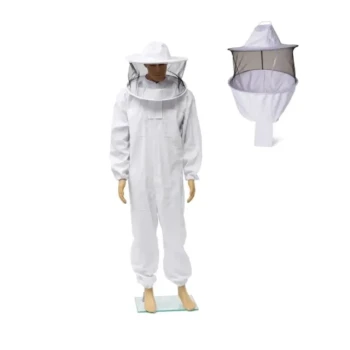
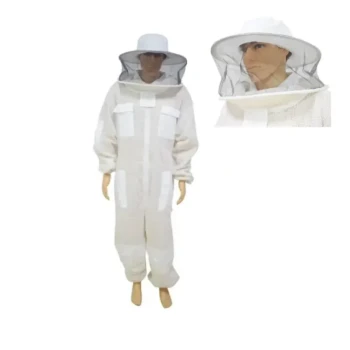
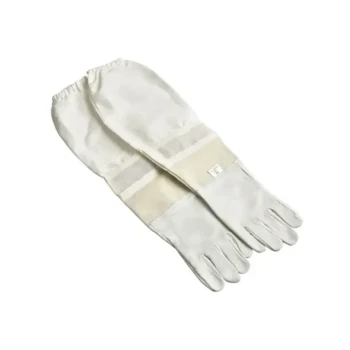
Selecting the correct size is a safety protocol, not a fashion choice. You are recommended to choose a beekeeping suit one or two sizes larger than your standard clothing to create a critical air gap between the fabric and your body. This looseness ensures that the fabric floats above the skin rather than clinging to it, making it physically impossible for a bee's stinger to bridge the distance and cause injury.
The primary defense mechanism of a bee suit is the separation it maintains between the material and your skin. A loose-fitting suit renders the bee’s stinger too short to reach you, transforming the fabric into a functional shield rather than just a covering.
The Mechanics of Protection
The Function of the Air Gap
The fundamental principle of a sting suit is distance, not just density.
When a suit fits loosely, it creates a suspension layer of air around your body. This gap acts as the primary barrier against venom.
Neutralizing the Stinger
Honey bees have a stinger of a finite length.
If the fabric is resting directly against your skin, a bee can easily sting through the material and puncture you. However, with an oversized suit, the bee stings the fabric and meets only the empty air gap underneath, leaving your skin untouched.
Operational Safety and Movement
Avoiding Contact Points
When you bend, stretch, or lift hive boxes, clothing naturally tightens against the body.
If you wear a standard-fit suit, simple movements will pull the fabric taut against your elbows, knees, and back. These tension points eliminate the protective gap, instantly becoming vulnerable targets for stings.
Ensuring Consistent Coverage
An oversized suit maintains its loose drape even when you are in motion.
By sizing up, you ensure that the fabric creates a consistent "tent" effect around you. This guarantees that protection remains constant regardless of your posture or the physical demands of the apiary work.
Common Pitfalls to Avoid
The "Tailored Fit" Mistake
New beekeepers often make the error of selecting gear that fits like standard streetwear.
While a tailored look may feel more familiar, it defeats the engineering purpose of the protective gear. In the apiary, a form-fitting suit is a safety liability.
Recognizing the Limits of Fabric
Do not rely solely on the thickness of the cloth.
Even heavy-duty canvas can be penetrated if it is pressed tight against the skin. The mechanical separation provided by a larger size is often more effective than the thickness of the material itself.
Making the Right Choice for Your Safety
To ensure you are adequately protected, apply the following logic when selecting your gear:
- If your primary focus is maximum protection: Prioritize a fit that feels baggy; if the fabric touches your skin when you bend your elbows, the suit is too small.
- If your primary focus is working comfort: Select a size that allows for full range of motion without the fabric pulling taut, ensuring you can lift heavy boxes without compromising your safety barrier.
By prioritizing a loose fit, you allow the equipment to function as designed, letting you focus on the bees rather than the risk of a sting.
Summary Table:
| Feature | Standard Fit Suit | Oversized Suit (Recommended) |
|---|---|---|
| Protection Mechanism | Fabric thickness only | Mechanical air gap + Fabric thickness |
| Stinger Reach | Can penetrate to skin | Stinger cannot bridge the air gap |
| Mobility | Becomes taut when bending | Maintains loose drape during movement |
| Vulnerability | High at joints (elbows/knees) | Consistently low across all postures |
| Safety Level | Moderate/Conditional | Maximum/Professional Grade |
Secure Your Apiary with Professional-Grade Gear
At HONESTBEE, we understand that for commercial apiaries and distributors, safety and durability are non-negotiable. Our comprehensive wholesale offering includes premium beekeeping suits, hive-making machinery, and honey-filling equipment designed to withstand the rigors of large-scale operations.
By partnering with us, you gain access to a full spectrum of industry-leading beekeeping tools and essential consumables that prioritize worker safety and operational efficiency. Whether you are stocking a distribution network or upgrading your commercial equipment, we provide the hardware and expertise you need to succeed.
Ready to elevate your beekeeping standards? Contact us today to discuss wholesale solutions and custom equipment needs
References
- Michael K. O’Malley, Philip G. koehler. Removal of Swarms and Colonies for Pest Control Operators. DOI: 10.32473/edis-in778-2008
This article is also based on technical information from HonestBee Knowledge Base .
Related Products
- Premium Cotton Beekeeper Suit with Reinforced Fencing Veil
- Professional Cotton Beekeeper Suit with Round Veil Design for Commercial Apiaries
- Professional Beekeeper Suit with Square Folding Cotton Veil
- Three-Layer Ventilated Beekeeper Suit with Structured Fencing Veil
- Vented Beekeeping Jacket with Hood and Veil for Beekeepers
People Also Ask
- What material and design specifications are recommended for a high-quality beekeeper suit? Top Gear Selection Guide
- How to Pre-treat Propolis Stains on Beekeeping Suits? Master Advanced Fabric Care and Soil Removal
- What features should be considered for sting protection in a beekeeping suit? Ensure Total Safety and Comfort
- What are the differences between full suits and jackets with veils in beekeeping? Choose Your Best Protection
- What features should be looked for in a beekeeping suit for maximum comfort? Prioritize Ventilation and Fit