Precision in honey color measurement relies heavily on the sample interface. Specialized glass cells are required because they create a perfectly flat and consistent plane for light to pass through the viscous liquid. Without this specific design, the physical thickness of the honey would distort the light path, rendering the colorimeter's readings inaccurate.
The design of these cells eliminates variables caused by honey's viscosity and chemical nature. By providing a uniform optical path and preventing contamination, they guarantee that color data remains reproducible across different batches.
The Mechanics of Optical Consistency
Conquering Sample Viscosity
Honey is a highly viscous fluid, which makes it difficult to manage physically compared to water-like liquids. It does not naturally settle into a perfectly flat surface on its own.
Specialized glass cells force the sample into a specific shape. They provide a rigid, flat boundary that ensures the honey presents a consistent face to the instrument.
Ensuring Uniform Light Transmission
For a colorimeter to function correctly, the light beam must pass through the sample without deviation. The glass cell creates a standardized "transmission plane."
This allows the beam to travel uniformly through the liquid. This uniformity is the baseline requirement for capturing accurate spectral data.
Material Properties and Data Integrity
Maximizing Optical Transparency
The glass used in these cells is selected for its high optical transparency. This material property is critical to prevent light scattering.
If the container material scatters light, the sensor receives "noise" rather than a true color reading. Specialized glass ensures the instrument measures the honey, not the interference of the container.
Preventing Cross-Contamination
Honey can be sticky and difficult to remove completely from porous surfaces. Specialized glass cells are chemically inert.
This inertness allows for complete cleaning between samples. It prevents residue from previous batches from contaminating the current reading, thereby securing the reproducibility of your data.
Understanding the Trade-offs
The Requirement for Maintenance
While glass provides superior optical properties, it requires strict maintenance. Because the measurement relies on a "flat and consistent" plane, the glass must remain free of scratches or abrasions.
Sensitivity to Imperfections
The system's reliance on optical transparency means that any physical damage to the cell immediately degrades data quality. Unlike plastic disposables, these cells are precision instruments that must be handled with care to maintain their inert and transparent qualities.
Ensuring Reliable Analysis in Your Workflow
To achieve the highest standard of quality control in honey production, the container is as important as the sensor.
- If your primary focus is Accuracy: Prioritize the use of specialized glass to guarantee a flat light-transmission plane that negates the effects of viscosity.
- If your primary focus is Batch Consistency: Rely on the chemical inertness of the glass to prevent cross-contamination and ensure high reproducibility between samples.
Ultimately, the specialized glass cell is not merely a container; it is an active, critical component of the optical measurement system.
Summary Table:
| Feature | Benefit for Honey Measurement | Why It Matters |
|---|---|---|
| Flat Boundary | Counteracts High Viscosity | Creates a consistent light path for accurate readings. |
| Optical Transparency | Minimizes Light Scattering | Ensures the sensor captures true honey color, not container noise. |
| Chemically Inert | Prevents Cross-Contamination | Guarantees data reproducibility across different honey batches. |
| Standardized Path | Uniform Light Transmission | Allows the colorimeter to capture precise spectral data. |
Elevate Your Honey Quality Standards with HONESTBEE
Precision in color measurement is the hallmark of premium honey production. At HONESTBEE, we empower commercial apiaries and global distributors with the professional tools needed to maintain excellence. From high-precision laboratory accessories to industrial-grade honey-filling and hive-making machinery, our comprehensive wholesale portfolio is designed to optimize your workflow.
Why Partner with HONESTBEE?
- Expert Equipment: Access a full spectrum of beekeeping hardware and specialized machinery.
- Scalable Solutions: We cater to large-scale operations and distributors with reliable consumables and innovative tools.
- Industry Insight: Beyond equipment, we offer honey-themed cultural merchandise to help you diversify your brand.
Ready to enhance your apiary's efficiency and product consistency? Contact our expert team today to discover how HONESTBEE can support your growth.
References
- Mahani, Bambang Nurhadi. EVALUATE ANTIOXIDANT ACTIVITY, PHENOLIC CONTENT AND COLOUR OF INDONESIAN STINGLESS BEE HONEY AND STING BEE HONEY CULTIVATED IN INDONESIA. DOI: 10.22159/ajpcr.2022.v15i11.46091
This article is also based on technical information from HonestBee Knowledge Base .
Related Products
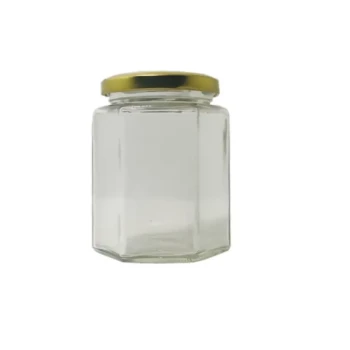
- Hexagonal Glass Honey Jars with Metal Lug Caps Elegant Versatile Packaging
- Digital Honey Refractometer for Precision Measurement of Optimal Honey Quality
- Modern Square Glass Honey Jar with Twist Off Lid
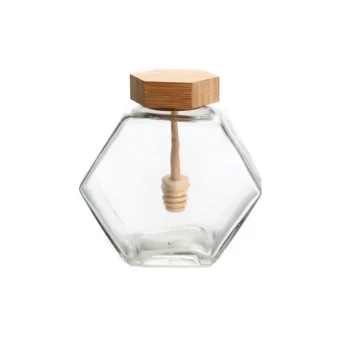
- Hexagonal Glass Honey Jar with Wooden Lid Integrated Dipper Elegant Functional Storage
- Precision Honey Refractometer Instrument for Quality Assessment
People Also Ask
- What is the aesthetic appeal of using glass jars for honey? Elevate Your Brand with Premium Packaging
- What are the logistical challenges associated with using glass jars for honey packaging? Navigating Weight & Fragility
- What are the advantages of glass containers for honey? Elevate Quality and Market Value with Premium Packaging
- What are the technical advantages of using glass jars for honey? Master Commercial Packaging for Premium Purity
- What are the advantages of using glass jars for honey packaging? Preserve Purity & Elevate Your Brand