The Quiet Anxiety of Winter
For a beekeeper, winter is a season of calculated faith. The hives sit silent, wrapped in snow, and the fate of thousands of lives rests on decisions made months ago. The most pressing question is simple: do they have enough food?
This leads to one of the most common and potentially fatal interventions in beekeeping: supplemental feeding. But the impulse to "help" often masks a dangerous assumption. We assume all feed is created equal. It is not.
Understanding the difference between feeding for energy and feeding for growth is the single most important strategic decision a beekeeper makes during the cold months.
The Physics of Survival
A common misconception is that bees hibernate. The reality is far more demanding and beautiful. A honeybee colony in winter is not a sleeping animal; it is a living furnace.
A Colony is a Furnace, Not a Sleeping Bear
To survive freezing temperatures, bees form a tight "winter cluster." They don't sleep. The bees on the outer layer shiver their wing muscles, generating immense heat that warms the colony and protects the queen at its core.
This constant work is incredibly energy-intensive. The colony is actively burning fuel, day and night, for months on end.
The Fuel for the Fire: Honey's Perfect Design
The ideal fuel for this furnace is honey. It's a perfectly engineered energy source, the result of a full season's labor. A beekeeper's first and most important job is to ensure the colony has enough of its own honey to last until spring.
Supplemental feeding is not Plan A. It is an emergency backup system. It is life support.
The Moment of Intervention: When the Fuel Gauge Reads Empty
You engage this backup system only when you have clear evidence of need. The simplest diagnostic is to "heft" the hive—gently lifting it from the back during a brief warm spell. An experienced hand can feel the difference between a hive heavy with honey and one that feels dangerously light.
That lightness is a signal of impending starvation. It’s the moment a beekeeper must act.
Two Levers of Colony Management: Energy and Growth
When you open a hive to provide supplemental feed, you are not just giving food. You are pulling one of two powerful biological levers: Energy or Growth. Pulling the wrong one at the wrong time can be catastrophic.
The Energy Lever: Pure Carbohydrates for Heat
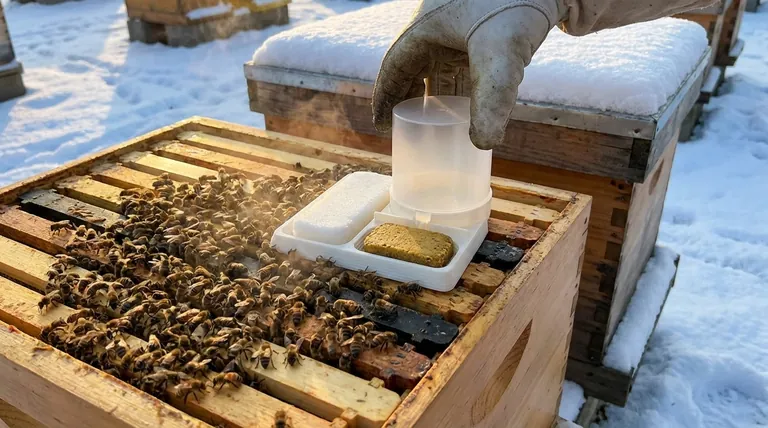
Winter patties are almost pure carbohydrates (sugar). Their function is singular: to provide the raw, immediate energy the cluster needs to continue generating heat.
Think of it as adding more logs to the fire. It's a simple, direct input to maintain the status quo—survival. It sends no other signal to the colony.
The Growth Lever: Protein's Biological Trigger
Pollen patties are fundamentally different. Their key ingredient is protein. In the complex biology of the hive, protein is not just food; it is a powerful signal. It tells the colony that spring has arrived, resources are plentiful, and it is time to raise the next generation.
When nurse bees consume protein, they begin producing royal jelly, which prompts the queen to start laying eggs. You have triggered the growth cycle.
The Catastrophic Mistake: Pulling the Wrong Lever
Feeding a pollen patty in the dead of winter is one of the most common and devastating mistakes a beekeeper can make. You are telling the queen to start laying eggs when the colony's entire focus should be on conserving energy for warmth.
Raising brood is incredibly demanding. The cluster must raise its core temperature significantly (to around 35°C / 95°F), burning through food stores at an accelerated rate.
Now imagine a cold snap hits. The small winter cluster is faced with an impossible choice: keep itself warm, or keep the new, vulnerable brood warm. It cannot do both. The result is chilled brood, a depleted and exhausted colony, and often, total collapse. A well-intentioned act becomes a fatal one.
A Framework for Strategic Feeding
Your feeding decision must be a conscious, strategic choice based on a clear goal. The timing dictates the tool.
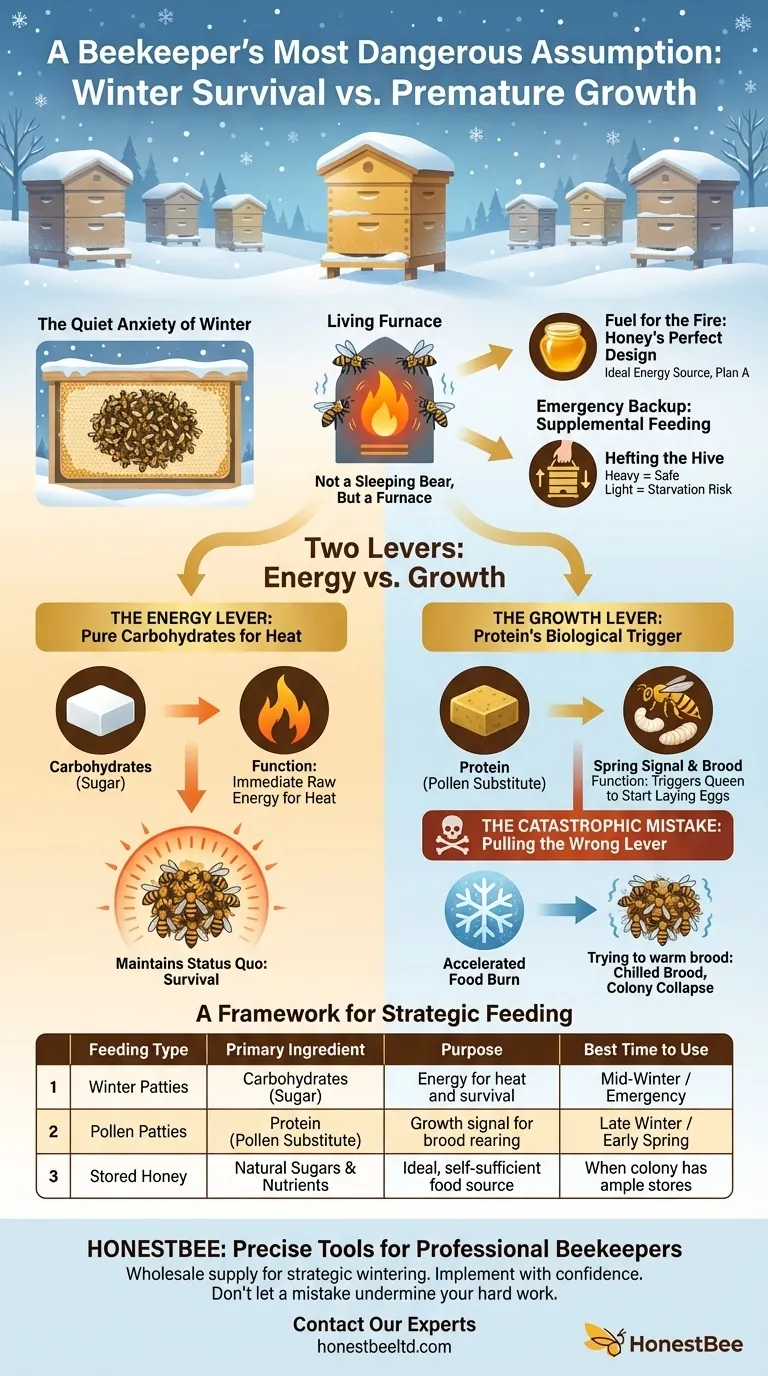
| Feeding Type | Primary Ingredient | Purpose | Best Time to Use |
|---|---|---|---|
| Winter Patties | Carbohydrates (Sugar) | Energy for heat and survival | Mid-Winter / Emergency |
| Pollen Patties | Protein (Pollen Substitute) | Growth signal for brood rearing | Late Winter / Early Spring |
| Stored Honey | Natural Sugars & Nutrients | Ideal, self-sufficient food source | When colony has ample stores |
For commercial apiaries and equipment distributors, managing dozens or hundreds of hives magnifies the importance of this strategic clarity. Mistakes don't just cost a single colony; they impact the viability of an entire operation. Executing the right feeding strategy at scale requires reliable, high-quality supplies that perform exactly as intended.
This is why HONESTBEE focuses exclusively on wholesale supply for professional beekeepers. We provide the precise tools—from energy-rich winter patties to protein-balanced pollen patties—that allow you to implement your wintering strategy with confidence.
Don't let a simple feeding mistake undermine a season's hard work. Ensure your colonies have the right fuel at the right time.
Visual Guide
Related Products
Related Articles
- The Cold Deception: Why Beehive Wintering is About Moisture, Not Warmth
- Beyond Warmth: The Physics of Beehive Survival in Winter
- How to Secure Beehive Covers: Weatherproof Strategies for Every Hive Type
- Beyond the Cold: The Physics of a Winter Beehive and Why Our Instincts Fail Us
- How to Time Hive Insulation for Maximum Winter Bee Survival