The Beekeepers' Misguided Instinct
We tend to think about a beehive in winter the way we think about our own homes. Our instinct, shaped by millennia of seeking shelter, is to seal every crack and pile on insulation to trap heat. We want to make the hive warm.
This is a profound, and often fatal, psychological error.
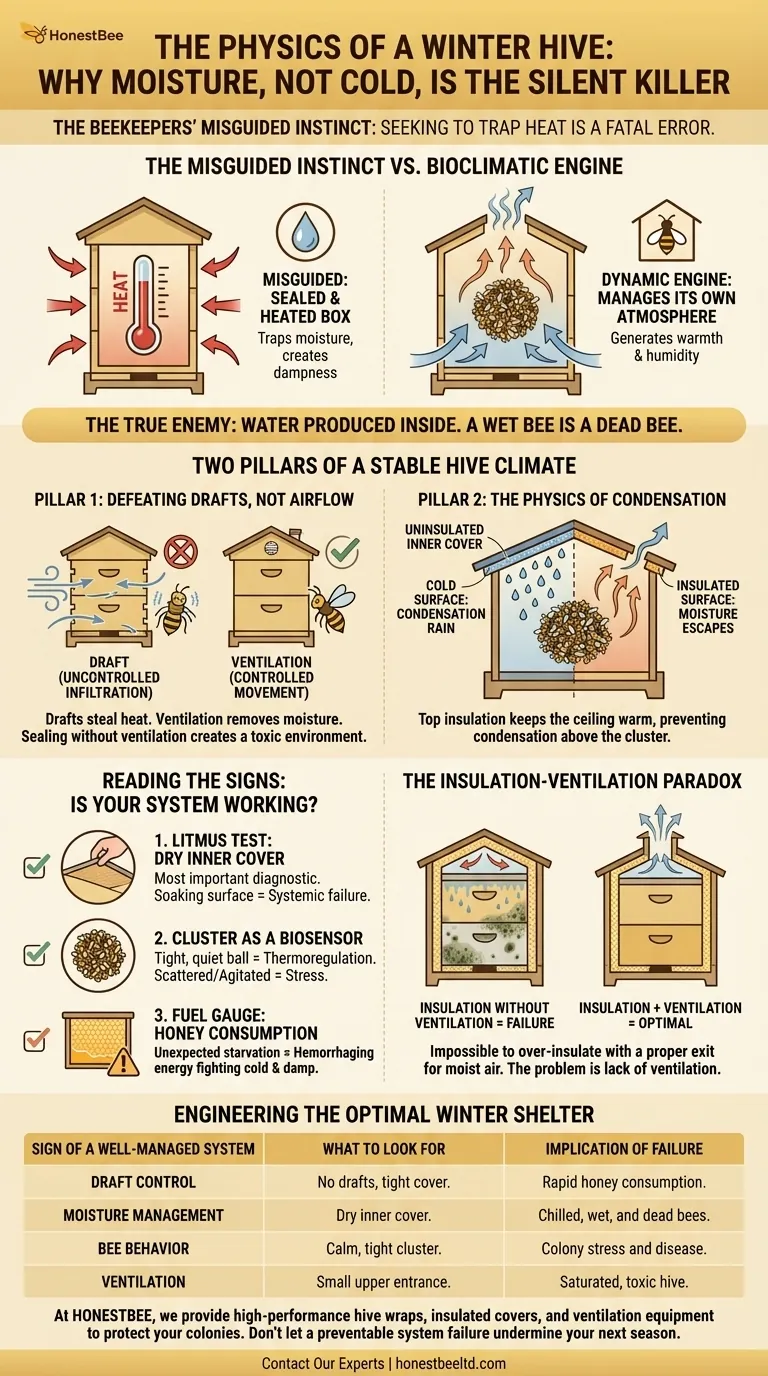
A beehive is not a passive box to be heated. It is a dynamic bioclimatic engine. The bee cluster generates its own warmth and humidity. Our job is not to heat it, but to help the colony manage its own atmosphere.
The true enemy in winter is not the cold outside, but the water the bees produce inside. A wet bee is a dead bee, and the primary cause of death is often condensation dripping from the hive's own ceiling.
The Two Pillars of a Stable Hive Climate
To create a survivable winter environment, we must stop thinking like homeowners and start thinking like systems engineers. The entire goal is to create a dry, draft-free shelter that allows the colony to maintain equilibrium. This rests on two pillars.
Pillar 1: Defeating Drafts, Not Airflow
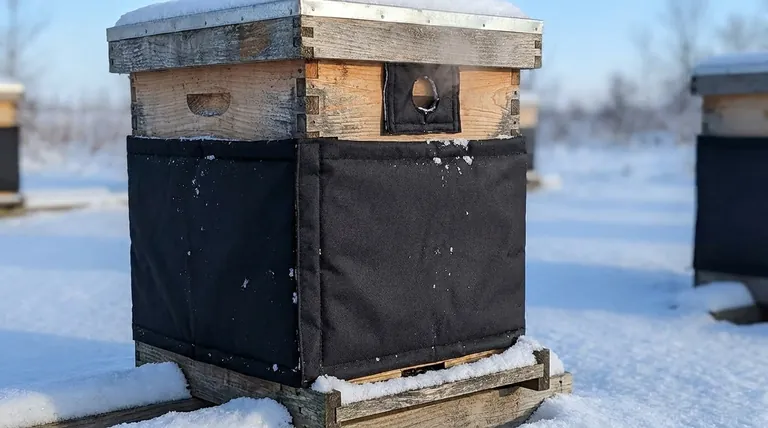
A draft is uncontrolled air infiltration. It is a chaotic force that steals heat and forces the colony to burn through precious honey stores just to stay warm. Sealing gaps between hive bodies and ensuring a tight-fitting outer cover is like creating a proper building envelope. It is non-negotiable.
But this is not the same as eliminating ventilation. Ventilation is the controlled, intentional movement of air. It is essential for removing the moisture the bees produce. Sealing a hive completely is like living in a plastic bag—it becomes a toxic, suffocating environment.
Pillar 2: The Physics of Condensation
A winter cluster's respiration releases a significant amount of warm, moist air. This creates a pocket of tropical humidity within the hive.
When this warm, moist air rises and hits a cold surface—like an uninsulated inner cover—it rapidly cools past its dew point. The water vapor instantly condenses into liquid water, forming droplets that rain back down on the very bees that produced it.
The solution is not to eliminate the moisture, but to change the surface it touches. Top insulation is the critical intervention. It keeps the inner surface of the hive ceiling warm, preventing condensation from forming directly above the cluster.
Reading the Signs: Is Your System Working?
During a quick cold-weather check, you don't need to disturb the colony deeply. The hive itself will tell you if its internal climate system is stable.
The Litmus Test: A Dry Inner Cover
This is your most important diagnostic. Briefly lift the telescoping outer cover. The underside of the inner cover should be dry. A little moisture at the very edges might be acceptable, but a soaking, dripping surface is a sign of systemic failure. Your top insulation is inadequate.
The Cluster as a Biosensor
On a cold day, the bees should be in a tight, quiet ball. They are in a state of controlled thermoregulation. If you see bees scattered, agitated, or lining the walls, it indicates environmental stress—likely from drafts or chilling moisture.
The Fuel Gauge: Honey Consumption
A colony fighting a losing battle against cold and damp will burn through its honey stores at a shocking rate. If a hive starves unexpectedly, it wasn't just hungry; it was likely hemorrhaging energy to compensate for a poorly managed environment.
The Insulation-Ventilation Paradox
Many beekeepers fear "over-insulating." The real danger is far more specific: insulation without ventilation.
A completely sealed hive, no matter how insulated, will fail. It traps humidity, leading to widespread condensation, mold, and stressed bees.
The key is to provide a small, dedicated exit path for moisture. A small upper entrance or a notch in the inner cover acts as a chimney. It allows the warm, humid air to escape, working in concert with your top insulation to keep the internal environment dry.
It is nearly impossible to over-insulate a hive that has a proper exit for moist air. The problem is never too much insulation; it is always a lack of ventilation.
Engineering the Optimal Winter Shelter
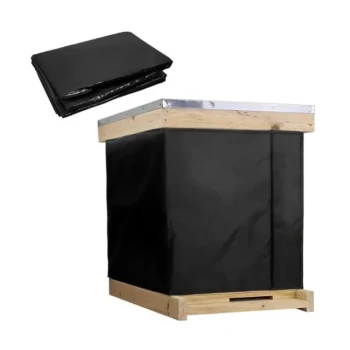
For commercial apiaries, where every colony represents a significant investment, winterization cannot be left to chance. It requires a systematic approach and professional-grade equipment designed for performance and durability.
The goal is to create a complete system that manages both drafts and moisture.
| Sign of a Well-Managed System | What to Look For | Implication of Failure |
|---|---|---|
| Draft Control | No drafts from cracks; sealed boxes; tight outer cover. | Rapid honey consumption. |
| Moisture Management | Dry inner cover; no condensation above the cluster. | Chilled, wet, and dead bees. |
| Bee Behavior | Calm, tight, centered cluster. | Colony stress and disease. |
| Ventilation | Small upper entrance allows moist air to escape. | A saturated, toxic hive. |
At HONESTBEE, we provide the high-performance hive wraps, insulated covers, and ventilation equipment engineered to solve these exact challenges. Our wholesale-focused operation ensures that commercial apiaries and distributors have access to reliable solutions that protect their colonies and their bottom line. Don't let a preventable system failure undermine your next season.
Visual Guide
Related Products
- Professional Insulated Winter Hive Wrap for Beekeeping
- Professional Insulated Plastic Bee Hives
- Inner Beehive Cover for Beekeeping Bee Hive Inner Cover
- Stainless Steel Round Beehive Air Vents for Ventilation
- Metal Hive Feet Bee Hive Stand for Ant Protection
Related Articles
- The Cold Deception: Why Beehive Wintering is About Moisture, Not Warmth
- Beyond Warmth: The Physics of Beehive Survival in Winter
- How to Secure Beehive Covers: Weatherproof Strategies for Every Hive Type
- Beyond the Cold: The Physics of a Winter Beehive and Why Our Instincts Fail Us
- How to Time Hive Insulation for Maximum Winter Bee Survival