The Beekeeper’s Paradox
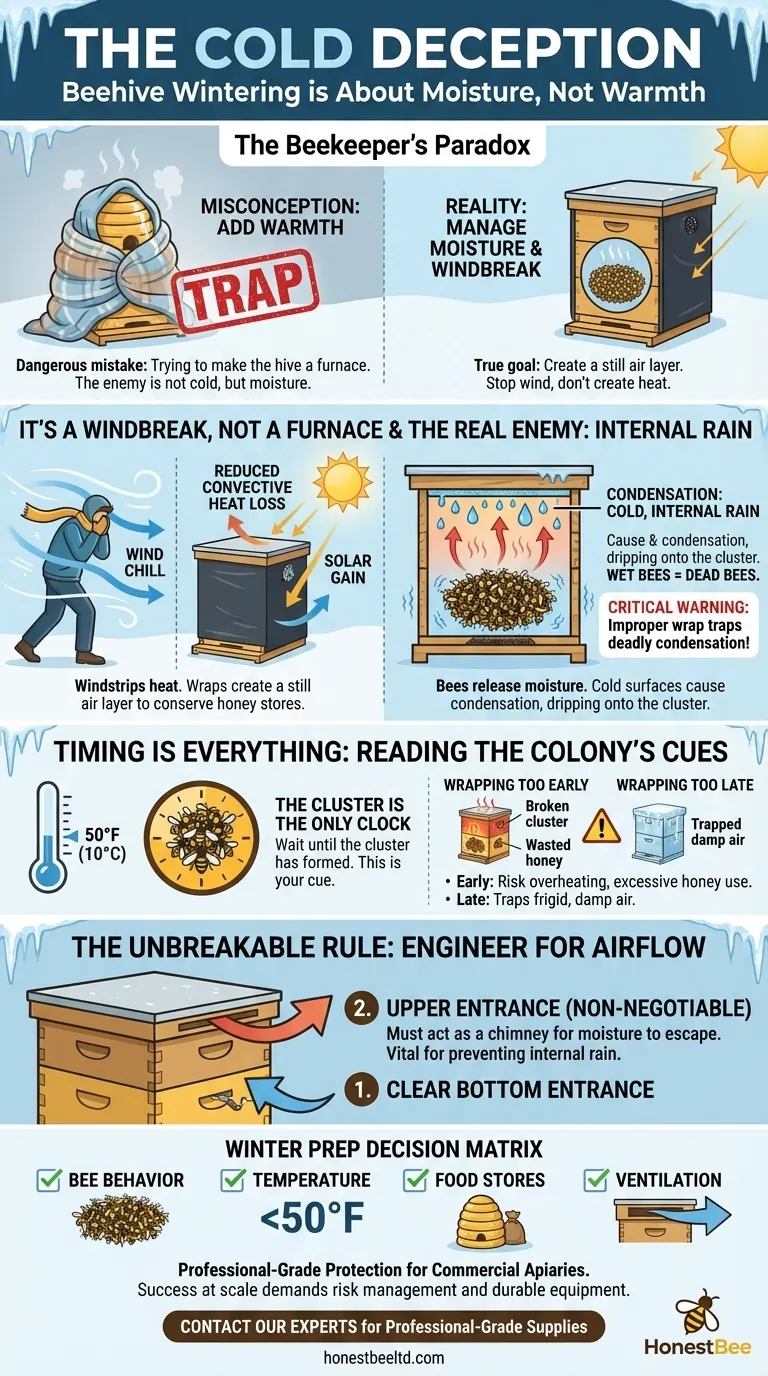
Every fall, a well-meaning beekeeper feels the primal urge to protect their colonies from the coming cold. The instinct is to add warmth, to bundle the hive up like a child in winter.
This instinct is a trap.
The most dangerous mistake in winter beekeeping is born from a misunderstanding of physics. We think the enemy is cold. But for a healthy bee colony, the true killer is often the beekeeper's own misplaced efforts, which create an even deadlier threat: water.
It's a Windbreak, Not a Furnace
Imagine standing in a 30°F (-1°C) wind. Now imagine standing in 30°F air with no wind. The temperature is the same, but the experience is radically different. The wind strips heat from your body relentlessly.
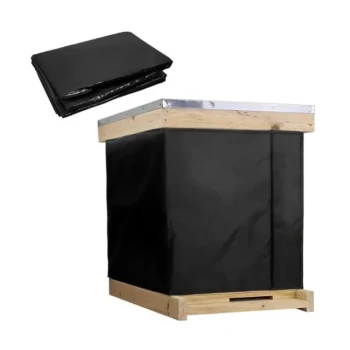
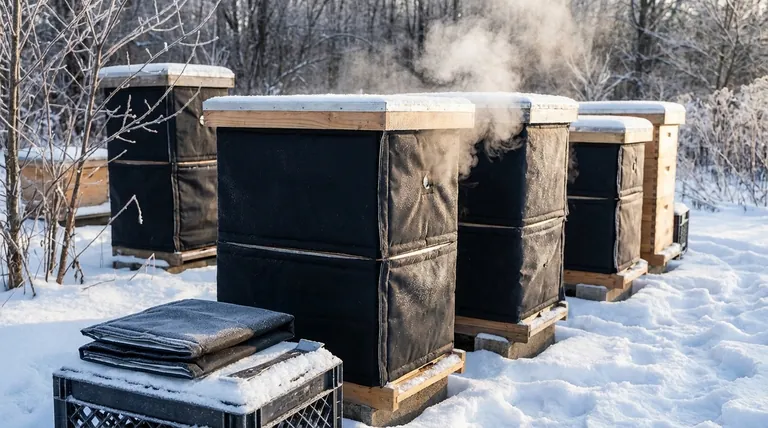
It’s the same for a beehive. The primary purpose of a winter wrap is not to generate heat, but to stop the wind from stealing the heat the bees produce themselves. By creating a still layer of air, a wrap dramatically reduces this convective heat loss, allowing the bee cluster to conserve its precious honey stores.
A dark wrap adds a secondary benefit: on a clear winter day, it absorbs solar radiation, passively warming the hive wall and easing the colony's energy burden just enough to make a difference.
The Real Enemy: Internal Rain
Bees, through the simple act of breathing and metabolizing honey, release a surprising amount of warm, moist air. In a cold hive, this air rises and hits the freezing-cold inner cover.
The result is condensation.
This condensation drips back down, creating a cold, internal rain that falls directly onto the winter cluster. Wet bees are dead bees. They cannot survive being chilled and damp, no matter how much honey they have stored.
Proper winterization is therefore a battle against moisture. A hive wrap, if improperly applied, becomes a plastic tomb that traps this deadly condensation.
Timing is Everything: Reading the Colony's Cues
The calendar is a poor guide for when to wrap. The bees themselves will tell you when they are ready.
The Cluster Is the Only Clock That Matters
The single most important signal is the formation of the winter cluster. As temperatures consistently fall, the bees will cease flying and gather into a tight, shivering ball to generate and share warmth.
Wrapping before this happens can cause confusion, disrupt their final winter preparations, and risk overheating them on a warm autumn day. Wait until the cluster has formed. This is your cue that the hive has shifted into survival mode.
The Thermometer Is Your Final Check
A good rule of thumb is to act when daytime temperatures consistently stay below 50°F (10°C) and nighttime temperatures are nearing or dipping below freezing.
Your goal is to have the wrap on before the first deep freeze or major snowstorm. Working in frigid conditions is stressful for you and risks breaking the vital propolis seals the bees have painstakingly created to weatherproof their home.
The High Cost of Miscalculation
The decision to wrap is a strategic one with real consequences. Acting too early is just as dangerous as acting too late.
- Wrapping Too Early: If you wrap during a warm spell, the hive can overheat. This may cause the cluster to break prematurely or trick the queen into laying a new round of brood. This late-season brood rears at an astronomical cost, forcing the colony to burn through its winter honey at an unsustainable rate.
- Wrapping Too Late: If you wait until after a deep cold has set in, you risk trapping that frigid, damp air inside the wrap. The wrap will prevent the sun from warming the hive walls, making the interior conditions even worse.
The Unbreakable Rule: Engineer for Airflow
A wrap without proper ventilation is worse than no wrap at all. This cannot be overstated.
You must ensure two things:
- The bottom entrance is clear and unobstructed.
- You provide an upper entrance for moisture to escape.
This upper vent is non-negotiable. It can be a small hole drilled in the top super or a shim placed under the inner cover. It acts as a chimney, allowing the warm, moisture-laden air produced by the bees to exit the hive before it can condense and rain down on the cluster.
Winter Prep Decision Matrix
| Key Factor | Ideal Indicator | Why It Matters |
|---|---|---|
| Bee Behavior | The winter cluster has formed. | Signals the colony is in its natural wintering state. |
| Temperature | Consistently below 50°F (10°C). | Protects before the harshest weather arrives. |
| Food Stores | Hive is heavy with honey/syrup. | A wrap cannot save a starving colony. Check this first. |
| Ventilation | A clear upper entrance exists. | Prevents deadly condensation. This is the critical step. |
For a commercial apiary, where dozens or hundreds of colonies represent a significant investment, these are not just husbandry decisions—they are acts of risk management. Success at scale demands precision, which requires not just the right knowledge but also equipment built for the job. Professional-grade, durable wraps and engineered ventilation systems aren't a luxury; they are essential tools for protecting your assets through the harshest conditions.
For professional-grade supplies designed for the rigors of commercial apiaries, we can help ensure your colonies are properly protected. Contact Our Experts
Visual Guide
Related Products
- Professional Insulated Winter Hive Wrap for Beekeeping
- Inner Beehive Cover for Beekeeping Bee Hive Inner Cover
- Premium Three Layer Ventilated Bee Suit with Round Veil
- Professional Square Folding Wire Mesh Beekeeping Veil
- Three-Layer Ventilated Beekeeper Suit with Structured Fencing Veil
Related Articles
- Beyond Warmth: The Physics of Beehive Survival in Winter
- How to Secure Beehive Covers: Weatherproof Strategies for Every Hive Type
- Beyond the Cold: The Physics of a Winter Beehive and Why Our Instincts Fail Us
- How to Time Hive Insulation for Maximum Winter Bee Survival
- Beyond Warmth: The Critical Thermodynamics of Wintering Honey Bees