The Misleading Comfort of a Winter Jacket
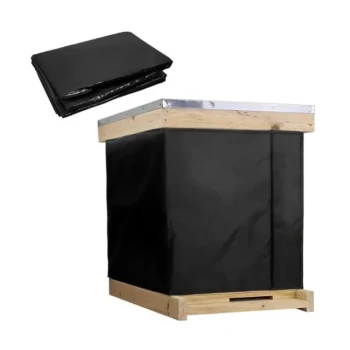
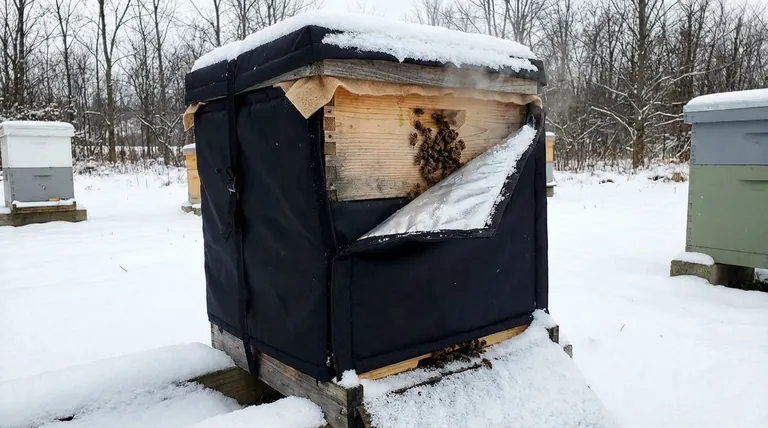
Picture a beekeeper in late autumn, carefully wrapping a hive in black insulation. The gesture feels intuitive, almost paternal. We put on a coat when it's cold; surely our bees need one too.
This mental model, while well-intentioned, is dangerously incomplete. It frames the problem as a simple battle against cold.
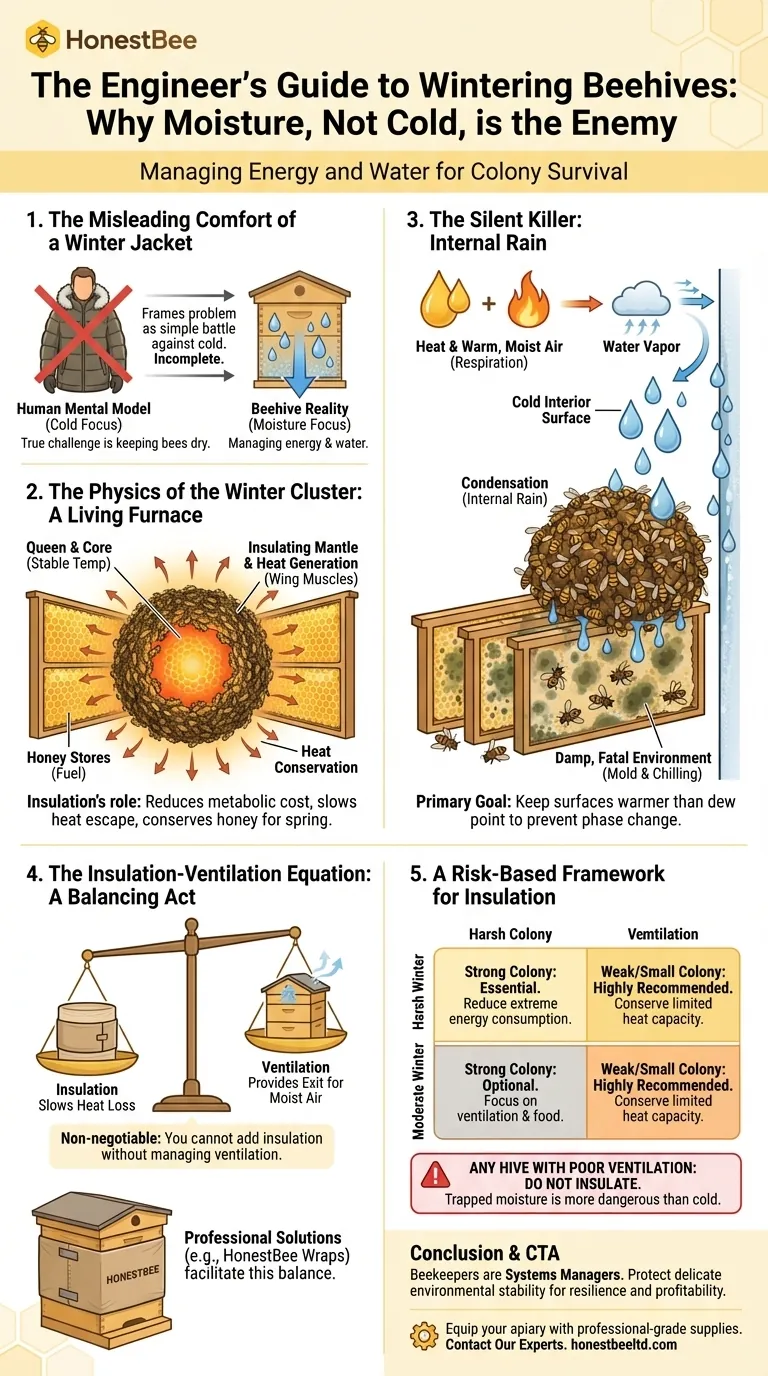
The reality is that a strong honey bee colony is a masterful thermoregulatory engine. The true challenge of winter isn't keeping the bees warm—it's keeping them dry. The real engineering problem is managing energy and water.
The Physics of the Winter Cluster
Honey bees don't hibernate. They form a living furnace.
Inside the dark, quiet hive, tens of thousands of bees create a dense "winter cluster." At its core, the queen remains safe at a stable temperature. The bees on the outer layers create a thick, insulating mantle, while bees inside generate heat by vibrating their powerful wing muscles.
This process is fueled by one thing: honey. Every shiver, every degree of heat maintained, consumes their meticulously stored energy reserves. Insulation's first job is not to add heat, but to reduce the rate at which the cluster's self-generated heat escapes. It lowers the metabolic cost of survival.
A well-insulated hive allows the colony to burn less fuel, ensuring they have more honey left for the critical population boom of early spring.
The Silent Killer: Internal Rain
As the colony consumes honey and generates heat, it releases an enormous amount of warm, moist air through respiration. Here, we encounter the true villain of winter survival.
When this water vapor hits a cold interior surface of the hive—the inner cover, the walls—it instantly condenses into liquid water.
This condensation becomes a deadly, internal rain. It can drip down onto the cluster, chilling the bees, fostering mold on the frames, and creating a damp, fatal environment. More colonies are lost to moisture-related stress than to cold alone.
The primary goal of insulation is to keep the hive's interior surfaces warmer than the dew point, preventing this phase change from vapor to liquid. It’s a tool for humidity control, not just a blanket.
The Insulation-Ventilation Equation
This brings us to a non-negotiable principle: you cannot add insulation without managing ventilation.
Insulating a hive without providing an escape route for moist air is the worst of all worlds. You create a thermos that traps water, guaranteeing condensation and a damp, sick colony.
Effective wintering is a balancing act.
- Insulation slows heat loss through the hive walls and top.
- Ventilation provides an exit path for the water vapor produced by the bees.
This is often achieved with a small upper entrance or a slightly propped inner cover, allowing the moist air to escape. Professional-grade equipment is designed to facilitate this balance. High-quality hive wraps from suppliers like HONESTBEE are built to fit snugly around the hive body while leaving critical entrances and ventilation points unobstructed.
A Risk-Based Framework for Insulation
The decision to insulate is not a universal "yes" or "no." It's a strategic choice based on an assessment of risk factors.
Your Climate's Demands
In regions with months of deep freezes and biting winds, insulation shifts from a helpful aid to an essential component of survival. The energy demand on the colony is simply too high to overcome without assistance.
Your Colony's Strength
A massive, populous colony has significant thermal mass and a huge workforce to generate heat. A smaller nucleus colony or a weaker hive has far less capacity. For them, insulation provides critical support, helping them conserve what little heat they can produce.
The Decision Matrix
| Condition | Insulation Recommendation | Primary Rationale |
|---|---|---|
| Harsh Winter & Strong Colony | Essential | Reduce extreme energy consumption. |
| Moderate Winter & Strong Colony | Optional | Focus on ventilation and ample food stores. |
| Any Climate & Weak/Small Colony | Highly Recommended | Conserve limited heat-generating capacity. |
| Any Hive with Poor Ventilation | Do Not Insulate (Fix this first) | Trapped moisture is more dangerous than cold. |
Ultimately, a beekeeper's job is to be a thoughtful systems manager. We are not just protecting bees from the cold; we are helping them maintain the delicate environmental stability they need to thrive.
For commercial apiaries, ensuring colonies not only survive but emerge from winter strong and ready for pollination or honey flow is a matter of profitability. Investing in the right equipment is investing in a more resilient and productive operation.
If you're ready to equip your apiary with durable, professional-grade supplies designed for the rigors of commercial beekeeping, we can help you build the right system. Contact Our Experts
Visual Guide
Related Products
- Professional Insulated Plastic Bee Hives
- Professional Insulated Winter Hive Wrap for Beekeeping
- Inner Beehive Cover for Beekeeping Bee Hive Inner Cover
- Stainless Steel Round Beehive Air Vents for Ventilation
- Metal Hive Feet Bee Hive Stand for Ant Protection
Related Articles
- Plastic Bee Hives: A Smart Investment for Modern Beekeepers
- How to Optimize Beehive Insulation: A Data-Driven Guide for Beekeepers
- How to Insulate Beehives for Winter Survival: A Regional Guide for Beekeepers
- How to Time Hive Insulation for Maximum Winter Bee Survival
- Beyond Warmth: The Critical Thermodynamics of Wintering Honey Bees