The Unseen Physics of a Beehive Foundation
A beekeeper pulls a frame from a super. The beeswax foundation within seems simple—a passive sheet of wax waiting for the colony's attention. But its condition is not passive at all. It is the result of a dozen unseen forces, from the temperature in the warehouse where it was stored to the slight tremor of the truck that delivered it.
The performance of a beeswax foundation sheet isn't governed by a date stamped on a box. It is governed by physics and chemistry. Understanding this is a critical psychological shift for any commercial apiary, moving from viewing foundation as a mere consumable to treating it as a strategic asset that directly influences hive productivity and profitability.
Thermal Integrity: The Foundation's Primary Vulnerability
Beeswax is a remarkable natural polymer, but its structural integrity is deeply sensitive to temperature. This sensitivity is its most significant vulnerability in a commercial operation.
The Enemy of Structure: Heat
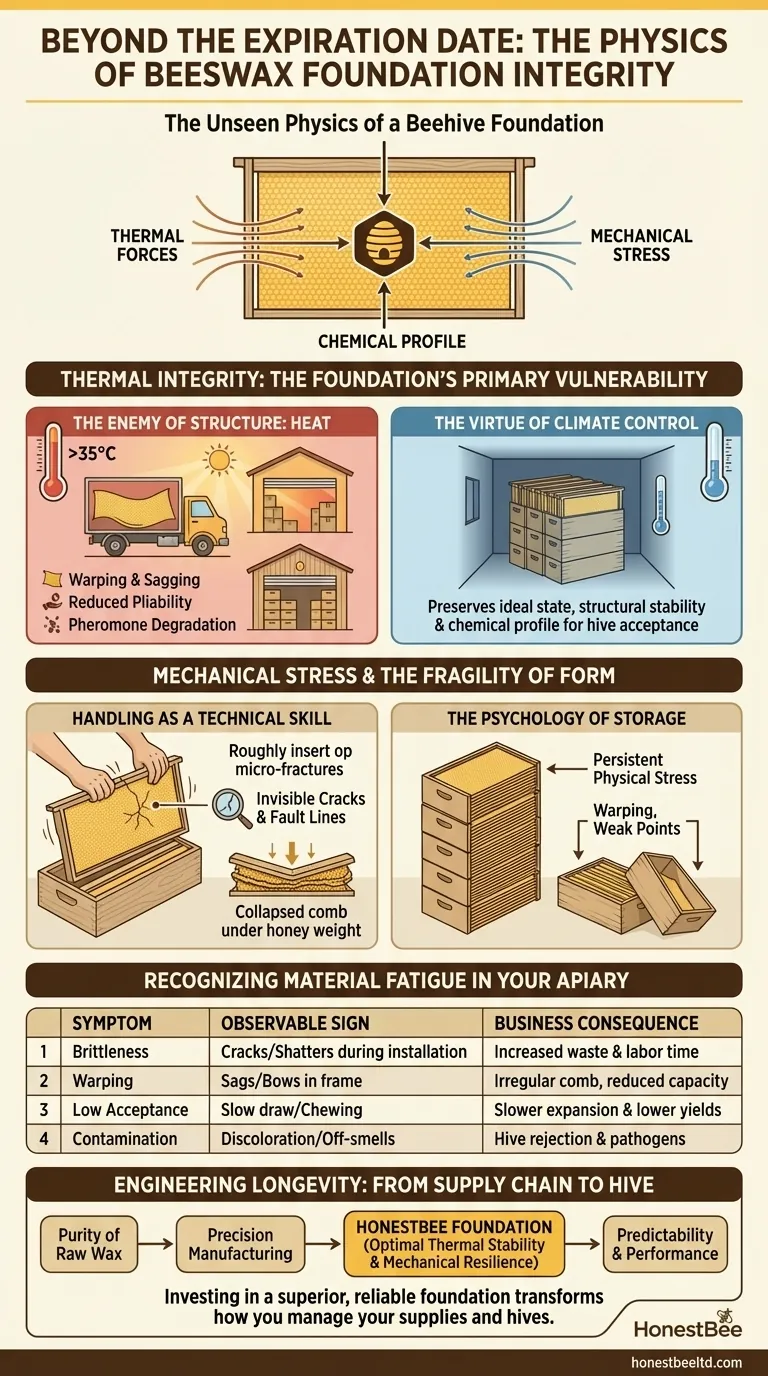
Hot water might melt a consumer kitchen wrap, but in an apiary, the consequences of heat are systemic. Temperatures above 35°C (95°F) don't just soften wax; they can begin to relax its molecular structure. This leads to:
- Warping and Sagging: Sheets stored in a hot warehouse or transported in a sun-baked truck lose their perfect flatness, forcing bees to build inefficient, irregular comb.
- Reduced Pliability: Wax that has been heat-cycled can become brittle once it cools, leading to cracks during installation into frames.
- Pheromone Degradation: The subtle, attractive scent of pure beeswax can be diminished by excessive heat, making the foundation less appealing for the bees to draw out.
The Virtue of Climate Control
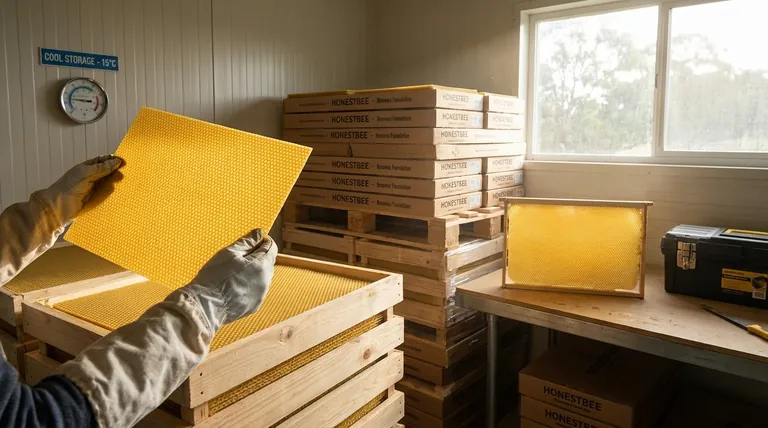
The principle of using "cool water" on a kitchen wrap scales up to a mandate for climate control in a professional setting. Proper storage isn't about tidiness; it's about preserving the material's ideal state.
Storing foundation in a cool, dark environment maintains its structural stability and chemical profile, ensuring that when it's placed in the hive, it is in the exact condition the manufacturer intended—and that the bees expect.
Mechanical Stress and the Fragility of Form
Like any precisely engineered material, a beeswax foundation sheet is susceptible to mechanical damage. The accumulation of small stresses can lead to systemic failure within the hive.
Handling as a Technical Skill
Rough handling, forcing sheets into frames, or embedding wires too aggressively can create micro-fractures. These invisible cracks become fault lines. Under the weight of honey and brood, these weaknesses can manifest as collapsed comb—a catastrophic failure that results in lost resources and a massive expenditure of colony energy to repair.
The Psychology of Storage
In a large-scale operation, the temptation to stack pallets too high or store boxes on their sides to save space is immense. This is a classic example of a short-term efficiency creating a long-term liability. Improper storage introduces persistent physical stress, leading to warping and weak points that compromise every sheet in the case.
Recognizing Material Fatigue in Your Apiary
A degraded foundation sheet sends clear signals. Recognizing them before they impact the hive is crucial for maintaining a productive operation. The signs of failure aren't just about a "worn-out" product; they are symptoms of underlying issues in storage or handling.
| Symptom | Observable Sign in the Apiary | Business Consequence |
|---|---|---|
| Brittleness | Foundation cracks or shatters during frame installation. | Increased inventory waste and labor time. |
| Warping | Foundation sags or bows within the frame post-installation. | Bees build irregular comb, reducing honey/brood capacity. |
| Low Acceptance | Bees are slow to draw out the comb, or they chew it away. | Slower colony expansion and lower honey yields. |
| Contamination | Discoloration or off-smells from poor storage conditions. | Potential for hive rejection and introduction of pathogens. |
Engineering Longevity: From Supply Chain to Hive
The lifespan of a beeswax foundation begins long before it arrives at your apiary. It starts with the purity of the raw wax and the precision of the manufacturing process. A foundation sheet is not a commodity; it is an engineered product.
High-quality foundation from a supplier like HONESTBEE is manufactured for optimal thermal stability and mechanical resilience. We understand that for commercial apiaries and equipment distributors, foundation isn't just wax—it's the structural backbone of a productive hive. Our processes ensure that every sheet provides the perfect blend of rigidity and pliability required to withstand the rigors of a commercial operation.
Investing in a superior, reliable foundation minimizes the downstream costs of failed comb, slow build-outs, and wasted inventory. It’s an investment in predictability and performance. Understanding these material principles transforms how you manage your supplies and your hives. To ensure your operation is built on the most reliable foundation, Contact Our Experts.
Visual Guide
Related Products
- Beeswax Foundation Sheets Beehive Foundation for Wholesale
- Colorful Silicone Beeswax Foundation Mold Mould for Beekeeping
- Notebook Style Beeswax Foundation Mould Wax Foundation Mold
- Beeswax Machine Press Embosser Wax Foundation Mold Printer Bee Hive Equipment Making Sheet
- Fully Automatic Beeswax Embossing Machine Foundation Mill
Related Articles
- How to Choose and Use Budget-Friendly Tools for Durable Beeswax Foundations
- How Beeswax Foundations Enhance Colony Health and Beekeeping Efficiency
- From Liquid to Lattice: Mastering Thermal Control in Beeswax Foundation Stacking
- Why Your Beeswax Foundation Sheets Keep Cracking—And How to Stop It for Good
- Why Your Beeswax Foundation Fails: A Guide to Preventing Costly Warping and Breakage