The Hidden Drag on a Growing Apiary
Imagine a commercial apiary. The honey is exceptional, demand is surging from distributors, and everything points to growth. Yet, the owner feels stuck, spending more time managing the bottling line than the business itself.
The bottleneck isn't the bees or the harvest; it's the final, seemingly simple step of applying a label.
This scenario reveals a fundamental business truth: the most significant costs are often not on the balance sheet. They are the invisible drags on efficiency, the psychological burden of managing repetitive manual work, and the constant, low-level anxiety of human error. The true cost of manual labeling is the strategic opportunity lost while you're busy fixing crooked labels.
Deconstructing "Labor Cost"
When we talk about reducing "labor cost," the mind immediately goes to headcount. But that's a dangerously incomplete picture. The real expense of a manual process is a complex system of direct and indirect drains on the business.
From a Workforce to a System Operator
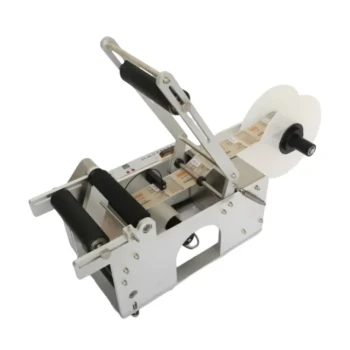
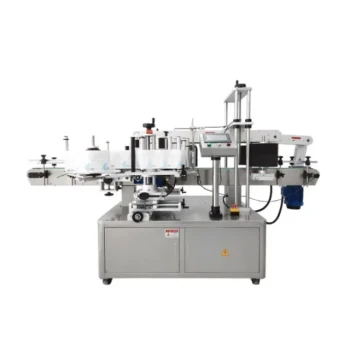
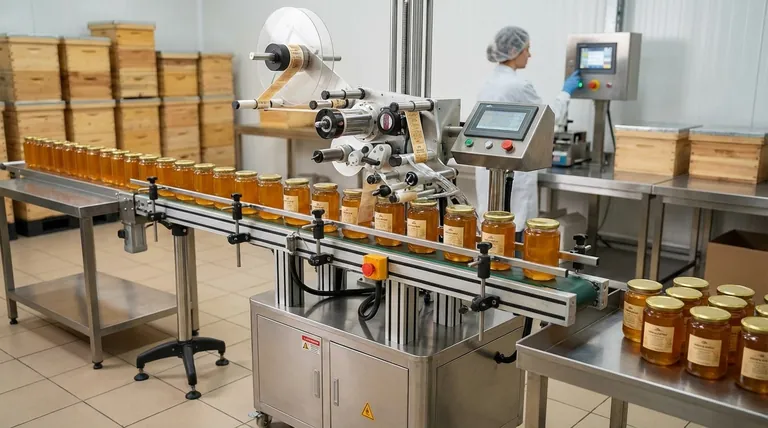
The most obvious saving is reducing the number of hands needed to perform a single task. An automatic labeling machine turns a team of laborers into one or two skilled operators.
This isn't about eliminating jobs; it's about elevating them. It frees your most valuable asset—your people—from monotonous repetition and allows them to focus on higher-value work that requires human ingenuity, like quality control, hive health, or developing new product lines.
The Invisible Taxes of Manual Work
Beyond salaries, a manual labeling process imposes several "invisible taxes" on your operation:
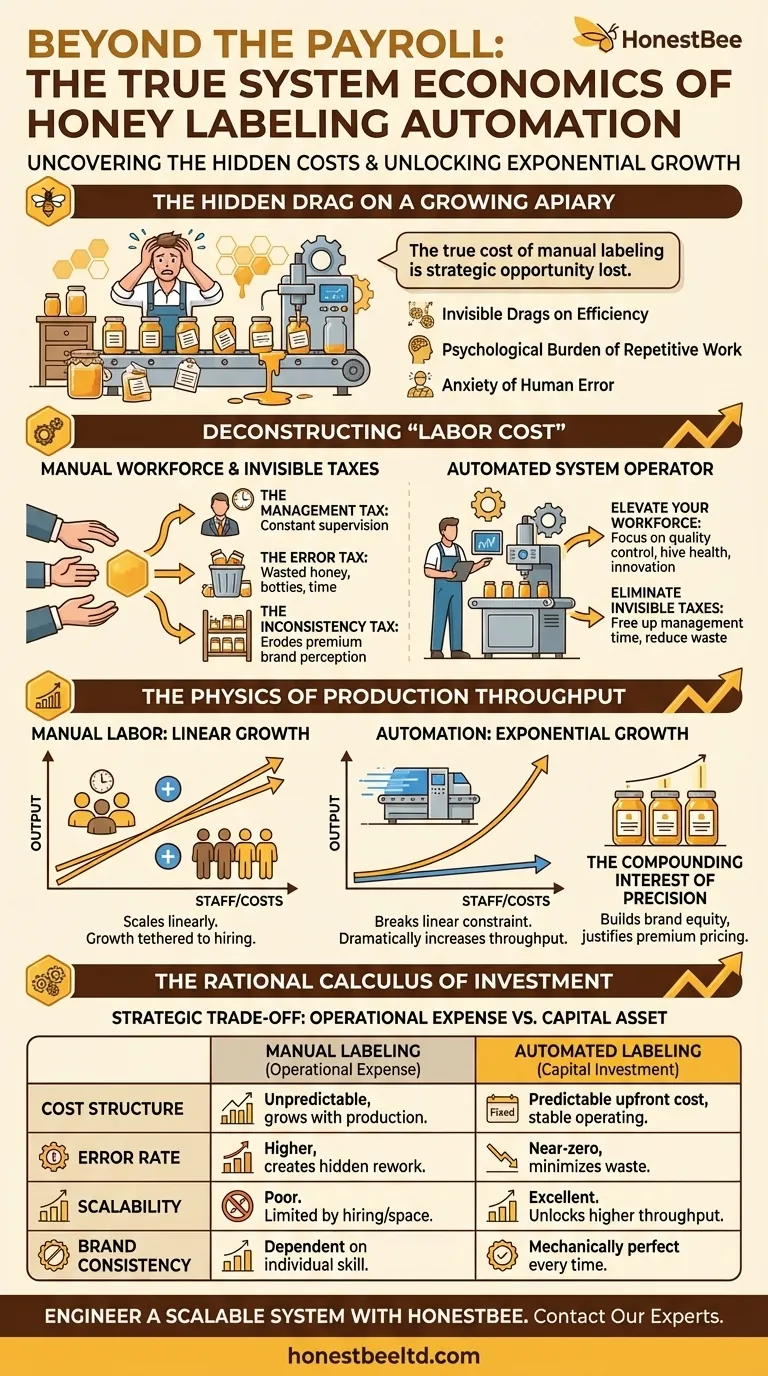
- The Management Tax: Constant supervision is required to maintain speed and quality. This is a direct drain on a manager's time and focus—time that could be spent on sales, strategy, or supplier negotiations.
- The Error Tax: Every misplaced, wrinkled, or incorrect label is more than just a wasted sticker. It's wasted honey, a wasted bottle, and wasted time spent on rework. It's a production process moving backward.
- The Inconsistency Tax: Humans are not machines. Slight variations from one bottle to the next are inevitable. Over thousands of units, this inconsistency slowly erodes the premium look of your brand on a crowded shelf.
The Physics of Production Throughput
Automating the labeling process doesn't just reduce costs; it fundamentally changes the physics of your production capacity. It allows your business to escape a trap that snares many growing companies.
Escaping Linear Growth
Manual labor scales linearly. To double your output, you must roughly double your labeling staff, along with all the associated "invisible taxes." Your growth is directly tethered to your ability to hire and manage more people.
Automation breaks this linear constraint. A single machine can dramatically increase throughput, allowing you to meet a sudden large order from a new distributor without the panic of hiring and training a temporary workforce. It transforms your growth potential from linear to exponential.
The Compounding Interest of Precision
A perfectly applied label, repeated 10,000 times, does more than look good. It builds brand equity. This consistency creates a perception of quality and professionalism that customers and distributors recognize, often subconsciously.
This isn't a soft benefit; it's a hard financial asset. It justifies a premium price point and builds the trust necessary for long-term distributor relationships. Precision, when applied at scale, compounds like interest.
The Rational Calculus of Investment
Of course, a labeling machine is a significant capital investment. But framing it as a simple "cost" is a mistake. It is a strategic trade-off.
| Factor | Manual Labeling (Operational Expense) | Automated Labeling (Capital Investment) |
|---|---|---|
| Cost Structure | Variable, unpredictable, and grows with production. | Fixed, predictable upfront cost with low, stable operating costs. |
| Error Rate | Higher and inconsistent, creating hidden rework costs. | Near-zero, minimizing material waste and lost time. |
| Scalability | Poor. Limited by hiring, training, and physical space. | Excellent. Unlocks higher throughput without proportional costs. |
| Brand Consistency | Dependent on individual skill and attention. | Mechanically perfect, ensuring a professional look every time. |
You are swapping an unpredictable, inefficient, and scalable operational expense for a predictable, highly efficient capital asset.
For commercial apiaries and beekeeping equipment distributors, the choice isn't about artisanship versus automation. It's about building a resilient operation capable of seizing market opportunities. High-quality automated systems, like those supplied by HONESTBEE, are engineered for the demands of commercial-scale production, offering the reliability and speed necessary to compete and grow.
This isn't just about sticking labels on jars. It's about designing a better business. If you are ready to transition from managing a manual process to engineering a scalable system, Contact Our Experts.
Visual Guide
Related Products
- Fully Automatic Honey Filling Packaging Machine for Processing Line
- Automatic Single-Dose Snap & Squeeze Honey Sachets Packing Machine
- Automatic Honey Filling and Filtering Machine for Beekeeping Bottle Filling
- Semi Automatic Small Honey Bottle Filling Machine Honey Filler
- Manual Honey Filling Machine Bottling Machine for Honey
Related Articles
- The Bottleneck and the Bottom Line: A Systems Approach to Choosing Your Honey Filling Machine
- Are Manual Honey Filling Methods Bottlenecking Your Apiary's Growth?
- The Unseen Cost of Manual Honey Filling: A Case for Automation
- The Bottleneck and the Balance Sheet: A Strategic Guide to Honey Filling Machines
- The Bottleneck in a Bottle: Why Manual Honey Filling Limits Your Apiary's Growth