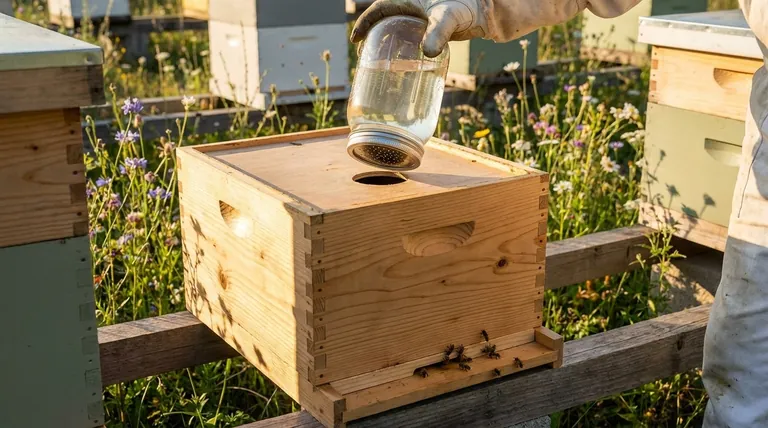
A Defect or a Deliberate Design?
Unboxing new beekeeping equipment comes with a sense of anticipation. You imagine the colony that will soon inhabit it. But then you see it: a perfectly drilled hole, right in the center of the lid for your new 5-frame nucleus box.
The immediate human reaction is to suspect a mistake. A flaw. A defect that will let in rain and pests.
This is a common psychological bias. We often misinterpret features we don't immediately understand as errors. In reality, this hole is not a flaw; it's a mark of thoughtful engineering. It is an invitation to manage your colony with greater precision and efficiency.
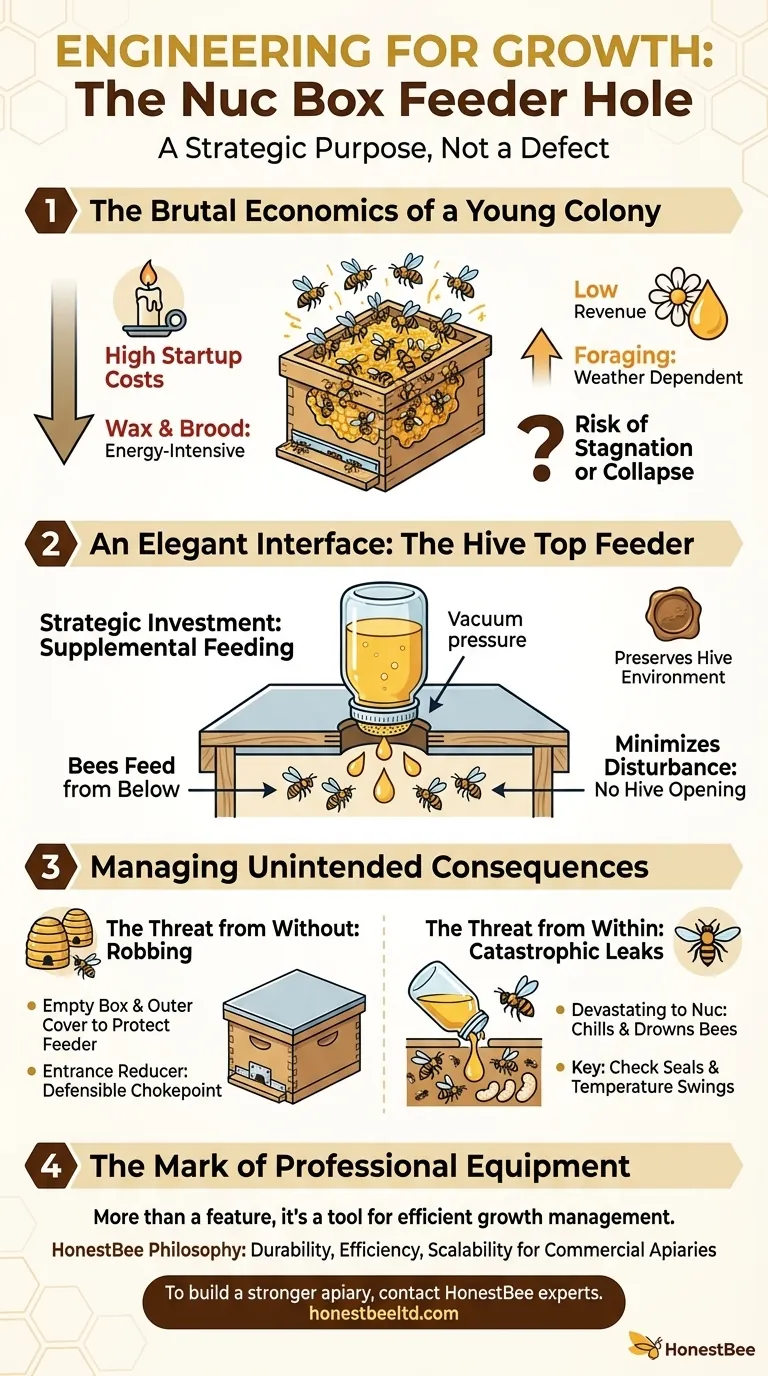
The Brutal Economics of a Young Colony
Think of a nucleus colony, or "nuc," as a startup. It has a small, energetic team, a clear mission (to grow), but very limited capital and resources.
The colony's primary "startup costs" are immense. It must draw out fresh wax comb—a process that consumes enormous amounts of energy. It must also feed a growing population of brood. Its "revenue"—the nectar brought in by a small foraging force—can easily fall short of these expenses, especially if the weather is poor or there is no strong natural nectar flow.
When expenses exceed revenue, the startup fails. For a bee colony, this means stagnation or collapse. This is where supplemental feeding becomes a strategic investment.
An Elegant Interface: The Hive Top Feeder
The hole in the lid is a dedicated port for a hive top feeder, typically an inverted jar filled with sugar syrup. A lid with small perforations is screwed onto the jar, which is then placed upside down over the hole.
Vacuum pressure prevents the syrup from pouring out, but allows the bees to drink it from below as needed.
This design is elegant for one critical reason: it minimizes disturbance.
Every time a beekeeper opens a hive, they break the propolis seals the bees have painstakingly created to regulate their nest's temperature, humidity, and biosecurity. The colony must then expend precious energy to repair the breach. Feeding through the lid allows you to deliver critical resources without ever cracking open the hive body itself. It’s like a Series A funding round with zero administrative overhead.
Managing Unintended Consequences
However, like any powerful tool, this feeding method introduces new risks that must be managed. The success of the system depends not just on the feature itself, but on the beekeeper's understanding of its potential failure points.
The Threat from Without: Robbing
Providing a consistent source of sugar syrup is like announcing free food to every other bee colony in the area. A small nuc cannot defend itself against a full-sized hive determined to rob its stores.
This is why the system has two other essential components:
- An empty hive box: This is placed over the nuc lid to completely enclose the feeder jar.
- An outer cover: This is placed on top of the empty box, protecting the feeder from robbers and the elements.
When feeding, you must also use an entrance reducer set to its smallest opening. This gives the nuc's small guard force a defensible chokepoint to protect their home.
The Threat from Within: Catastrophic Leaks
The most dangerous pitfall is a leak. If the jar's lid isn't perfectly sealed, or if temperature swings cause the vacuum to fail, syrup can drip or pour directly onto the colony below.
For a small nuc, this is devastating. A significant leak can chill the brood and drown a large number of bees, setting the colony back weeks or destroying it entirely. Diligence is key. Always check your feeder for leaks before placing it on the hive.
The Mark of Professional Equipment
This small hole is more than just a feature. It reveals a deep understanding of apiculture. It anticipates the needs of a growing colony and provides the beekeeper with a tool to manage that growth efficiently. It acknowledges the risks and, when used correctly, provides the means to mitigate them.
This is the philosophy behind professional-grade equipment. At HONESTBEE, we supply wholesale beekeeping equipment built for the realities of commercial apiary management. Our products are designed for durability, efficiency, and scalability, understanding that for professional beekeepers and distributors, every detail matters. The right equipment doesn't just house bees; it enables precise management, reduces colony stress, and supports a healthier, more productive operation.
To build a stronger, more efficient apiary, you need tools designed with purpose. Contact Our Experts
Visual Guide
Related Products
- Styrofoam Mini Mating Nuc Box with Frames Feeder Styrofoam Bee Hives 3 Frame Nuc Box
- Steel Round Disc Entrance Reducer for Flexzion Bee Hive Nuc Box Gate
- 5 Frame Wooden Nuc Box for Beekeeping
- 5 Frame Langstroth Poly Nuc Corrugated Plastic Nuc Boxes
- Automatic Heat Preservation 6 Frame Pro Nuc Box for Honey Bee Queen Mating
Related Articles
- Architecting Royalty: The Nuc Box as a Queen's Crucible
- The Thermodynamics of a New Colony: Why a Smaller Nuc Box Is a Stronger Start
- How Smaller Nuc Box Frames Improve Brood Health Through Thermal Regulation
- The Nuc Box Is Not a Home, It's a Tool: A Strategic Guide to Apiary Fleet Management
- Designing for Instinct: Why the Nuc Box is the Perfect Swarm Trap


