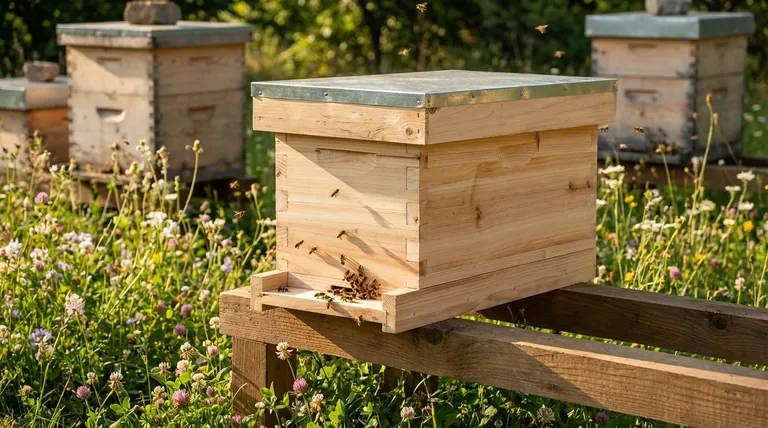
The Unseen Struggle in a Cavernous Home
Imagine a small, fledgling team tasked with heating a vast, empty warehouse using only their body heat. They would huddle together, burning through their energy reserves not to build or create, but simply to survive the cold.
This is the silent challenge a new bee colony faces when placed in a full-sized hive. It's a well-intentioned mistake, born from a desire to give them "room to grow." But in the delicate early stages of a colony's life, too much space is a liability, not a luxury.
The colony, a superorganism, must maintain its brood nest at a precise 95°F (35°C). In a cavernous space, the heat they generate dissipates into the void. Their mission shifts from expansion to a desperate, energy-draining battle against the cold.
The Psychology of Right-Sizing
Humans seek environments that feel appropriate. We feel secure in a well-fitting room and overwhelmed in a space that's too large and empty. While a bee colony doesn't feel emotion, it operates on an analogous principle governed by the brutal laws of physics and resource allocation.
The core concept is "right-sizing"—matching the hive's volume to the colony's population. It’s not about thinking small; it's about being precise. A correctly sized home minimizes wasted energy, allowing the bees to focus their collective will on the only two things that matter for a new colony: raising healthy brood and expanding the workforce.
Engineering the Ideal Nursery
A wooden nucleus (nuc) box is not just a small hive; it is a purpose-built incubator. Its design is a masterclass in applied thermodynamics for apiaries.
Mastering the Thermal Equation
By dramatically reducing the interior volume, a nuc box allows the colony's own heat to concentrate. The bees no longer have to burn through precious honey reserves just to maintain the brood's critical temperature.
This energy efficiency has a direct, compounding return. Every drop of nectar not consumed for heat is another resource available for feeding larvae and producing wax.
From Survival to Explosive Growth
The stable, warm, and humid environment inside a nuc box is the perfect nursery. Temperature fluctuations, which can chill brood and invite disease, are minimized.
This stability translates directly into a higher survival rate for young bees and a faster rate of population growth. The colony moves from a defensive posture of survival to an offensive one of expansion, which is the primary goal of any beekeeping operation.
A Tool for Critical Operations
The compact design makes the nuc box an indispensable instrument for specific, high-stakes beekeeping tasks.
- Initiating New Colonies: For new bee packages or captured swarms, a nuc box provides the security and focus needed to establish a brood nest quickly.
- Propagating Genetics: When splitting a strong hive or raising a new queen, the controlled environment of a nuc gives the small population the best possible odds of success.
- Commerce and Logistics: For commercial apiaries, nuc boxes are the industry standard for selling and transporting bees. They are secure, self-contained, and manageable.
| Feature | Benefit in a Nuc Box | Implication for the Colony |
|---|---|---|
| Small Volume | Concentrates heat, easy to regulate | Less energy spent on heating |
| Reduced Space | Encourages focused brood nest development | Faster population growth |
| Compact Size | Ideal for handling, transport, and splits | Operational efficiency for the beekeeper |
| Limitation | Quickly outgrown by a successful colony | Requires timely transfer to a larger hive |
Understanding the Design's Trade-offs
The nuc box's greatest strength—its size—is also its primary limitation. It is a springboard, not a final destination.
The Inevitable Upgrade
A thriving colony will rapidly fill the frames with brood, pollen, and nectar. The beekeeper must remain vigilant. Failure to move the colony into a full-sized hive will trigger its natural impulse to swarm, as the bees seek more space to continue their expansion. This need to upgrade isn't a flaw; it is the sign of a successful start.
Wood as a Foundation
Wood remains the traditional and trusted material for hive construction. It offers excellent insulation, durability, and a porous structure that helps manage humidity. At HONESTBEE, our wholesale beekeeping supplies for commercial apiaries and distributors are built on this principle, providing durable, well-designed wooden nuc boxes that form the foundation of a strong operation.
Aligning Equipment with Ambition
For a commercial beekeeper, choosing a nuc box isn't a compromise. It is a strategic decision to optimize the most vulnerable phase of a colony's life. It's about applying sound engineering to a biological system to achieve predictable, efficient results. By ensuring new colonies and splits get the strongest possible start, you are investing directly in the future productivity of your entire apiary.
If your operation depends on the reliable growth of new colonies, the right equipment is not an expense—it's the foundation of your success. Contact Our Experts
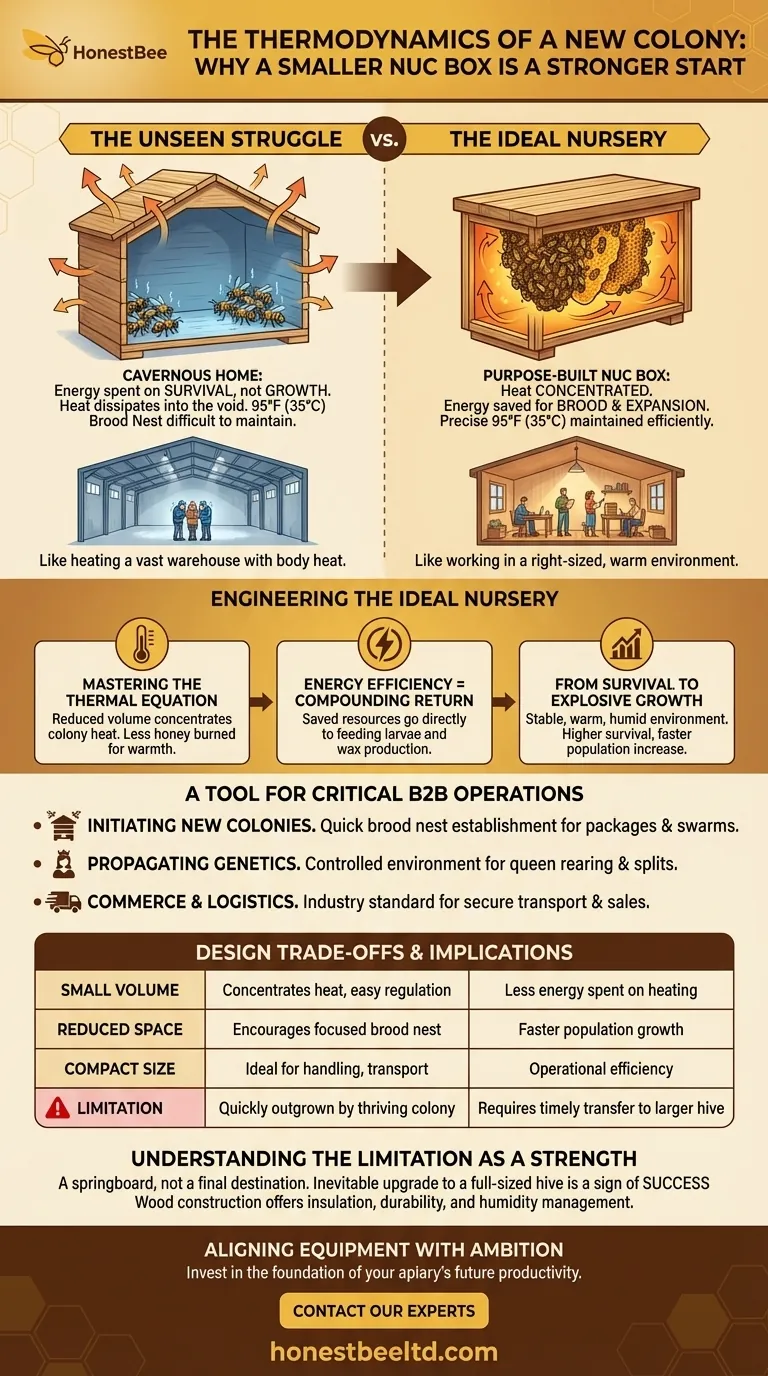
Visual Guide
Related Products
- 5 Frame Wooden Nuc Box for Beekeeping
- Styrofoam Mini Mating Nuc Box with Frames Feeder Styrofoam Bee Hives 3 Frame Nuc Box
- Automatic Heat Preservation 6 Frame Pro Nuc Box for Honey Bee Queen Mating
- 5 Frame Langstroth Poly Nuc Corrugated Plastic Nuc Boxes
- 4 Frame Plastic Nuc Boxes for Beekeeping Bee Nuc Box
Related Articles
- How Smaller Nuc Box Frames Improve Brood Health Through Thermal Regulation
- Architecting Royalty: The Nuc Box as a Queen's Crucible
- How to Successfully Requeen Hives Using the 5-Frame Nuc Method: A Beekeeper’s Guide
- Designing for Instinct: Why the Nuc Box is the Perfect Swarm Trap
- The Architect's Dilemma: How a Nuc Box Solves a Honeybee Swarm's Housing Crisis


