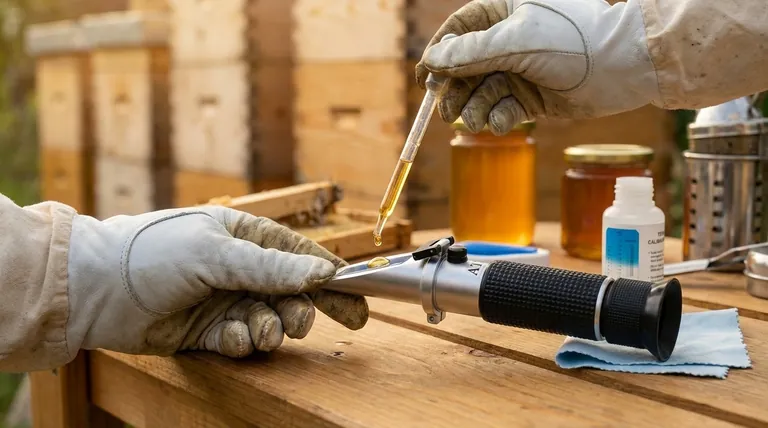
Accurate moisture measurement in honey isn't just about compliance—it’s about preserving flavor, texture, and shelf life. Whether you're a commercial apiary or a distributor, mastering refractometer techniques ensures your honey meets industry standards while maintaining premium quality.
Mastering Honey Refractometer Precision
Honey refractometers are indispensable tools for beekeepers, but their accuracy hinges on proper usage. Research shows that even minor errors in calibration or sample handling can skew moisture readings by several percentage points—enough to impact product stability.
Calibration Protocols for Reliable Results
- Use Certified Standards: Calibrate with distilled water (0% Brix) and a known sucrose solution (e.g., 50% Brix) before each batch.
- Adjust for Ambient Conditions: Temperature fluctuations can alter refractometer optics. Allow the device to acclimate to room temperature for 10–15 minutes.
- Verify Scale Alignment: Ensure the baseline (0% moisture) aligns perfectly with the reference line. Misalignment can lead to systematic errors.
Pro Tip: Recalibrate every 2–3 hours during continuous use to account for instrument drift.
Sample Preparation and Environmental Control
- Consistency Matters: Filter honey to remove air bubbles and particulates that scatter light. Bubbles alone can inflate moisture readings by up to 1%.
- Temperature Compensation: Honey viscosity changes with heat. Aim for a sample temperature of 20°C (68°F)—the industry standard for measurements.
- Minimize Exposure: Test samples immediately after extraction. Prolonged air exposure can lead to moisture absorption or evaporation.
Interpreting Readings for Industry Compliance
Most honey falls within 15–18% moisture for optimal stability. Exceeding 20% risks fermentation, while overly dry honey (<14%) may crystallize prematurely.
- ISO Standards: The International Honey Commission recommends refractometer measurements as a primary method, with tolerances of ±0.2% moisture.
- Regional Variations: Some markets, like the EU, enforce stricter limits (≤20% moisture). Always cross-check local regulations.
Troubleshooting Common Measurement Challenges
Even with meticulous preparation, real-world conditions introduce variables. Here’s how to address them:
Mitigating Temperature-Induced Errors
- Use ATC (Automatic Temperature Compensation): Modern refractometers adjust for temperature, but manual models require conversion charts.
- Pre-Warm Samples: Cold honey thickens, trapping air. Warm samples to 20°C in a water bath—never direct heat.
Resolving Viscosity and Bubble Interference
- Slow Dispensing: Apply honey drop-by-drop to the prism to minimize air entrapment.
- Wait for Stabilization: After loading the sample, wait 30 seconds for bubbles to dissipate before reading.
Elevate Your Beekeeping Standards with HONESTBEE
Precision tools are the backbone of quality honey production. HONESTBEE’s refractometers and beekeeping supplies empower commercial apiaries and distributors to deliver consistently superior products—backed by wholesale-friendly solutions tailored for high-volume operations.
Ready to refine your honey quality control? Explore HONESTBEE’s equipment designed for accuracy at scale.
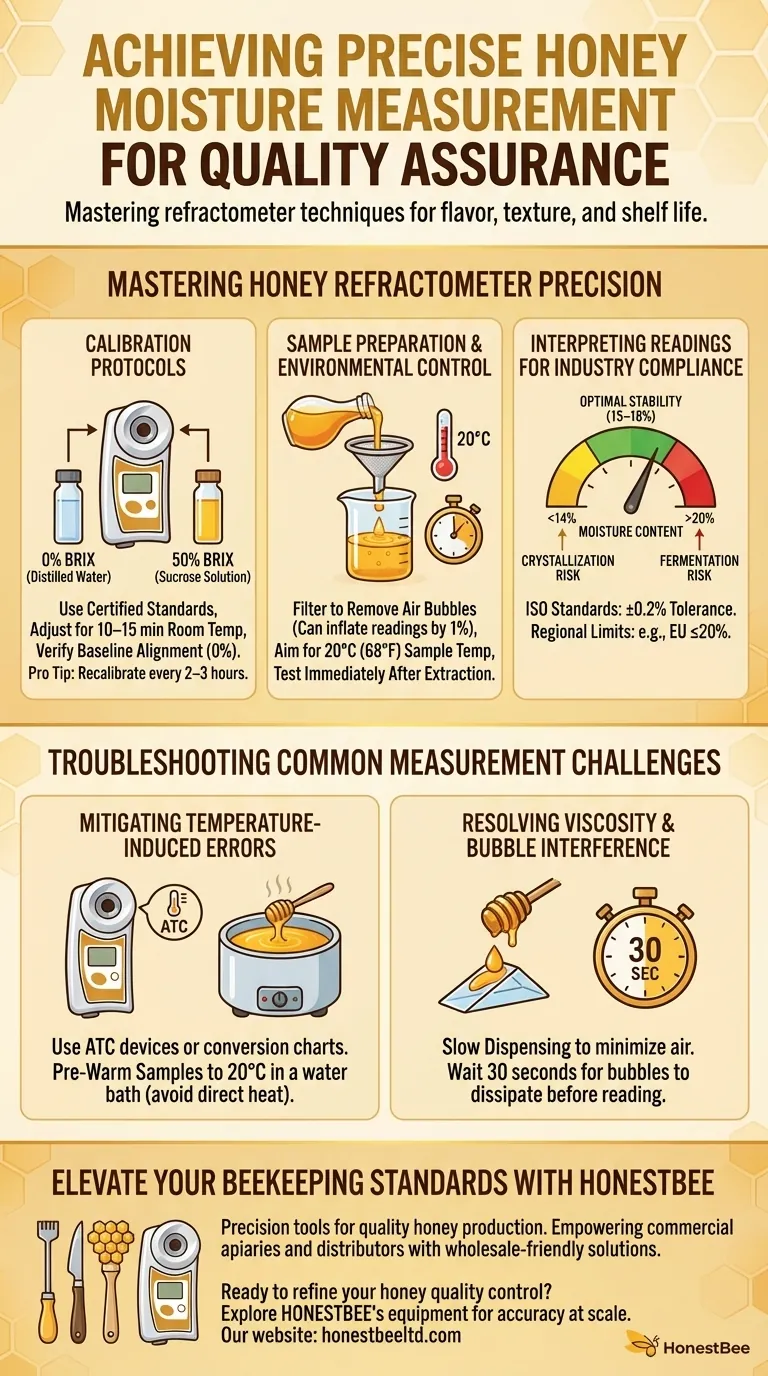
Visual Guide
Related Products
- Precision Honey Refractometer Instrument for Quality Assessment
- Digital Honey Refractometer for Precision Measurement of Optimal Honey Quality
Related Articles
- The Physics of Perfection: Why a Single Number Determines Your Honey's Fate
- How to Accurately Test Honey Readiness: Science-Backed Methods for Beekeepers
- Why Your Honey Refractometer Gives Inconsistent Readings—And How to Fix It for Good
- The Physics of Trust: Why Your Honey Refractometer Lies Without Temperature Discipline
- Beyond Brix: Why Your Honey's Future Depends on a Single, Temperature-Compensated Number

