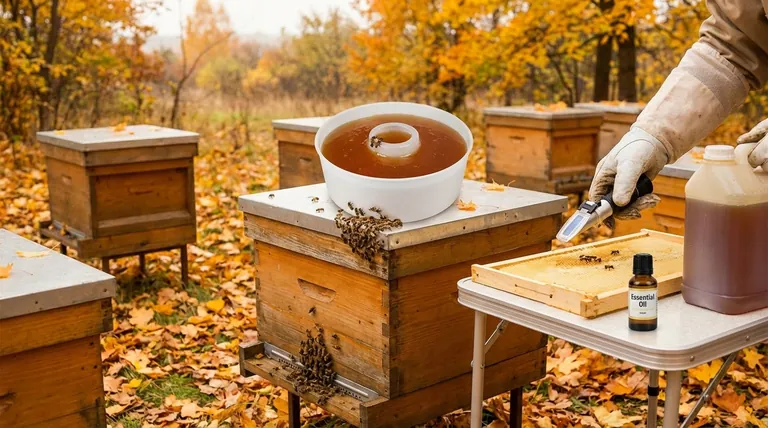
As temperatures drop, beekeepers face a critical challenge: providing adequate nutrition while preventing syrup spoilage from excess moisture. Proper autumn feeding requires precise timing, adjusted syrup ratios, and strategic feeder selection to ensure colonies store winter provisions safely. This guide combines scientific thresholds with practical field techniques used by commercial apiaries.
Preparing Hives for Winter
Temperature Thresholds for Safe Syrup Evaporation
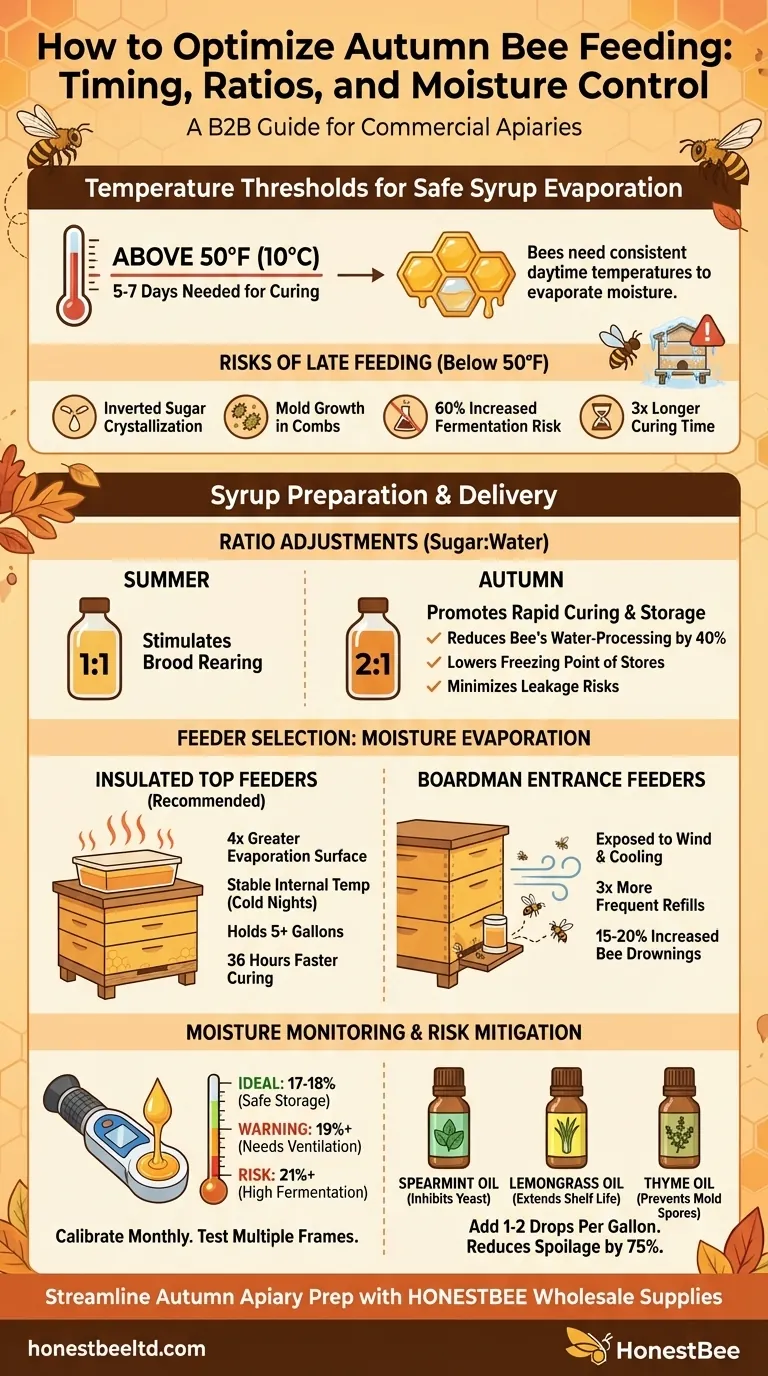
Bees need 5-7 days of daytime temperatures above 50°F (10°C) to evaporate moisture from processed syrup. Below this threshold:
- Inverted sugars crystallize prematurely
- Excess humidity promotes mold growth in combs
- Fermentation risks increase by over 60%
Research shows colonies fed after consistent sub-50°F nights require 3x longer to cure syrup, often leaving 20-30% uncapped stores vulnerable to spoilage.
Signs Your Colony Needs Emergency Late-Season Feeding
Even with planned autumn feeding, monitor for these red flags:
- Lightweight hives – Heft test reveals <40 lbs (18 kg) stored honey
- Spotty brood patterns – Indicates nutritional stress
- Aggressive syrup consumption – Bees drain feeders within 24 hours
Pro Tip: For late interventions, use HONESTBEE’s insulated feeder jackets to extend evaporation windows by 2-3 days during cold snaps.
Syrup Preparation and Delivery
Ratio Adjustments for Autumn vs. Summer Feeding
| Season | Sugar:Water Ratio | Purpose |
|---|---|---|
| Summer | 1:1 | Stimulates brood rearing |
| Autumn | 2:1 | Promotes rapid curing & storage |
Thicker autumn syrup:
- Reduces bees’ water-processing workload by 40%
- Lowers freezing point of stored feed
- Minimizes leakage risks in top feeders
Top Feeders vs. Entrance Feeders: Moisture Evaporation Comparison
Insulated Top Feeders (Recommended)
- Allow evaporation through 4x greater surface area
- Maintain stable internal temperatures during cold nights
- Reduce refill disturbances by holding 5+ gallons
Boardman Entrance Feeders
- Expose syrup to wind-driven cooling
- Require 3x more frequent refills
- Increase bee drownings by 15-20%
Field data shows top feeders help colonies cure syrup 36 hours faster in 55-60°F conditions.
Moisture Monitoring and Risk Mitigation
Using Refractometers to Test Honey Moisture Levels
Ideal cured syrup should measure:
- 17-18% moisture – Safe for long-term storage
- 19%+ moisture – Requires additional ventilation
- 21%+ moisture – High fermentation risk
Calibrate tools monthly and test multiple frames per hive—moisture distribution varies even within single supers.
Preventing Fermentation with Essential Oils
Add 1-2 drops per gallon of these antimicrobial agents:
- Spearmint oil – Inhibits yeast growth
- Lemongrass oil – Extends syrup shelf life
- Thyme oil – Prevents mold spores
These natural additives reduce spoilage incidents by up to 75% in high-humidity regions.
Ready to streamline your autumn apiary prep? HONESTBEE’s wholesale beekeeping supplies help commercial operations mitigate winter losses with moisture-controlled feeders, precision refractometers, and essential oil additives—all designed for high-volume beekeeping efficiency. [Contact our team] for bulk pricing on autumn feeding systems.
By aligning feeding schedules with evaporative thresholds, optimizing syrup chemistry, and selecting the right delivery systems, beekeepers can turn autumn feeding from a seasonal gamble into a predictable preservation process. Remember—well-cured autumn stores don’t just feed your bees; they fuel next spring’s explosive brood buildup.
Visual Guide
Related Products
- HONESTBEE Round Hive Top Bee Feeder for Syrup
- HONESTBEE Entrance Bee Feeder Efficient Hive Front Liquid Feeding Solution for Beekeeping
- Rapid Bee Feeder White Plastic 2L Round Top Feeder for 8 or 10-Frame Bee Hives
- HONESTBEE Professional Hive Top Bee Feeder Feeding Solution
- White Plastic 0.5L Beekeeping Entrance Feeder for Bees
Related Articles
- How Round Hive Top Feeders Solve 3 Critical Beekeeping Challenges
- How to Choose the Right Bee Feeder for Your Hive’s Health and Efficiency
- How to Choose Between Frame and Gravity Feeders for Healthy Honey Bee Colonies
- How to Prevent Bee Drowning in Top Feeders Without Sacrificing Efficiency
- The Winter Fortress: Engineering Colony Survival with the Hive Top Feeder