A Question of Weight
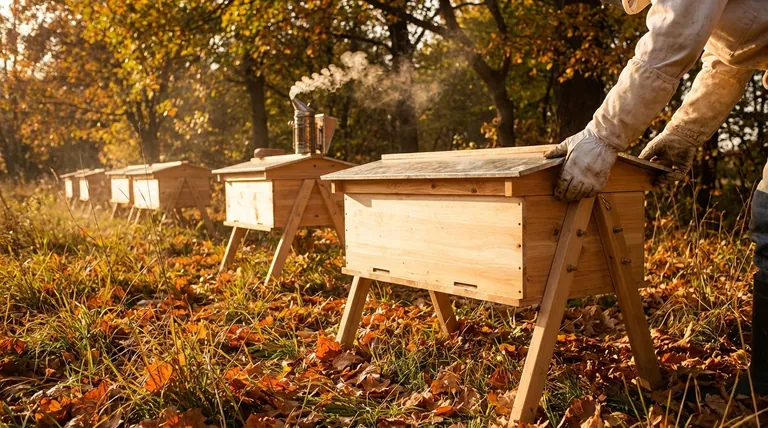
It’s an autumn afternoon. A beekeeper approaches a hive, not to inspect frames, but to perform a simpler, more profound diagnosis. They grip the back of the hive box and tilt.
In that single motion, a critical question is answered. Does the hive feel "glued to the ground," heavy with the dense weight of honey? Or does it feel alarmingly light, a hollow echo of the bustling factory it was all summer?
This single data point—the weight—is more important than the calendar date or the color of the leaves. It tells a story of resource management. And for the beekeeper, it triggers a cascade of decisions that separate a thriving colony from a winter casualty.
Diagnosis Before Prescription
The instinct to "help" is strong. When we see a potential problem, our first impulse is often to intervene. In beekeeping, this can manifest as a desire to feed colonies simply because winter is coming.
This is a cognitive trap. The goal is not to give bees sugar; it is to strategically correct a measured resource deficit. Unnecessary feeding can disrupt the colony’s natural rhythms and create dependency.
The Heft Test: Your Most Honest Indicator
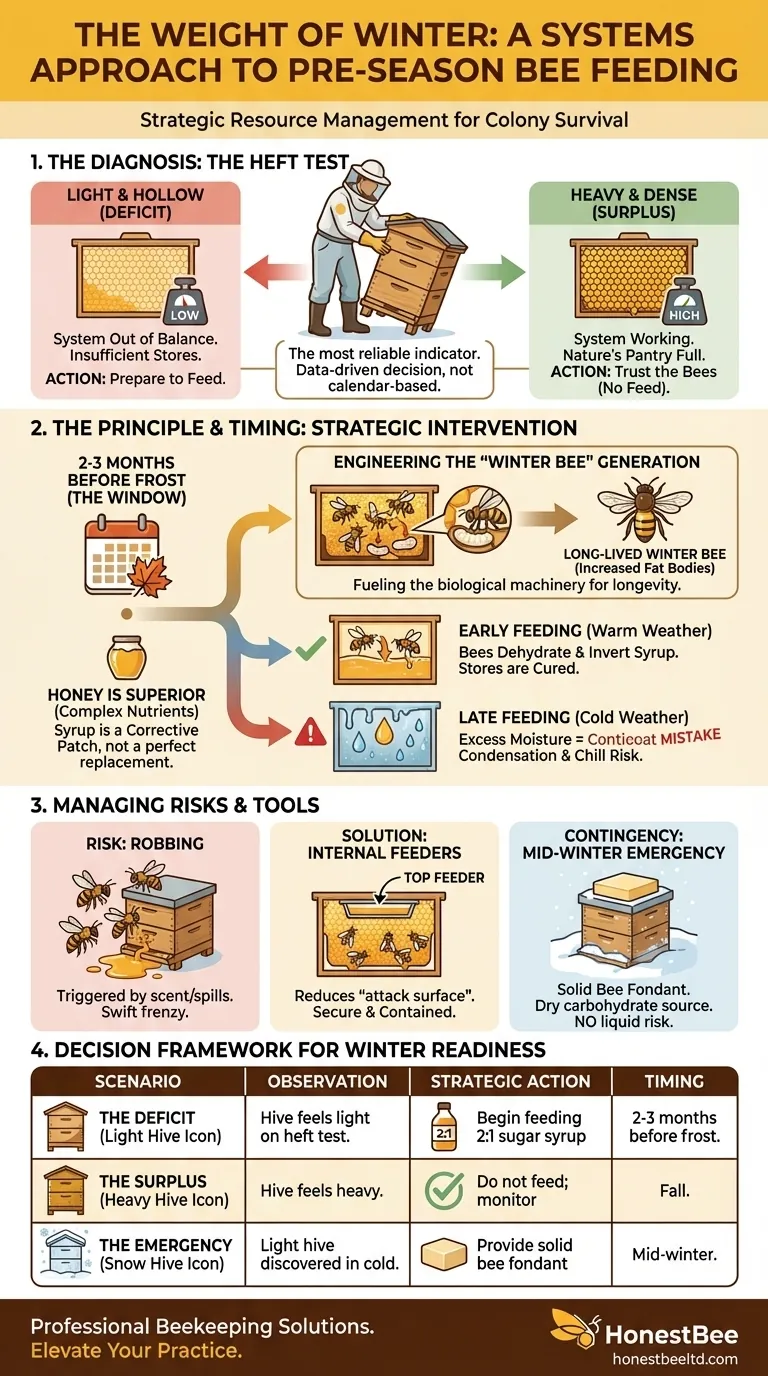
Before mixing a single drop of syrup, you must diagnose. The heft test is the most reliable, least intrusive method. A light hive is a clear signal: the colony failed to accumulate enough honey due to poor nectar flow, a late-season split, or other environmental factors. It is a system out of balance.
A heavy hive tells you the opposite: the system is working. The bees have successfully managed their own pantry. In this case, the best action is no action. Trust the bees.
Why Nature's Pantry is Always Superior
Even when intervention is necessary, we must acknowledge we are providing a substitute, not a perfect replacement. Honey is a complex substance, rich with enzymes and micronutrients that sugar syrup lacks.
Feeding is a corrective measure, an engineering patch for a production shortfall. It's a powerful tool, but one wielded only when the data—the physical weight of the hive—demands it.
The Critical Calculus of Timing
Once a deficit is confirmed, when you feed is as important as what you feed. The window for effective intervention is finite.
The Two-Month Window: More Than Just Storing Food
Beginning supplemental feeding two to three months before the first frost is not arbitrary. This lead time gives the bees the crucial runway they need to process the syrup—to dehydrate it, invert its sugars, and store it in cells, just as they would with nectar.
Rushing this process is not an option.
Engineering the "Winter Bee" Generation
This same time window aligns with a critical biological event: the raising of "winter bees." This is the final generation of the year, and they are physiologically different. They have increased fat bodies and are built for longevity, designed to live for months instead of weeks.
Providing a steady resource stream during this period is not just about filling cells with food. It's about fueling the biological machinery that produces the very population that will carry the colony’s genetic legacy through the frozen months.
The Physics of Late Feeding
Feeding liquid syrup once the weather turns cold is a catastrophic mistake. The bees struggle to process it, and more importantly, you introduce a fatal variable into the hive's delicate thermodynamics: moisture.
Excess moisture inside a cold hive leads to condensation, which can drip onto the winter cluster, chilling and killing the very bees you're trying to save. It’s a simple physics problem with devastating consequences.
Managing Unintended Consequences
Intervention always carries risk. A professional beekeeper, especially one managing a commercial apiary, thinks like a risk manager. Feeding is no exception.
The Risk of Robbing: An External Threat
The smell of open sugar syrup can trigger a frenzy of robbing, where stronger colonies attack and overwhelm a weaker one, plundering its resources. It is a swift and brutal end for the hive being robbed.
This is often caused by operational sloppiness—spilled syrup or poorly designed external feeders. For a commercial apiary, where hives are in close proximity, a single robbing event can cascade through the yard.
The Right Tool for the Job: Internal Feeders
Risk mitigation is about system design. Using an internal top feeder dramatically reduces the "attack surface" for robbers. The food source is contained within the hive, minimizing scent trails and access points for invaders. It’s a simple engineering choice that enhances hive security at scale.
The Mid-Winter Contingency Plan
Sometimes, despite the best planning, a colony burns through its stores faster than anticipated. A mid-winter check reveals a dangerously light hive.
Here, the rules change again. Liquid feed is off the table. The solution is an emergency energy transfer using a solid block of bee fondant. Placed directly above the cluster, fondant provides a dry source of carbohydrates the bees can consume without the moisture risk of syrup. It's a different tool for a different, more critical, phase of the mission.
A Decision Framework for Winter Readiness
Your strategy should not be based on habit, but on a clear decision-making framework driven by observation.
| Scenario | Observation (Heft Test) | Strategic Action | Timing |
|---|---|---|---|
| The Deficit | Hive feels light | Begin feeding 2:1 sugar syrup | 2-3 months before frost |
| The Surplus | Hive feels heavy | Do not feed; monitor | Fall |
| The Emergency | Light hive discovered | Provide solid bee fondant | Mid-winter |
By accurately assessing your hive's needs and deploying the right tools at the right time, you elevate your practice from simply keeping bees to underwriting their survival. For commercial apiaries, where resilience and predictability are paramount, this systematic approach is non-negotiable. It requires not only knowledge but also a reliable supply of professional-grade equipment.
Visual Guide
Related Products
- Rapid Bee Feeder White Plastic 2L Round Top Feeder for 8 or 10-Frame Bee Hives
- HONESTBEE Entrance Bee Feeder Professional Hive Nutrition Solution for Beekeeping
- White Plastic 0.5L Beekeeping Entrance Feeder for Bees
- HONESTBEE Entrance Bee Feeder Efficient Hive Front Liquid Feeding Solution for Beekeeping
- HONESTBEE Professional Entrance Bee Feeder Hive Nutrition Solution
Related Articles
- How to Choose Between Frame and Gravity Feeders for Healthy Honey Bee Colonies
- How to Choose the Right Bee Feeder for Your Hive’s Health and Efficiency
- Design, Drowning, and the Deceptively Simple Bee Feeder
- Beyond the Jar: The Hidden Engineering of Bee Feeder Safety
- How to Accelerate Bee Colony Growth with Science-Backed Feeding Strategies