The Illusion of Efficiency
In any production environment, the human mind defaults to a simple equation: faster equals better. For a beekeeper facing hundreds of frames dripping with honey, the allure of a heated uncapping knife—slicing through wax like a hot blade through butter—is immense. It promises speed, volume, and progress.
But this is a dangerous illusion. The relentless pursuit of speed often obscures its hidden costs: the gouged comb that bees must spend precious energy to rebuild, the wasted honey in deep wax cuttings, and the missed opportunities to understand the colony's health. The most elegant solutions are often the simplest, and in the apiary, true efficiency is found in precision.
The Anatomy of a Perfect Seal
To appreciate the tool, we must first appreciate the bees' engineering. They don't just store honey; they cure it. After filling a hexagonal wax cell, they patiently fan their wings to reduce the nectar's moisture content to a perfect, stable level—around 17-18%.
Only then do they apply the final touch: a pristine wax capping. This capping is an organic, airtight seal, a masterpiece of natural preservation. To harvest the honey with a centrifugal extractor, this seal must be broken. How we break it matters immensely.
A Scalpel, Not a Sword
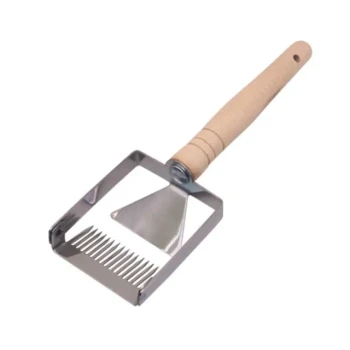
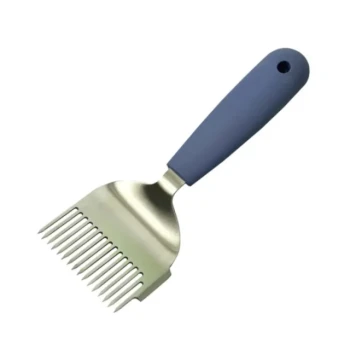
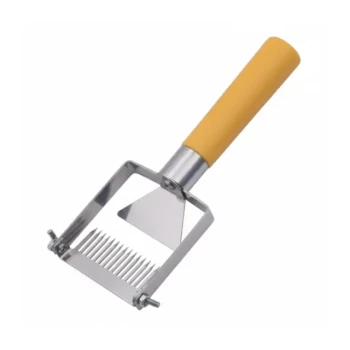
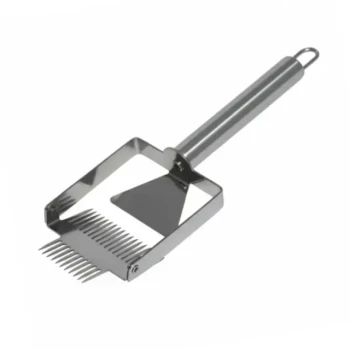
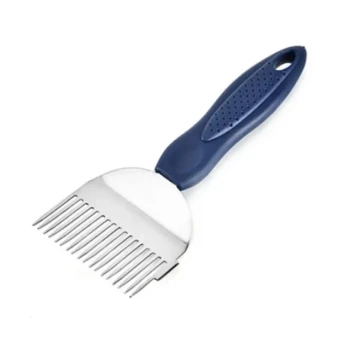
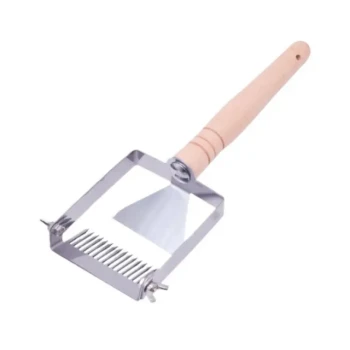
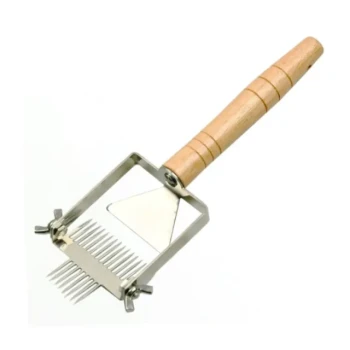
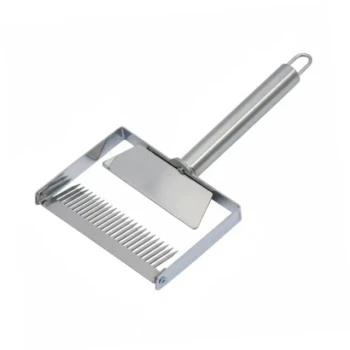
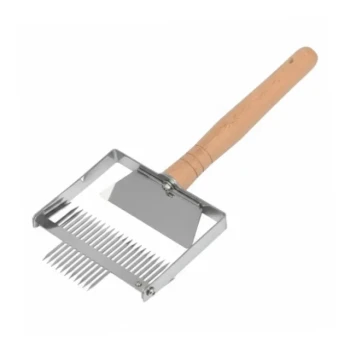
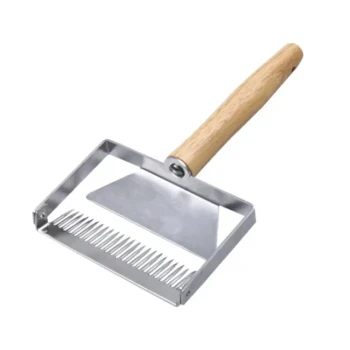
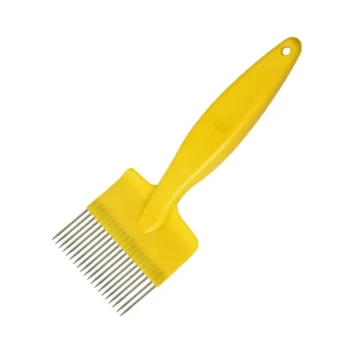
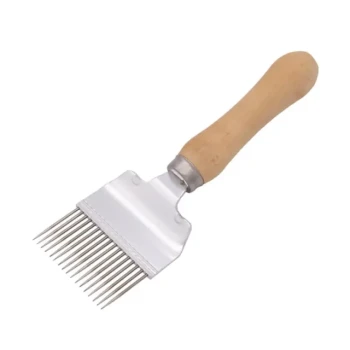
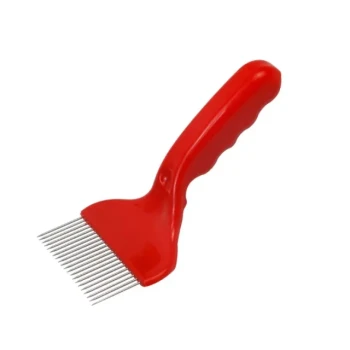
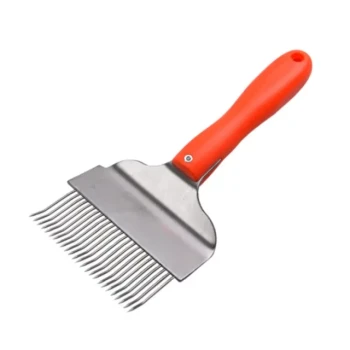
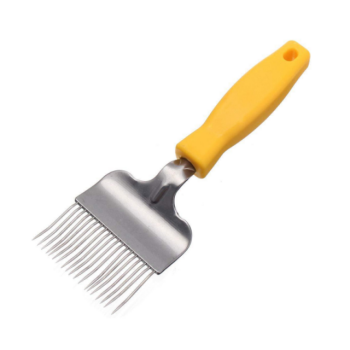
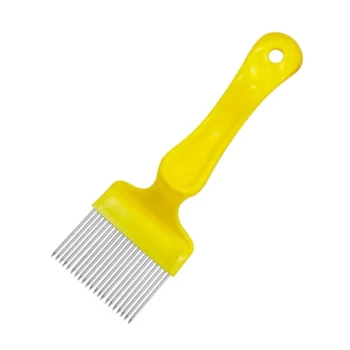
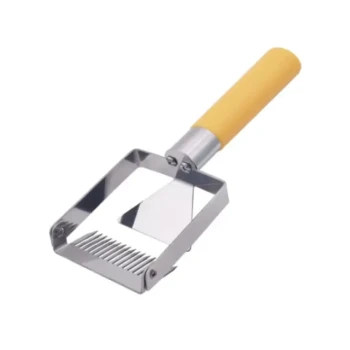
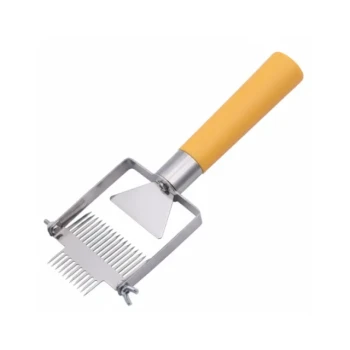
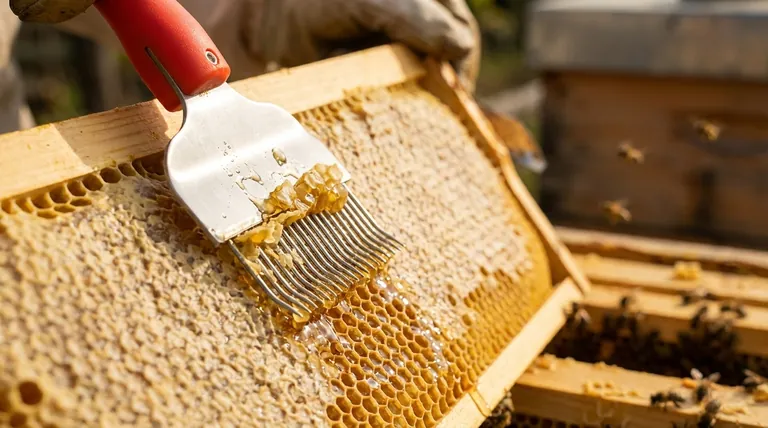
The uncapping fork is a disarmingly simple tool: a handle with sharp, steel tines. Its function isn't one of brute force, but of surgical precision.
Where a knife slashes across the entire frame, often missing the low spots and valleys of an uneven comb, the fork allows for a cell-by-cell approach. The beekeeper slides the tines just under the cappings and lifts gently. It's less like plowing a field and more like performing a delicate operation. This control is not a luxury; it's the key to minimizing waste and preserving the intricate wax structure that bees worked so hard to build.
Every frame has a unique topography. The fork allows the beekeeper to have a conversation with the comb, adapting to its dips and curves. A knife, by contrast, only hears its own monologue.
Beyond the Harvest: A Diagnostic Tool
The fork's true genius reveals itself in tasks far removed from the honey house. It is one of the most important diagnostic tools a beekeeper possesses.
Reading the Brood
The Varroa mite, a devastating parasite, reproduces within sealed brood cells, hidden from view. A conscientious beekeeper doesn't wait for an infestation to become obvious.
Using the tip of an uncapping fork, they can perform a quick "biopsy" on the hive. By selectively uncapping a few drone brood cells (the Varroa's preferred nursery), they gain a direct window into the colony's health. This simple, targeted inspection can be the difference between a thriving apiary and a collapsing one.
The Gentle Nudge
Sometimes, a beekeeper needs to encourage bees to move honey—perhaps to clear space in the brood box for the queen to lay. Instead of disruptive frame shuffling, a light scratch across the honey cappings with a fork is a subtle signal. The bees perceive the seal as broken and are prompted to move the honey, all with minimal stress to the colony.
The Mental Calculus: Your Operational Philosophy
Choosing between a fork and a knife is not just about the number of hives you manage. It's a choice that reflects your entire approach to beekeeping. It's a trade-off between raw speed and intelligent control.
| Operational Philosophy | Primary Tool Strategy | The Role of the Uncapping Fork |
|---|---|---|
| The Hobbyist (Precision First) | Fork as Primary | The main, cost-effective tool for harvest and hive inspections. |
| The Commercial Operator (Scale First) | Knife for Bulk, Fork for Detail | An indispensable cleanup tool for maximizing yield from uneven frames. |
| The Hive Health Specialist (Diagnostics First) | Tool Agnostic | A non-negotiable surgical instrument for routine biosecurity checks. |
For large-scale operations, the fork is not a replacement for the knife; it is its essential partner. The knife handles the flat, easy 80% of the surface. The fork ensures the remaining 20%—the dips, corners, and imperfections—is not wasted. This two-tool system represents the pinnacle of efficient, thoughtful honey extraction.
Equipping for Precision at Scale
The most successful commercial apiaries don't just think about speed; they think about systems. They understand that preserving comb and minimizing honey loss are just as crucial to the bottom line as frames-per-hour. They know that a cheap, flimsy tool is a liability, not an asset.
That is why HONESTBEE supplies durable, professional-grade uncapping forks and other beekeeping equipment to commercial apiaries and distributors. We provide the tools for operations that value a systems-based approach to beekeeping, where precision and scale work hand-in-hand.
To build an apiary that is both productive and resilient, you need tools designed for the task. Contact Our Experts
Visual Guide
Related Products
- Professional Stainless Steel Uncapping Fork with Wooden Handle
- Professional Multi-Function Uncapping Fork with Ergonomic Rubber Grip
- Adjustable Stainless Steel Honey Uncapping Fork with Plastic Handle for Beekeeping
- All Stainless Steel Double Sided Pivoting Honey Uncapping Fork
- Professional Multi-Function Uncapping Fork with Integrated Blade for Beekeeping
Related Articles
- How Uncapping Forks Protect Honeycombs and Reduce Beekeeping Costs
- The Uncapping Fork: Precision Over Pace in Honey Extraction
- Precision Over Pace: The Economic Logic of the Uncapping Fork
- Precision Over Pace: The Strategic Role of the Uncapping Fork in Honey Harvesting
- Why Your Uncapping Knife Is Costing You Money—And How a Simple Fork Fixes It