The Final Barrier
A frame of honey is heavy with success. It represents months of collaboration between a beekeeper and tens of thousands of bees. But between the beekeeper and the liquid honey lies one final, perfect barrier: a delicate, paper-thin seal of beeswax, crafted by the bees to preserve their stores.
Breaking this seal is the first, non-negotiable step of any harvest. And the tool a beekeeper chooses for this task reveals everything about their operational philosophy.
A Lock Forged by Nature
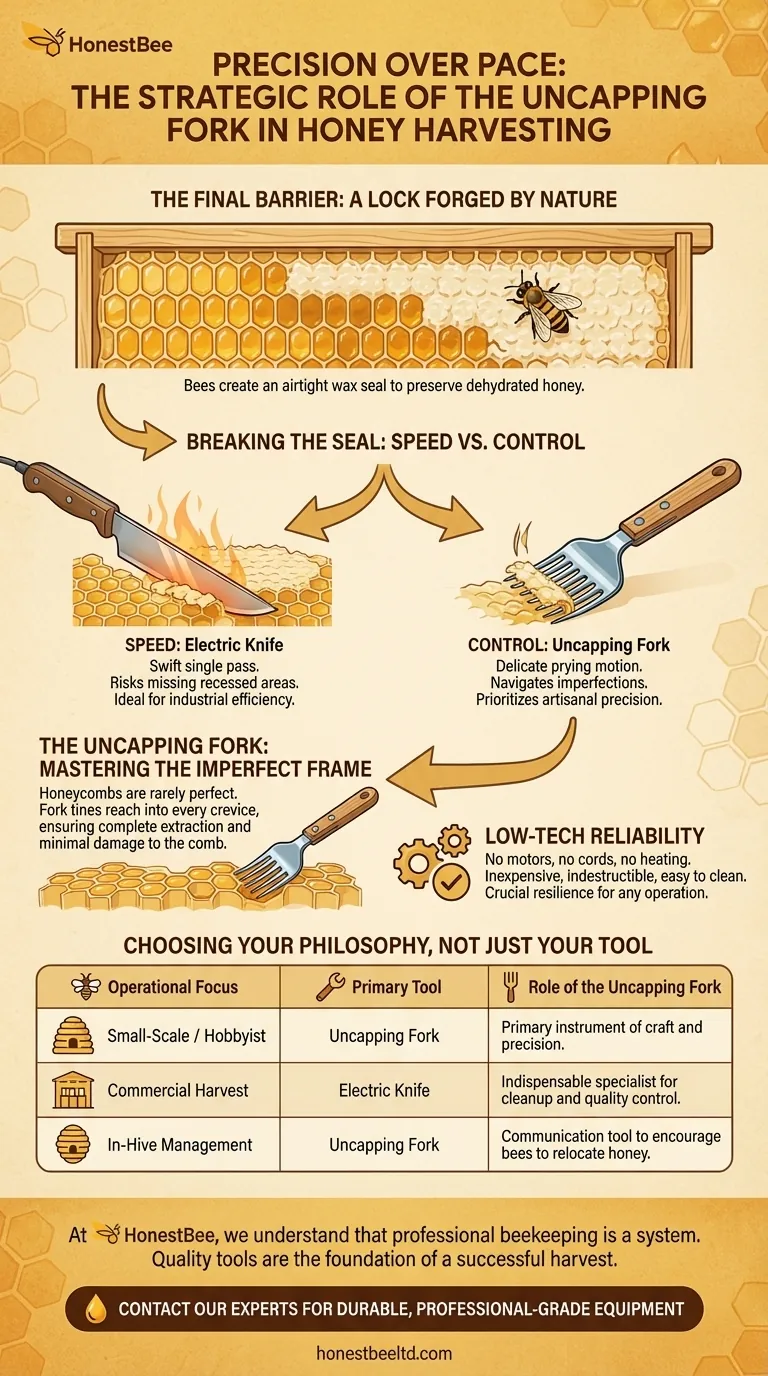
Bees are masters of preservation. When they have filled a cell with nectar and dehydrated it to the perfect moisture content—around 18%—they cap it. This wax capping is an airtight seal, protecting the honey from humidity and microbes, ensuring it remains pristine for months or even years.
To extract the honey, we must first undo this meticulous work. A capped frame placed in a centrifugal extractor will yield nothing; the honey is locked in place. The harvest begins not with force, but with finesse.
The Uncapping Dilemma: Speed vs. Control
The modern beekeeper faces a fundamental choice. Do you optimize for speed, using a heated electric knife to slice off the cappings in a single, swift pass? Or do you optimize for control, using a simple, manual tool?
This isn't just a question of equipment. It's a psychological choice between industrial efficiency and artisanal precision. While large-scale operations depend on speed, they quickly learn that speed alone is an incomplete solution. The reality of a beehive is rarely perfect.
The Genius of a Simple Design
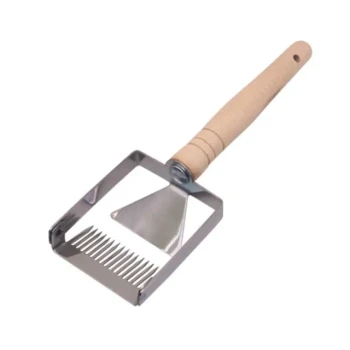
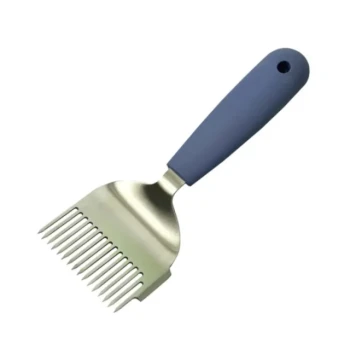
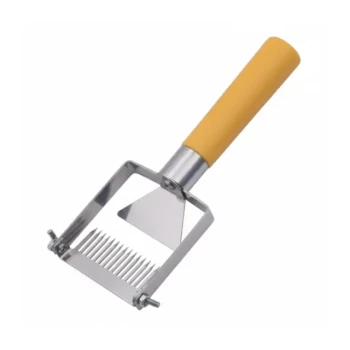
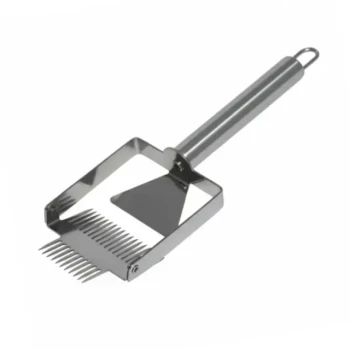
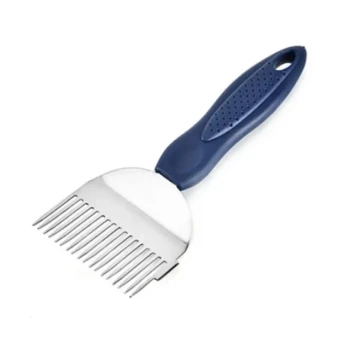
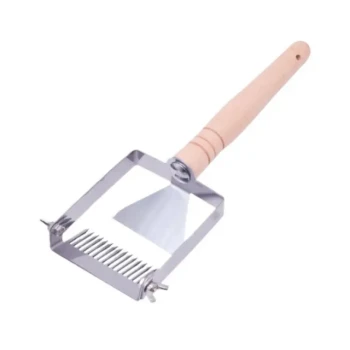
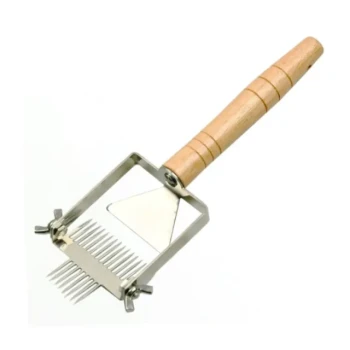
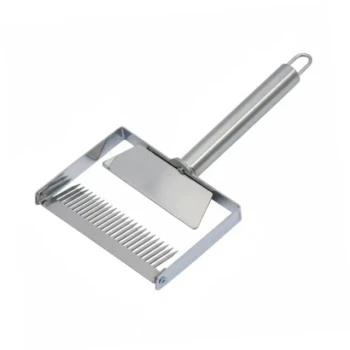
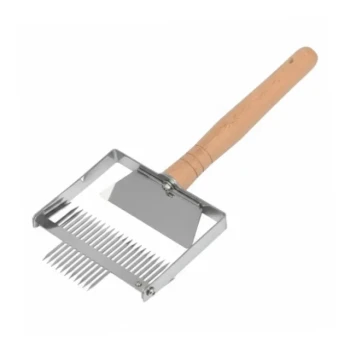
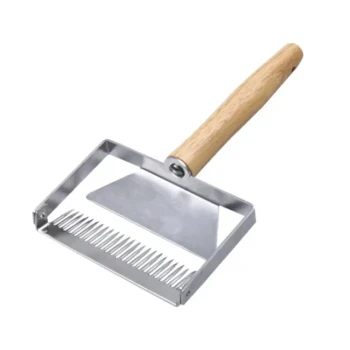
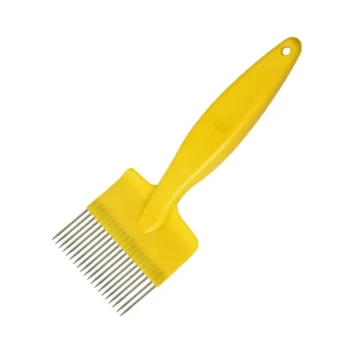
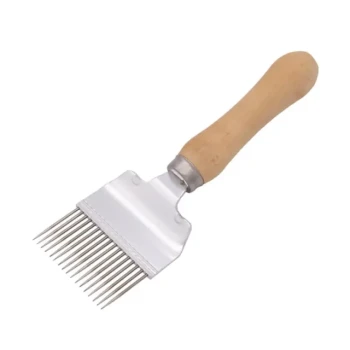
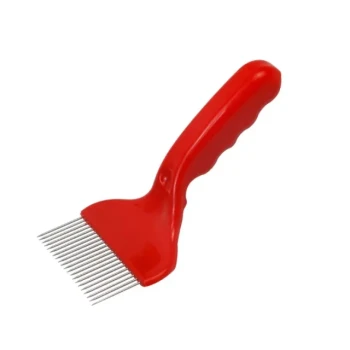
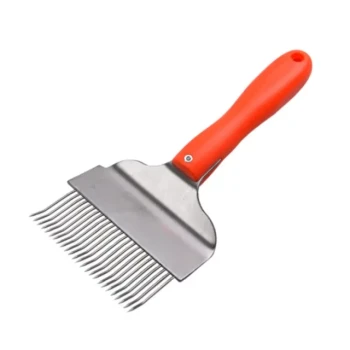
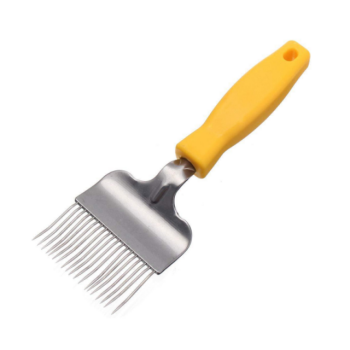
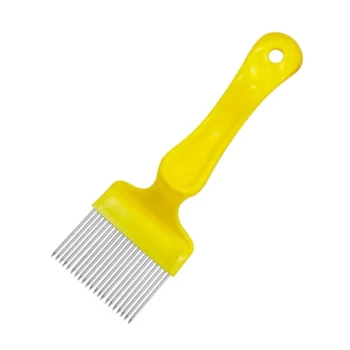
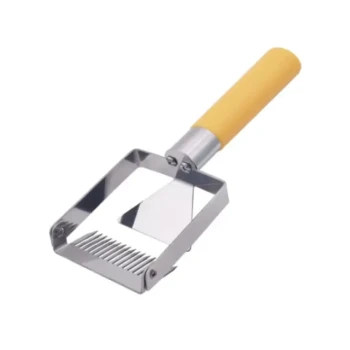
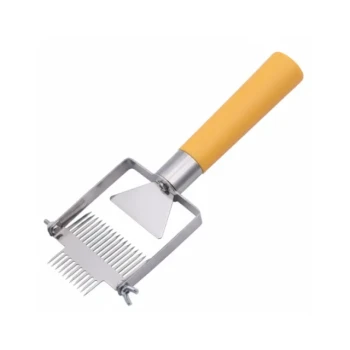
Enter the uncapping fork. It is a disarmingly simple tool: a handle connected to a row of sharp, steel tines. Its function is not to slice, but to delicately lift.
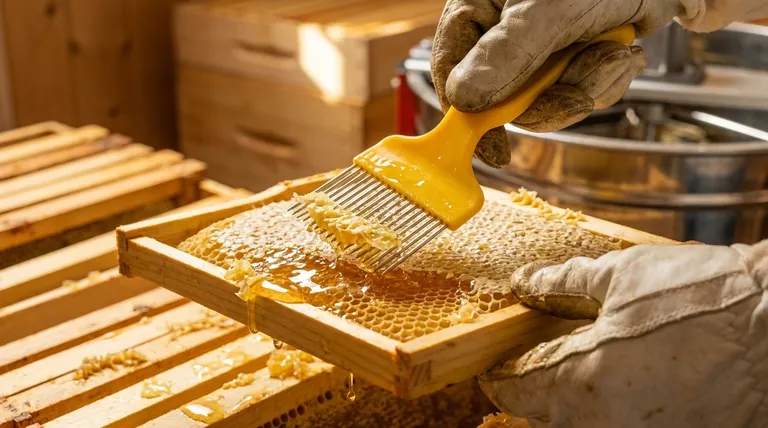
The proper technique involves sliding the tines just under the wax cappings and using a gentle prying motion. The wax peels away, exposing the honey-filled cells with minimal damage to the underlying comb structure that the bees worked so hard to build.
Mastering the Imperfect Frame
Here lies the fork’s true genius. Honeycombs are not perfect, uniform planes. They have low spots, recessed corners, and uneven surfaces. A flat blade will glide right over these areas, leaving significant patches of honey locked away.
The fork, however, is a tool for navigating reality. Its tines can reach into every crevice, ensuring that every last possible cell is opened for extraction. It is the specialist’s tool for handling the imperfections that automated processes miss.
The Virtue of Low-Tech Reliability
In the middle of a sticky, time-sensitive harvest, the last thing an operator needs is equipment failure. The uncapping fork has no motor to burn out, no cord to manage, and no temperature to set.
It is inexpensive, indestructible, and easy to clean. Its reliability is a feature, not a bug, providing a crucial layer of resilience to any harvesting operation, large or small.
Choosing Your Philosophy, Not Just Your Tool
The right tool depends entirely on the job you need to do. The decision matrix is simple but profound.
| Operational Focus | Primary Tool | Role of the Uncapping Fork |
|---|---|---|
| Small-Scale / Hobbyist | Uncapping Fork | The primary instrument of craft and precision. |
| Commercial Harvest | Electric Knife | The indispensable specialist for cleanup and quality control. |
| In-Hive Management | Uncapping Fork | A communication tool to encourage bees to relocate honey. |
For a hobbyist, the fork is an instrument of connection to the process. For a commercial apiary, it is the essential tool that guarantees a complete and thorough harvest, ensuring no honey is left behind. It’s the difference between a job done fast and a job done right.
At HONESTBEE, we understand that professional beekeeping is a system of interlocking tools and strategies. Supplying durable, professional-grade equipment to commercial apiaries is our specialty, because we know that quality tools are the foundation of a successful harvest.
If you are ready to equip your operation with reliable tools built for the realities of beekeeping, Contact Our Experts
Visual Guide
Related Products
- Professional Stainless Steel Uncapping Fork with Wooden Handle
- Professional Multi-Function Uncapping Fork with Ergonomic Rubber Grip
- Adjustable Stainless Steel Honey Uncapping Fork with Plastic Handle for Beekeeping
- All Stainless Steel Double Sided Pivoting Honey Uncapping Fork
- Professional Multi-Function Uncapping Fork with Integrated Blade for Beekeeping
Related Articles
- How Uncapping Forks Protect Honeycombs and Reduce Beekeeping Costs
- The Uncapping Fork: Precision Over Pace in Honey Extraction
- Precision in the Apiary: The Unsung Virtues of the Uncapping Fork
- Precision Over Pace: The Economic Logic of the Uncapping Fork
- Why Your Uncapping Knife Is Costing You Money—And How a Simple Fork Fixes It