The Moment of Decision
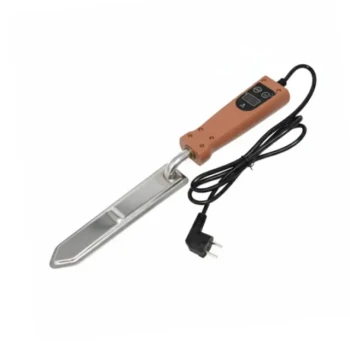
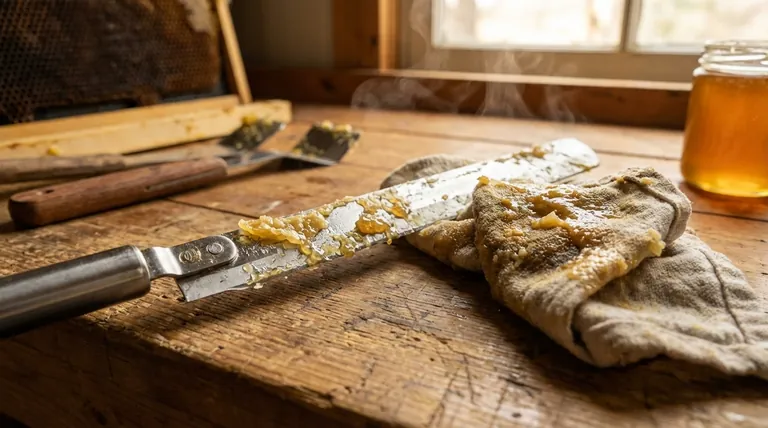
The last frame is uncapped. Honey extraction is complete. The air is thick with the sweet smell of success. In this moment of fatigue and satisfaction lies a critical decision point for every beekeeper: clean the sticky, wax-caked uncapping knife now, or leave it for later.
This isn't just a choice about a chore. It's a psychological test. Our brains, wired to seek immediate rest, urge us to postpone. Yet, this single decision pits a two-minute task now against a twenty-minute struggle later. Understanding why is a lesson in physics, discipline, and the quiet professionalism that defines a successful operation.
The Tyranny of the Cooldown
The difficulty of cleaning an uncapping knife is not determined by the tool you use, but by the state of matter you're working against. The core variable is temperature.
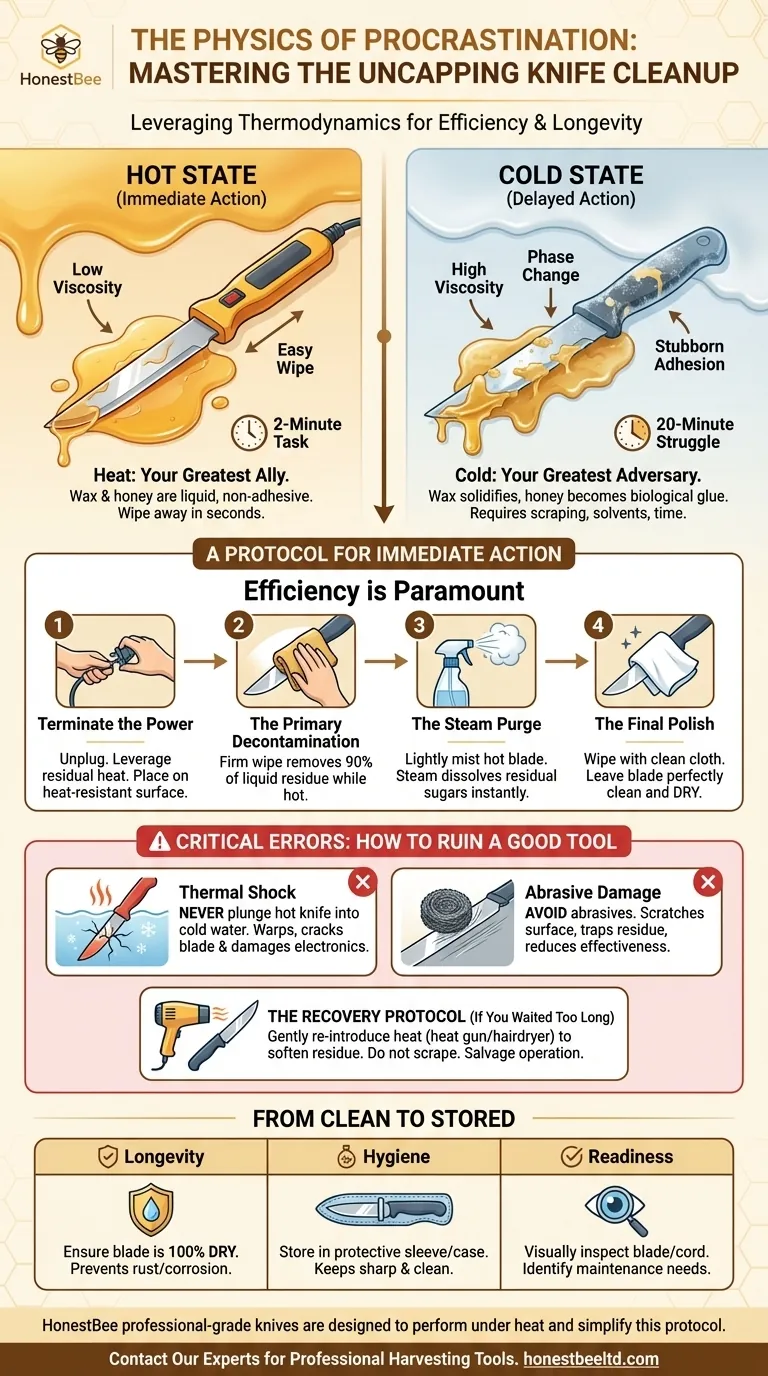
Heat: Your Greatest Ally
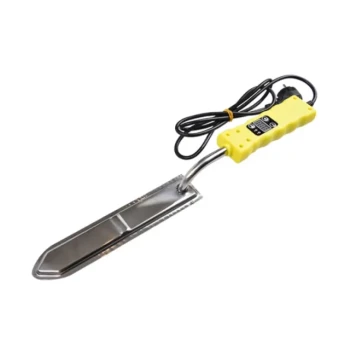
An electric uncapping knife operates at a temperature that keeps both beeswax and honey in a fluid, low-viscosity state. When hot, they have almost no adhesion. They are liquids to be wiped away, not solids to be fought. Acting immediately is an act of leveraging thermodynamics in your favor.
Cold: Your Greatest Adversary
Once the knife cools, a phase change occurs. The wax solidifies into a stubborn, hard coating. The honey’s viscosity increases dramatically, turning it into a thick, biological glue. The problem has now fundamentally changed. You are no longer cleaning; you are excavating. This requires scraping, solvents, or reheating—all of which introduce more time, more effort, and more risk of damaging your equipment.
A Protocol for Immediate Action
For commercial beekeepers, efficiency is paramount. A task repeated hundreds of times must be optimized. The following protocol isn't just about cleaning; it's about building a habit that protects your time and your investment.
H3: Step 1: Terminate the Power
Safety is the first step in any professional procedure. Unplug the knife. You need its residual heat, not its electrical current. Place it on a stable, heat-resistant surface away from flammable materials.
H3: Step 2: The Primary Decontamination
Using a dedicated, thick rag or heavy-duty paper towel, perform a firm wipe of both sides of the blade. This single motion removes over 90% of the wax and honey while they remain liquid. Consider this your "wax rag"—its job is done.
H3: Step 3: The Steam Purge
You'll be left with a thin, sticky film of honey residue. This is where a little water works like magic. Lightly mist the still-hot blade with a spray bottle. The heat will instantly convert the water into steam, dissolving the residual sugars on contact.
H3: Step 4: The Final Polish
Immediately wipe the blade again with a clean cloth. This removes the dissolved honey solution and moisture. The blade should be left perfectly clean and, crucially, completely dry.
This entire process, from unplugging to final wipe, takes less time than it takes to read about it. It’s a workflow built on physics. Commercial apiaries rely on equipment that can withstand this rhythm of intense use and immediate maintenance. The professional-grade uncapping knives supplied by HONESTBEE are designed with durable, high-quality steel that not only performs under heat but also simplifies this crucial post-harvest protocol.
Critical Errors: How to Ruin a Good Tool
The temptation to find a shortcut when faced with a cooled, sticky knife often leads to irreversible damage. Avoid these common, unforced errors.
- Thermal Shock: Never plunge a hot knife into a sink of cold water. The drastic temperature change can warp or even crack the metal blade. It also guarantees damage to the heating element and electrical components.
- Abrasive Damage: Avoid steel wool, scouring pads, or abrasive powders. They will permanently scratch the blade's surface. A scratched blade is less effective for uncapping and, ironically, becomes far more difficult to clean as honey and wax become trapped in the micro-abrasions.
The Recovery Protocol: If You Waited Too Long
If the knife is already cold and hard, don't resort to scraping. The safest recovery is to gently re-introduce heat. Use a heat gun on a low setting or a hairdryer to carefully warm the blade until the wax and honey soften enough to be wiped away. This is a salvage operation, not a standard procedure.
From Clean to Stored
Proper cleaning is a prerequisite for proper storage. A few final checks ensure your tool is an asset, not a problem, for the next harvest.
| Focus Area | Action | Benefit |
|---|---|---|
| Longevity | Ensure the blade is 100% dry before storing. | Prevents rust or corrosion on the blade and electronics. |
| Hygiene | Store in a protective sleeve or its original case. | Keeps the blade sharp, clean, and free from dust. |
| Readiness | Visually inspect the blade for nicks and the cord for wear. | Identifies maintenance needs before the next season. |
Ultimately, the care you invest in your tools is a reflection of the care you invest in your craft. It’s a system of small, intelligent actions that compound over time into a smooth, profitable, and sustainable operation.
This commitment to process and quality equipment is what separates a hobby from a commercial enterprise. For tools designed to withstand the rigors of professional harvesting and maintenance, Contact Our Experts.
Visual Guide
Related Products
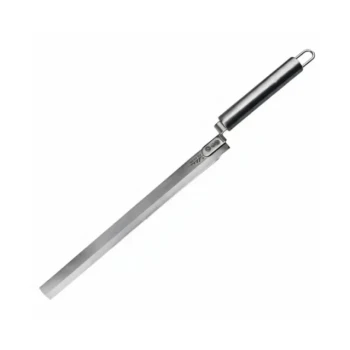
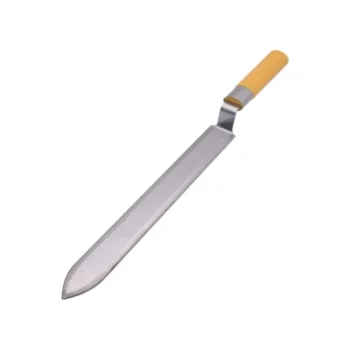
- Professional All-Stainless Steel Uncapping Knife for Beekeeping
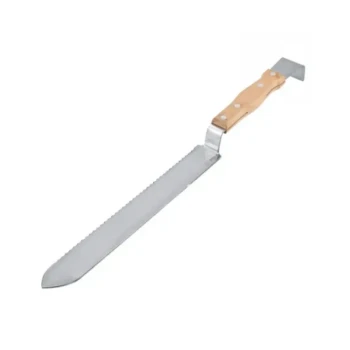
- Professional Z-Shaped Multi-Function Uncapping Knife for Beekeeping
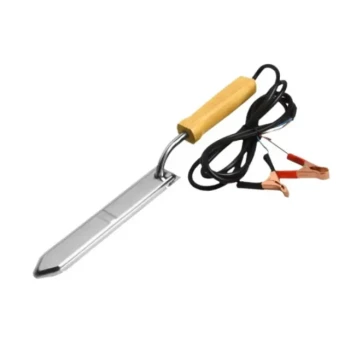
- Professional 12V DC Electric Uncapping Knife for Beekeeping
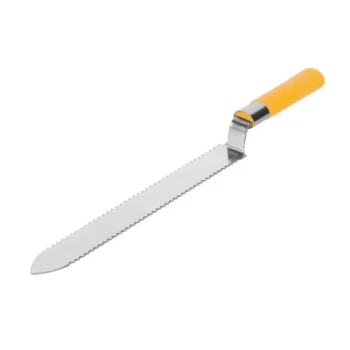
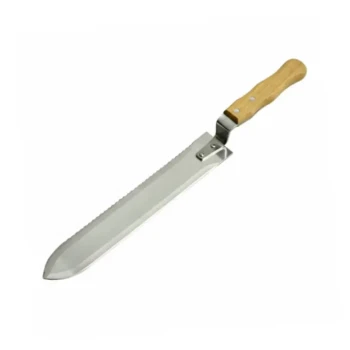
- Professional Serrated Double-Sided Uncapping Knife for Beekeeping
- Professional Stainless Steel Double-Sided Honey Uncapping Knife
Related Articles
- From Craft to Scale: Choosing the Right Uncapping Knife for Your Apiary
- Precision and Patience: The Physics and Psychology of the Uncapping Knife
- Anatomy of a Perfect Harvest: The Deliberate Design of the Uncapping Knife
- How to Choose and Master Decapping Knives for Optimal Honey Yield
- How to Choose the Right Beeswax Uncapping Tool for Your Beekeeping Needs