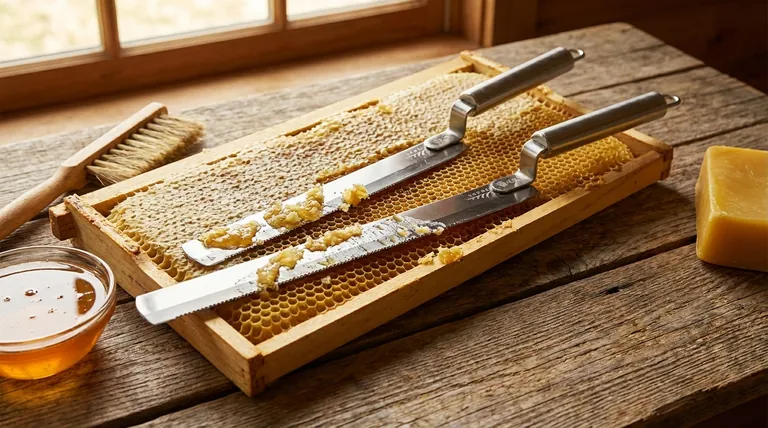
The Moment of Truth in Beekeeping
Before the golden honey flows, before the jars are filled, there is a quiet, critical moment. A beekeeper stands over a frame, heavy and sealed with a perfect sheet of white beeswax. The next few seconds will determine the efficiency of the harvest and the purity of the product.
This moment is not about brute force. It's about precision. And the critical interface between the beekeeper's intention and the honeycomb is a deceptively simple tool: the uncapping knife. To understand this tool is to understand the psychology of a perfect harvest.
Deconstructing a Purpose-Built Tool
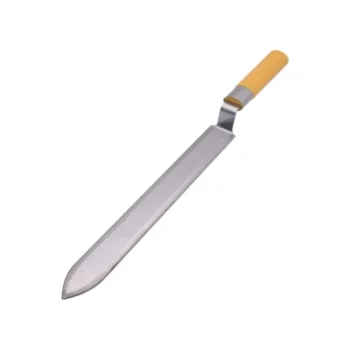
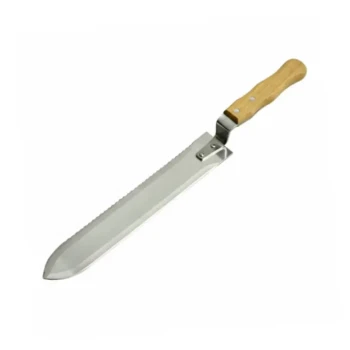
The effectiveness of the stainless steel uncapping knife lies not in a single feature, but in the harmony of its components. Each element is a solution to a specific problem faced by every beekeeper.
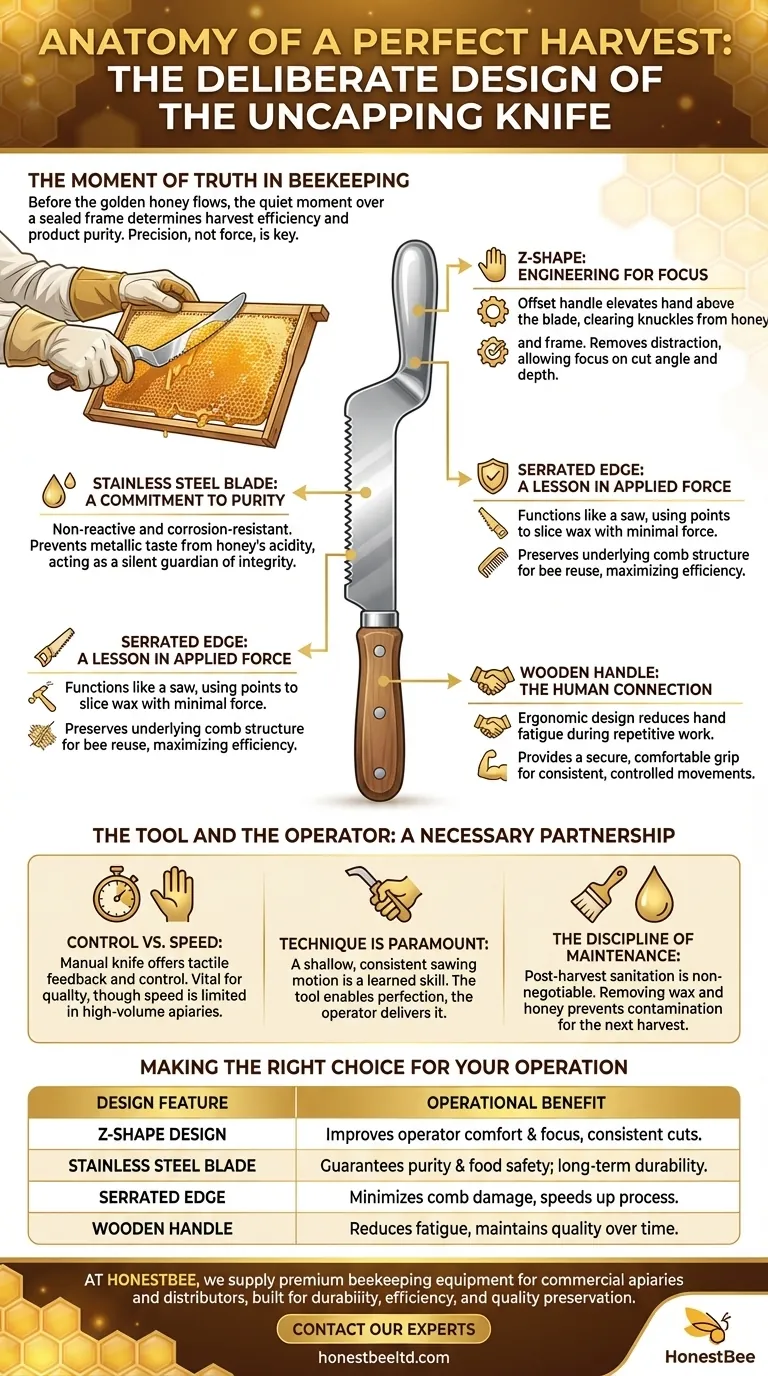
The Z-Shape: Engineering for Focus
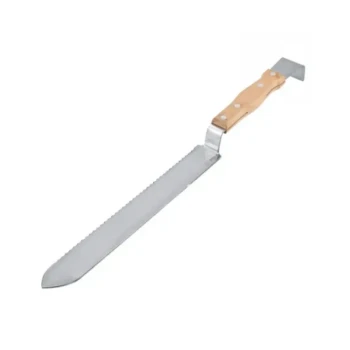
The most striking feature is the offset "Z" shape. This is not an aesthetic choice; it's an ergonomic mandate.
By elevating the handle above the plane of the blade, the design accomplishes one crucial thing: it gets the beekeeper's hand out of the way. Knuckles remain clear of sticky honey and the wooden frame. This small adjustment removes a physical and mental distraction, freeing the operator to focus entirely on the angle and depth of the cut. It’s a design that builds confidence and control into the physical motion.
The Stainless Steel Blade: A Commitment to Purity
Honey is a pristine natural product, but it is also slightly acidic. This subtle acidity is an unseen adversary to lesser metals, capable of causing corrosion and imparting a metallic taste that ruins the honey's delicate flavor profile.
The choice of stainless steel is a deliberate defense. It is non-reactive and corrosion-resistant, acting as a silent guardian of the honey's integrity. The blade ensures that the only thing you taste is the pure work of the bees, not the tool used to harvest it.
The Serrated Edge: A Lesson in Applied Force
A smooth blade, when met with the resistance of beeswax, has a tendency to push and tear. This requires more downward pressure, which can easily gouge the delicate comb structure beneath the cappings—a structure the bees spent immense energy building.
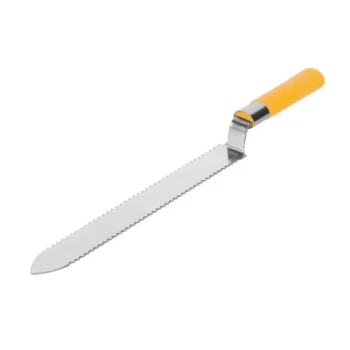
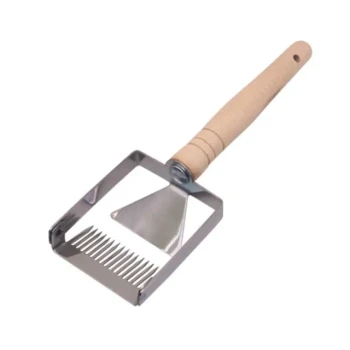
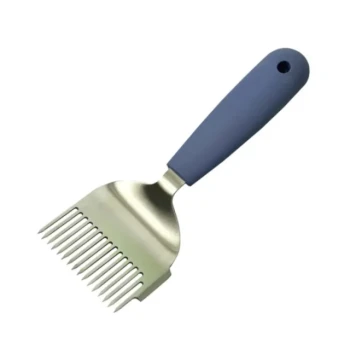
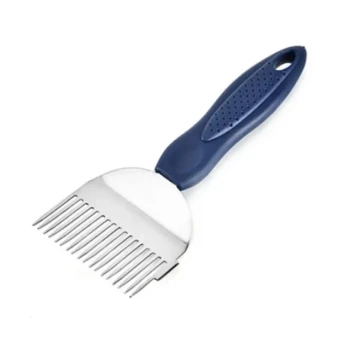
The serrated edge transforms this dynamic. It functions like a saw, using dozens of small points to slice through the wax with minimal force. This sawing action is far more efficient and surgical, preserving the underlying comb for the bees to reuse. It’s a choice that respects the bees' labor and maximizes the operation's efficiency.
The Wooden Handle: The Human Connection
Harvesting honey is repetitive work. Uncapping dozens or hundreds of frames can lead to hand fatigue, and fatigue is the enemy of precision.
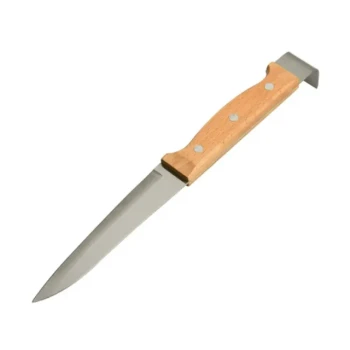
A simple, ergonomic wooden handle provides a secure, comfortable grip that reduces strain. It becomes an extension of the beekeeper's hand, allowing for consistent, controlled movements from the first frame to the last. This isn't a luxury; it's a prerequisite for quality at scale.
The Tool and The Operator: A Necessary Partnership
A superior tool does not replace skill; it amplifies it. Understanding the context of the manual uncapping knife is key to leveraging its strengths, especially in a commercial setting.
-
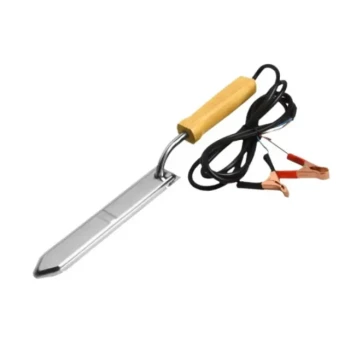
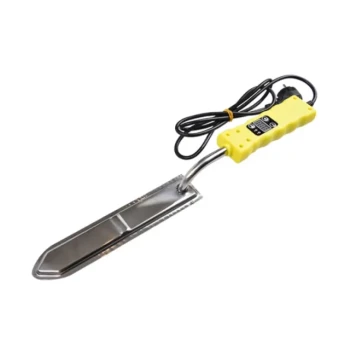
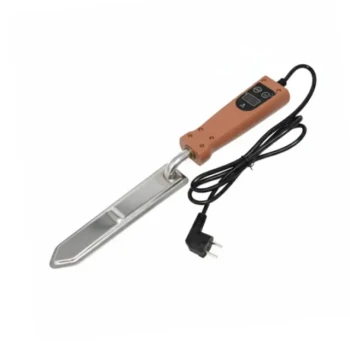
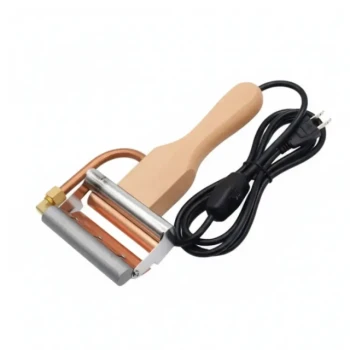
Control vs. Speed: The manual knife offers unparalleled tactile feedback and control, which is invaluable. However, for high-volume apiaries, the manual effort can become a bottleneck. This is where a strategic choice between manual precision and the raw speed of heated or electric alternatives becomes a critical business decision.
-
Technique is Paramount: The knife's design facilitates a clean cut, but the operator's technique remains the deciding factor. A shallow, consistent sawing motion is a learned skill. The tool provides the potential for perfection, but the beekeeper delivers it.
-
The Discipline of Maintenance: While stainless steel is easy to clean, the discipline of post-harvest sanitation is non-negotiable. Removing every trace of wax and honey, especially from the serrations, ensures that the tool remains a sterile instrument, protecting the next harvest from contamination.
Making the Right Choice for Your Operation
For commercial apiaries and distributors, equipment is not just a cost—it's an investment in quality and efficiency. The manual stainless steel uncapping knife represents a commitment to control and purity.
| Design Feature | Operational Benefit |
|---|---|
| Z-Shape Design | Improves operator comfort and focus, leading to cleaner, more consistent cuts. |
| Stainless Steel Blade | Guarantees honey purity and food safety; ensures long-term tool durability. |
| Serrated Edge | Minimizes comb damage and reduces physical effort, speeding up the process. |
| Wooden Handle | Reduces operator fatigue, maintaining high-quality work over long periods. |
At HONESTBEE, we understand that professional beekeeping is a system of thoughtful choices. We supply commercial apiaries and distributors with premium beekeeping equipment designed for durability, efficiency, and the preservation of honey's natural quality. Our wholesale operations are built to provide the reliable tools you need for a successful harvest, season after season.
If you are ready to equip your operation with tools designed with purpose, Contact Our Experts
Visual Guide
Related Products
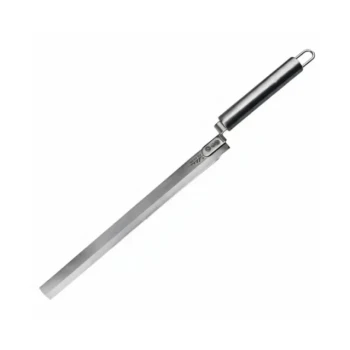
- Professional All-Stainless Steel Uncapping Knife for Beekeeping
- Professional Z-Shaped Multi-Function Uncapping Knife for Beekeeping
- Professional 12V DC Electric Uncapping Knife for Beekeeping
- Professional Serrated Double-Sided Uncapping Knife for Beekeeping
- Professional Stainless Steel Double-Sided Honey Uncapping Knife
Related Articles
- From Craft to Scale: Choosing the Right Uncapping Knife for Your Apiary
- Precision and Patience: The Physics and Psychology of the Uncapping Knife
- The Physics of Procrastination: Mastering the Uncapping Knife Cleanup
- How to Choose and Master Decapping Knives for Optimal Honey Yield
- How to Choose the Right Beeswax Uncapping Tool for Your Beekeeping Needs