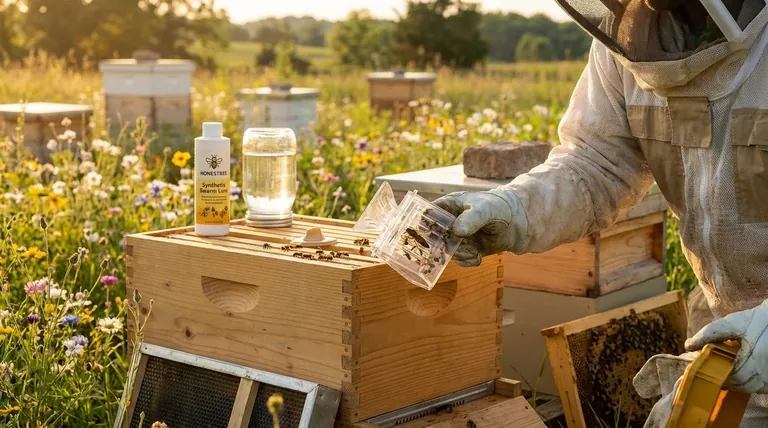
The Beekeeper's Two Languages
A beekeeper stands before an empty hive box. Their goal is to fill it with a colony. Weeks later, they stand before a bustling, established hive. The goal is now to ensure it thrives.
The tools they use in each scenario might seem similar—attractants and feeds—but their intent is fundamentally different. This isn't just about luring bees; it's about communication. Success in beekeeping comes from understanding that you must speak two different languages: the language of invitation and the language of provision.
One is about persuasion. The other is about support. Confusing them has consequences.
Language 1: The Invitation to a New Home
When a colony swarms, it enters a high-stakes search for real estate. Scout bees become explorers, evaluating cavities, sun exposure, and defensibility. As a beekeeper, your job is to convince these scouts that your bait hive is the perfect choice.
This is an act of pure persuasion, and it hinges on scent.
Mimicking the "Approved" Signal
Scout bees use a chemical signal, the Nasonov pheromone, to tell the rest of the swarm, "I've found it. This is the place." It’s a biological seal of approval. Your lure must mimic this exact signal.
Lemongrass Oil: A Natural Whisper
Lemongrass essential oil contains citral, a key component of the Nasonov pheromone. A few drops inside a bait hive serve as a natural, compelling whisper that suggests other bees have already vetted and approved this location.
Synthetic Pheromones: A Professional Broadcast
For commercial operations where predictability is paramount, a natural whisper may not be enough. Synthetic swarm lures are engineered to release a precise, potent, and long-lasting mimic of the Nasonov pheromone. This isn’t just an attractant; it’s a clear, unambiguous broadcast signal designed for maximum effect, increasing capture rates significantly.
Language 2: The Signal of Abundance
Once a colony is established, your language must change. The goal is no longer to attract bees from afar but to influence the behavior of the colony you have. You do this by signaling abundance.
A honey bee colony's entire existence is a bet on future resources. By providing supplemental food, you are not just feeding them; you are telling them the bet is safe. You are encouraging them to invest.
Simulating a Nectar Flow
Feeding a 1:1 sugar-to-water solution mimics a strong natural nectar flow. This signal tells the hive's collective intelligence that resources are plentiful. The response is immediate and instinctual: build wax, draw out comb, and prepare for expansion. The queen, sensing this abundance, increases her egg-laying rate.
Fueling the Next Generation
Pollen is the protein that fuels growth. It is essential for raising brood. When you provide pollen patties during a shortage, you send a powerful message: "The resources needed to raise a new generation are secure." This prevents a slowdown in brood rearing and ensures the colony's long-term strength.
The Unintended Consequences of Communication
Every signal carries risk. A message intended for your bees can be intercepted by others, and a well-meaning signal can be misinterpreted if the context is wrong.
When Your Signal is Too Loud
Open feeders or spilled syrup can attract wasps, ants, and robber bees from neighboring hives. This creates a state of war, stressing your colony and depleting its resources. Your signal of abundance becomes an invitation to chaos.
The Flaw in a Perfect Message
A potent synthetic lure in a poorly placed, undersized, or drafty bait hive will fail. The message—"This is a perfect home"—is contradicted by the reality. The system fails because the promise doesn't match the product. Persuasion requires both a compelling message and a quality offering.
The Burden of Provision
Improper feeding—using spoiled syrup or leaving patties in too long—can introduce pathogens and mold. The act of support becomes a source of disease. This transforms a tool for growth into a vector for decline, a reminder that provision carries a heavy responsibility.
Aligning Intent with Action
Effective beekeeping is about clarity of purpose. Are you persuading or providing? Your answer dictates your tools and your strategy.
| Objective | Psychological Signal | Primary Tool |
|---|---|---|
| Convince a new swarm to move in. | "This is a safe, approved home." | Synthetic Pheromone Lures |
| Stimulate comb construction. | "Nectar is abundant; build now." | 1:1 Sugar Syrup |
| Boost population growth. | "Protein is plentiful; raise brood." | Pollen Patties |
Executing this strategy at a commercial scale requires not just knowledge, but reliable, professional-grade tools. From potent synthetic lures that guarantee a consistent signal to durable feeding systems that minimize risk, HONESTBEE specializes in equipping commercial apiaries and distributors for success.
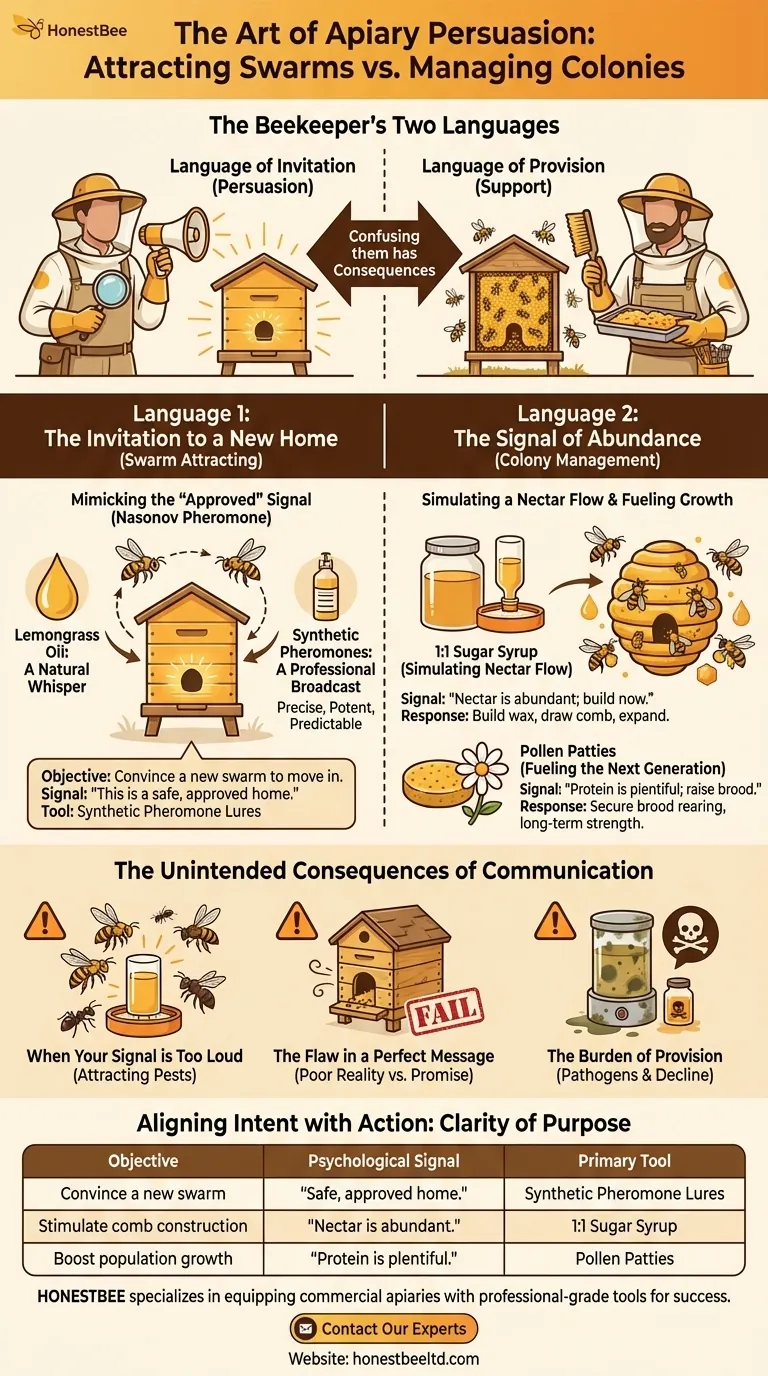
Visual Guide
Related Products
Related Articles
- Beyond Honey: The Strategic Calculus of the Pollen Trap
- The Queen's Prison: How a Pollen Trap Can Create a Single Point of Failure in Your Apiary
- How to Install Pollen Traps Without Stressing Your Hive: A Beekeeper’s Guide
- The Paradox of the Pollen Trap: Engineering for Harvest and Hive Health
- How Pollen Traps Transform Beekeeping: From Hive Health to Additional Income
