The Unseen Risk in the Solution
Opening a hive is an act of calculated intervention. The goal is to help, to nurture, to protect. Yet every tool we introduce into this delicate ecosystem carries an implicit risk.
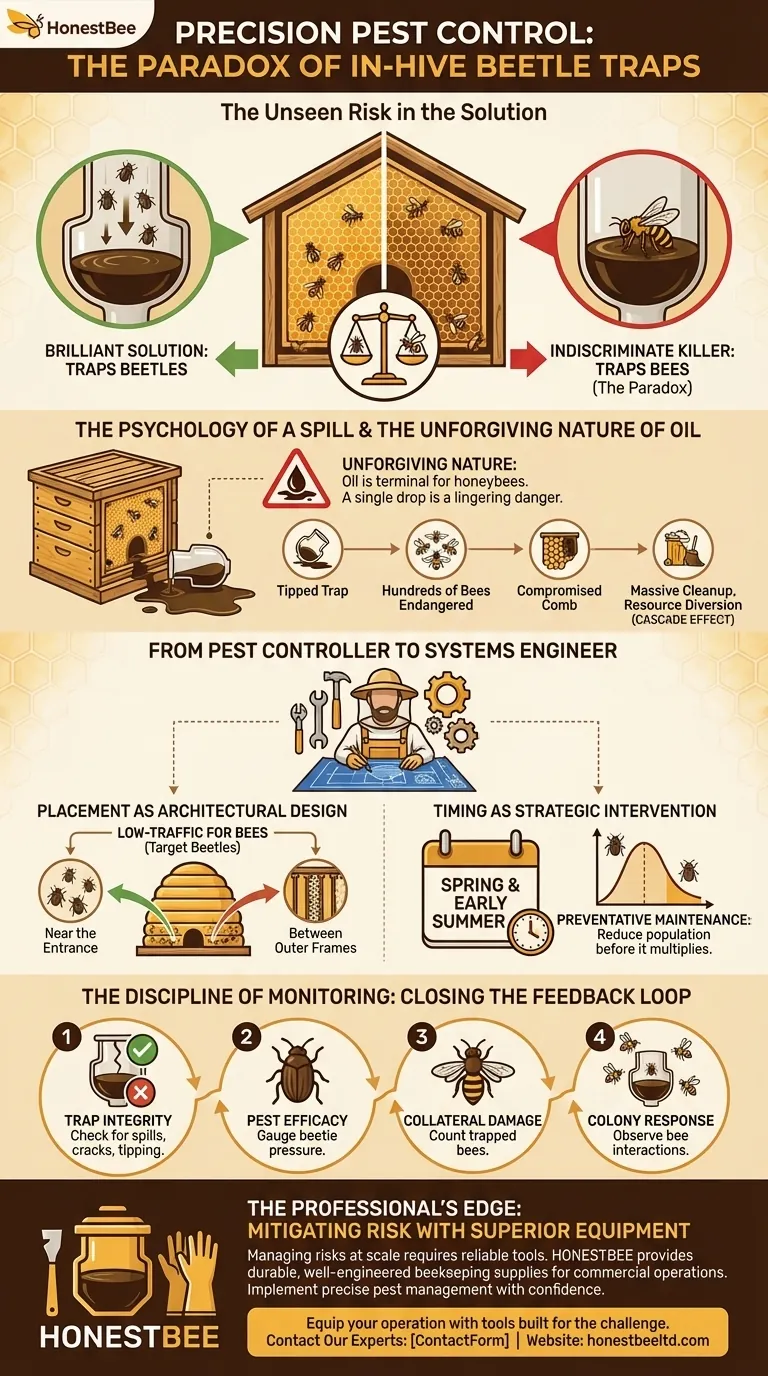
The small hive beetle trap is a perfect example of this paradox. It is a brilliant, simple solution to a persistent threat. But the very mechanism that makes it effective—a reservoir of oil—is also an indiscriminate killer. It cannot tell the difference between a pest and the bees you are sworn to protect.
This isn't a failure of the tool. It is a challenge of its application.
The Psychology of a Spill
We are wired to focus on the obvious threat: the beetles marching through the hive. This focus can create a blind spot, causing us to underestimate the secondary risk posed by our own solution. We worry about the invasion, but not the "friendly fire."
The Unforgiving Nature of Oil
For a honeybee, contact with the trapping oil is a terminal event. There is no escape. A single misplaced drop or a slightly overfilled trap creates a silent, persistent hazard within the colony.
A spill isn't a momentary mistake; it's a lingering danger zone. Bees performing their daily duties—cleaning, guarding, foraging—can wander into it, leading to a slow, cumulative loss that weakens the entire colony.
The Cascade Effect of a Small Error
In a complex system like a beehive, small errors don't always have small consequences. A tipped trap can endanger hundreds of bees, compromise a section of comb, and introduce a contaminant that requires a massive cleanup effort from the colony, diverting resources from honey production and brood care.
From Pest Controller to Systems Engineer
To use these traps safely, we must shift our mindset. A beekeeper isn't just a pest controller; they are a systems engineer, integrating a foreign component into a living machine. This requires precision, foresight, and an understanding of the hive's internal dynamics.
Placement as Architectural Design
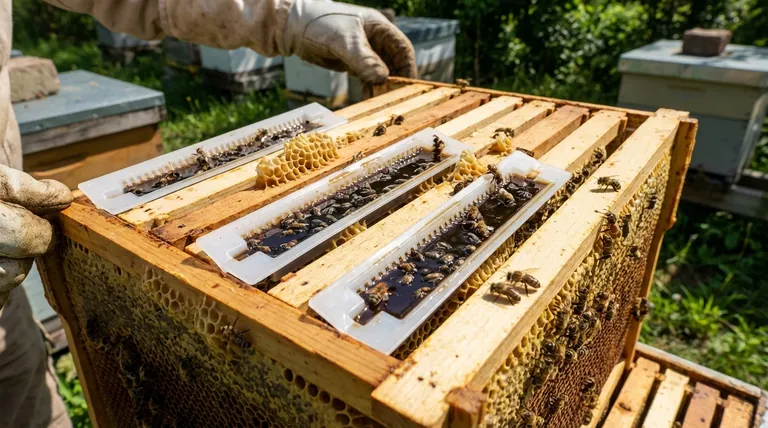
Where you place a trap is not a matter of convenience. It is an act of architectural design based on the hive's traffic flow. The goal is to position the trap in a low-traffic area for bees but a high-traffic, high-value location for beetles.
- Near the Entrance: Beetles often seek to hide immediately upon entering the hive.
- Between Outer Frames: Beetles migrate to the edges of the brood nest, away from the main cluster of bee activity.
Strategic placement minimizes the probability of accidental contact by bees and reduces the risk of the trap being dislodged during inspections.
Timing as Strategic Intervention
Deploying traps is not a reaction to a problem; it is a proactive measure. The most effective time for this intervention is in the spring and early summer.
By reducing the beetle population before it can multiply, you are performing preventative maintenance on the entire system. You prevent the conditions for failure—a catastrophic beetle infestation—from ever taking root.
The Discipline of Monitoring: Closing the Feedback Loop
A trap is not a "set-and-forget" device. It is an intervention that requires a feedback loop. Regular monitoring is how you collect the data to close that loop.
When you inspect a trap, you are assessing more than its beetle count. You are conducting a systems check.
| Monitoring Check | Purpose |
|---|---|
| Trap Integrity | Check for spills, cracks, or signs of tipping. |
| Pest Efficacy | Gauge the beetle population pressure. |
| Collateral Damage | Count any bees inadvertently caught. |
| Colony Response | Observe if bees are avoiding or interacting with it. |
This regular assessment ensures the solution isn't becoming a new problem.
The Professional's Edge: Mitigating Risk with Superior Equipment
For commercial apiaries and equipment distributors, managing these risks at scale is paramount. The discipline and precision required for safe pest control depend entirely on the reliability of the tools being used. A flimsy, poorly designed trap is an unacceptable liability; it increases the probability of spills and system failure.
This is why professional-grade equipment is not a luxury—it's a core component of risk management. HONESTBEE provides the durable, well-engineered beekeeping supplies designed for wholesale and commercial operations. Our equipment allows beekeepers to implement precise pest management strategies with confidence, ensuring the tools you rely on are a solution, not a liability.
Mastering the use of beetle traps is about understanding this delicate balance between protection and risk. With the right approach and reliable equipment, you can effectively safeguard your colonies. To equip your operation with the tools built for this challenge, Contact Our Experts.
Visual Guide
Related Products
- Reusable Aluminium Beetle Trap for Small Hive Beetles Silver Bullet
- Black Plastic Beetle Barn Hive Beetle Trap for Beehives
- Reusable Clear Small Hive Beetle Traps for Beehives Beetle Trapping Tools
- Removable Washable Hive Beetle Trap Attractants for Small Hive Beetles
- Plastic Beetle Blaster Trap Beekeeping Tools and Supplies
Related Articles
- The Beetle in the Machine: Hive Health is the Only True Pest Control
- Anatomy of a Hive Collapse: The Small Hive Beetle's Numbers Game
- The Scent Plume Protocol: A Strategic Guide to Swarm Capture
- Beyond Honey: The Strategic Calculus of the Pollen Trap
- How to Install Pollen Traps Without Stressing Your Hive: A Beekeeper’s Guide