The Psychology of a Forgotten Threat
Imagine a silent apiary in late autumn. The air is crisp, the hives are heavy with honey, and the colonies are well-fed. The beekeeper has done everything right—or so they think. They’ve prepared their bees for the long, cold months ahead.
Yet, a single, overlooked detail can render all that preparation useless.
This is the central problem of winter beekeeping: we often focus on the big, obvious challenges like starvation and temperature, while ignoring small, asymmetric threats. The most devastating of these is a single mouse.
The Hive's Transformation: From Fortress to Incubator
To understand the danger, you must first appreciate the profound behavioral shift a honeybee colony undergoes as winter approaches. It’s a complete system change, from an active fortress to a passive survival pod.
Summer: A Defended City
In warm weather, a beehive is a marvel of collective defense. Guard bees patrol the entrance relentlessly, identifying and repelling any intruder that doesn't belong. The hive is a high-traffic, heavily-policed city.
Winter: A State of Vulnerability
As temperatures drop, this entire defensive system is abandoned. The bees retreat from the outer world and form a tight winter cluster around their queen. Their only mission is survival.
They disengage their wings from their flight muscles and begin to shiver, generating the heat necessary to keep the queen and the core of the cluster alive. They are now completely stationary, a single, vulnerable organism focused inward. They will not—cannot—leave the cluster to investigate a disturbance or chase out a pest.
The fortress gates are left wide open.
The Intruder's Calculus: A Perfect Winter Haven
For a field mouse seeking shelter from the biting cold, a beehive is not just an option; it is a perfect destination. The logic is brutally simple.
- Unrivaled Shelter: A hive offers a pre-built, insulated cavity, protected from wind, rain, and snow. It is warmer than any burrow the mouse could dig.
- An Unending Pantry: More importantly, the hive contains a massive caloric stockpile. Honey and pollen provide endless food. Even the bees themselves become a source of protein.
To a mouse, a defenseless winter hive is the ultimate prize: a warm, safe home with a fully stocked pantry.
The Anatomy of a Collapse
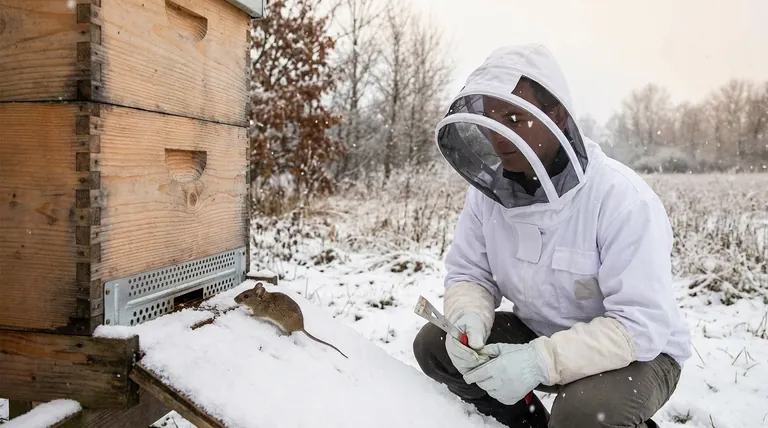
A mouse is not a benign tenant. Its presence is a slow-acting poison that systematically dismantles the colony from the inside out over the course of a few months. The damage is almost always fatal.
1. Structural Sabotage
To create a comfortable nest, mice will chew through the delicate wax honeycomb and wooden frames. They destroy the intricate architecture that the bees spent an entire season building, ruining the colony's ability to store food and raise brood in the spring.
2. Biological Contamination
The nesting area becomes fouled with urine and droppings. This contaminates stored honey and pollen, rendering it unusable for the bees. The foul odor and mess create an environment the bees will not clean and often abscond from if they survive.
3. Psychological Stress
The constant presence of a predator—its noise, its smell, its movement—causes immense stress on the clustered bees. This stress forces them to raise their metabolic rate, causing them to consume their finite winter honey stores far more quickly than they otherwise would.
By the time spring arrives, the beekeeper opens the hive to find a scene of total destruction: shredded frames, a foul nest, and a dead colony. The equipment is often so contaminated it must be destroyed.
The Elegant Solution: The Mouse Guard
The solution to this catastrophic, yet predictable, failure is an almost absurdly simple piece of engineering: the mouse guard.
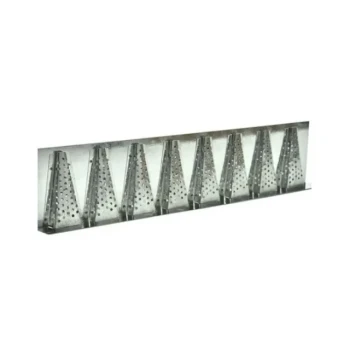
It is a strip of metal or wood placed over the hive entrance with openings just large enough for a bee to pass through (typically 3/8 inch or 9.5mm) but too small for a mouse to enter. It is one of the highest-leverage, lowest-cost tools in beekeeping.
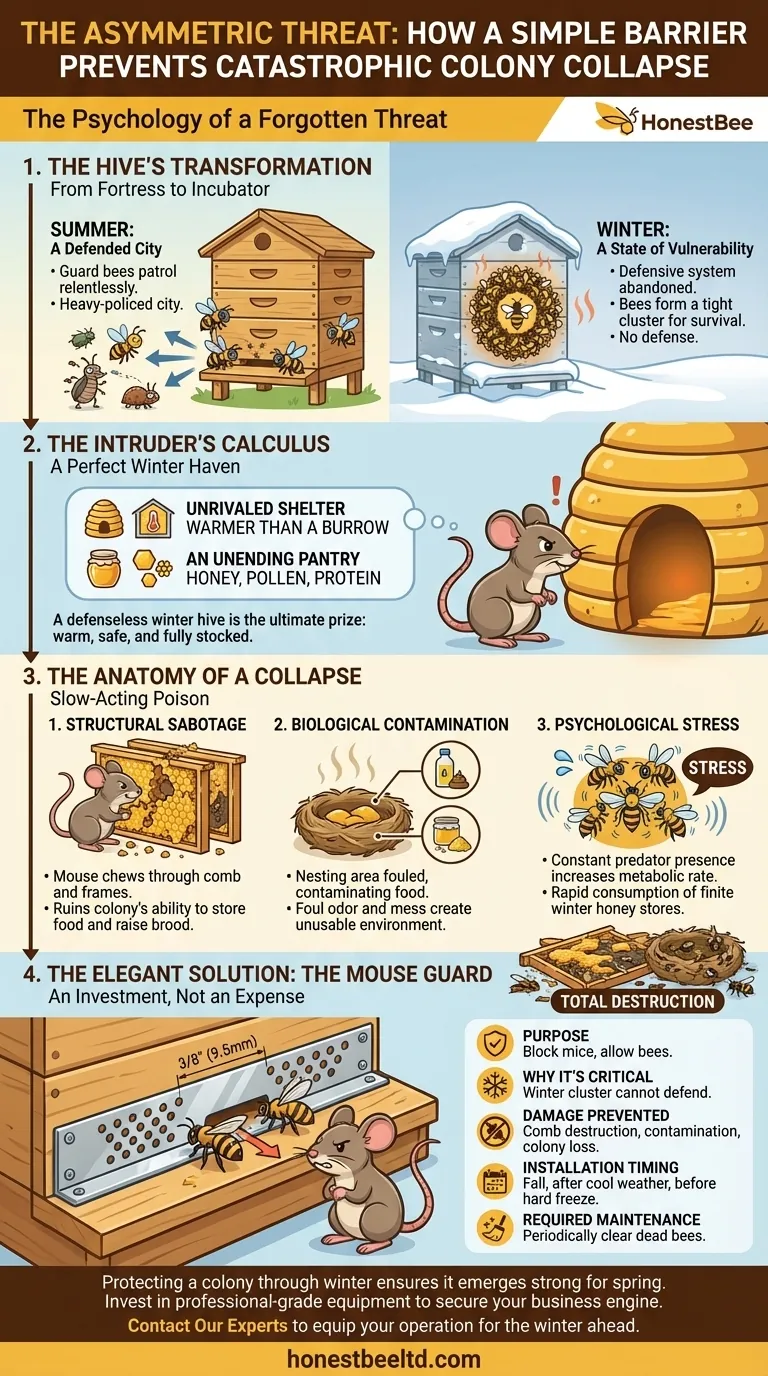
| Aspect | Key Consideration |
|---|---|
| Purpose | To physically block mice from entering the hive while allowing bee passage. |
| Why It's Critical | The winter bee cluster is physiologically incapable of defending the hive. |
| Damage Prevented | Destruction of comb, food contamination, colony stress, and total colony loss. |
| Installation Timing | In the fall, after cool weather arrives but before the first hard freeze. |
| Required Maintenance | Periodically check and clear any dead bees that may block the entrance. |
An Investment, Not an Expense
For commercial apiaries and wholesale distributors, a mouse guard isn't just a good idea; it's a fundamental component of risk management. The cost of a durable, well-made mouse guard is negligible compared to the value of a productive honeybee colony. Losing even a single hive to a preventable pest is an unacceptable operational failure.
Protecting a colony through winter ensures it emerges strong and ready for spring pollination and honey production. This isn't about saving bees; it's about protecting the engine of your business. The vulnerability is systemic, the threat is predictable, and the solution is simple.
For commercial apiaries and distributors focused on protecting their investments and ensuring strong colonies for the spring, using reliable, professional-grade equipment is non-negotiable. Contact Our Experts to equip your operation for the winter ahead.
Visual Guide
Related Products
Related Articles
- Hive Security is a Geometry Problem: Mastering the Beehive Entrance
- How to Prevent Robbing in Beehives: Science-Backed Strategies for Apiaries
- The Unclimbable Fortress: A Systems Approach to Protecting Hives from Ants
- Metal Queen Excluders: The Long-Term Solution for Healthy, Productive Hives
- How Metal Queen Excluders Deliver Decade-Long Value for Sterilization-Ready Apiaries