The Silence of a System Under Strain
A winter apiary is a place of profound quiet. To the untrained eye, it’s dormant. But for the beekeeper, it’s a season of calculated anxiety.
Inside each hive, a complex biological engine is running. A colony of bees, clustered into a tight sphere, is vibrating its flight muscles not to fly, but to generate heat. They are a living furnace, and their sole fuel is the honey they painstakingly stored months before.
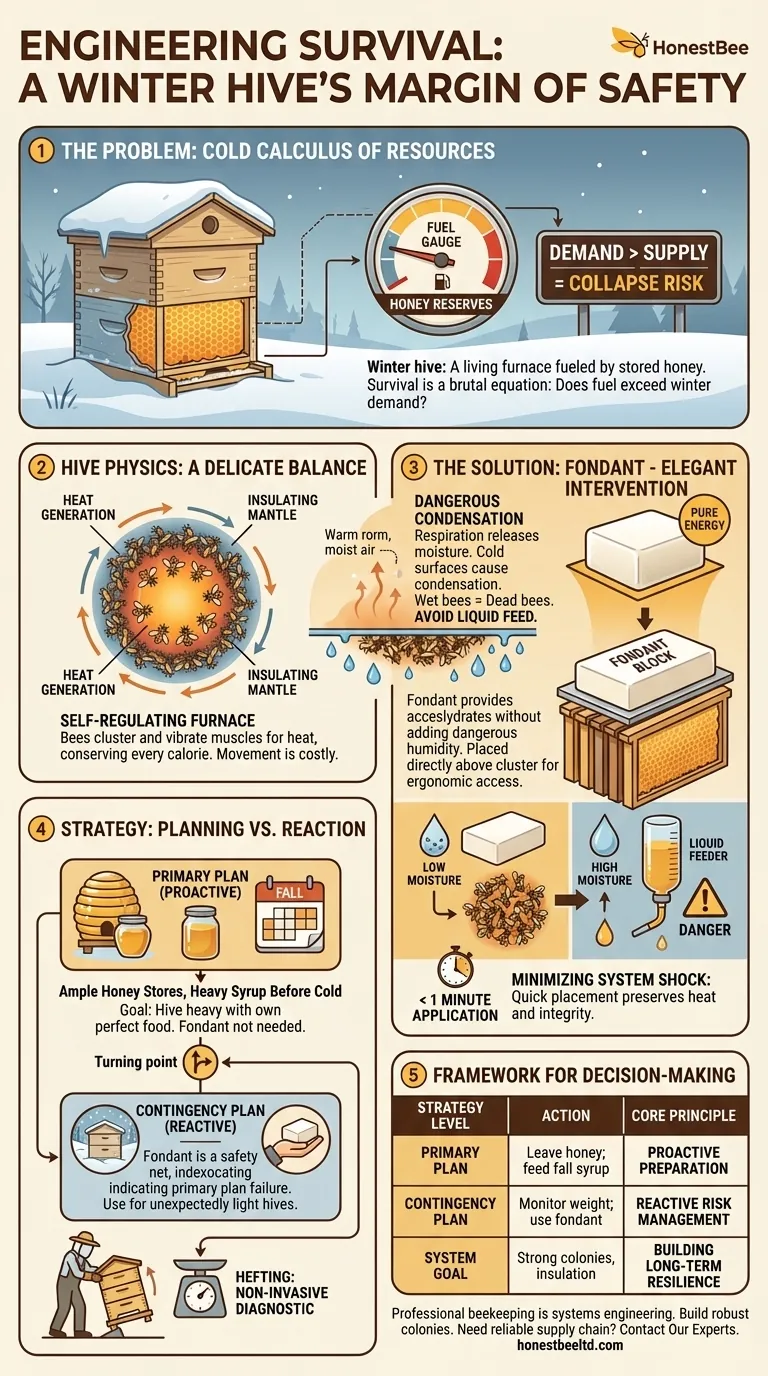
The fundamental challenge is a simple, brutal equation of resource management: does the fuel reserve (honey) exceed the demand required to survive an winter of unknown length and intensity?
When the answer trends toward "no," the entire system is at risk of collapse.
The Physics of a Winter Hive
To intervene successfully, one must first respect the delicate physics at play inside the hive.
The Self-Regulating Furnace
The winter cluster is a marvel of thermal engineering. Bees on the outer layer form a dense, insulating mantle, while bees in the core generate heat. They rotate positions, ensuring no single bee freezes.
This system is designed to conserve every possible calorie. Moving even a few inches to access a cold, distant food source can be a fatal expenditure of energy.
The Silent Killer: Condensation
The bees' respiration and the evaporation from their food sources release warm, moist air. In a cold hive, this moisture rises, hits the cold inner cover, and condenses.
If this moisture drips or freezes, it falls back onto the cluster. Wet bees are dead bees. This is why pouring liquid sugar syrup into a winter hive is not just ineffective; it's actively dangerous. You are injecting the very thing the hive is designed to expel: excess water.
Fondant: The Elegant Intervention
The problem, then, is how to deliver emergency carbohydrates without upsetting the hive's delicate thermal and moisture balance. The solution is fondant—a solid brick of sugar.
Delivering Energy, Not Water
Fondant is essentially a sugar candy with extremely low moisture content. It provides pure, accessible energy without contributing to the dangerous humidity cycle. The bees can consume it directly, drawing the minimal moisture they need from the candy itself.
Strategic Placement: A Lesson in Ergonomics
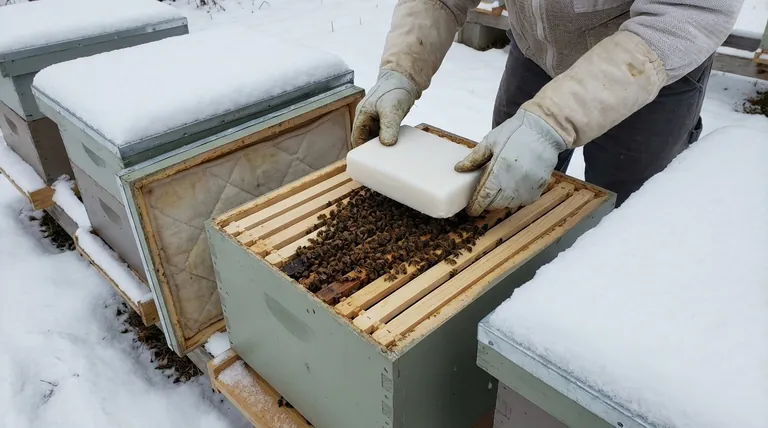
The standard practice is to place the fondant block directly on the top bars of the frames, right above the winter cluster. This placement is no accident. It allows the bees to access the food with minimal movement, without breaking their heat-generating cluster. The warmth rising from the bees even helps soften the fondant, making it easier to consume.
Minimizing System Shock
Applying fondant is a quick, minimally invasive procedure. The beekeeper can open the hive for less than a minute, place the block, and close it again. This surgical precision minimizes heat loss and avoids causing undue stress to the colony, preserving the system's integrity.
Planning vs. Reaction: A Mindset Shift
While fondant is a brilliant tool, its use represents a psychological and strategic turning point for the beekeeper. It is a sign that the primary plan has failed.
The Goal is to Not Need It
The best-case scenario is a hive so heavy with its own honey in the fall that emergency feeding is never a consideration. Honey is their perfect food, containing not just sugars but also the micronutrients they need. Proactive fall management—leaving ample honey and topping off stores with heavy syrup before the cold sets in—is the primary strategy.
Fondant is reactive. It's the safety net, not the high-wire. Consistently needing it is a data point suggesting your fall preparations need re-evaluation.
Reading the Signs: The Art of Hefting
Experienced beekeepers develop a feel for their hives. By periodically "hefting" or tilting the hive, they can gauge its weight. A hive that feels alarmingly light in January is a candidate for an emergency fondant application. It's a non-invasive diagnostic test, a way of monitoring the system's fuel levels without a disruptive inspection.
A Framework for Winter Decision-Making
Every intervention in a complex system involves trade-offs. Fondant is a lifesaver, but it is not a panacea. It's a tool that must be understood within a broader strategy.
| Strategy Level | Action | Core Principle |
|---|---|---|
| Primary Plan | Leave sufficient honey stores; feed heavy syrup in the fall to ensure maximum hive weight. | Proactive Preparation |
| Contingency Plan | Monitor hive weight through winter; have fondant ready for hives that become unexpectedly light. | Reactive Risk Management |
| System Goal | Cultivate strong, healthy colonies with good genetics and provide proper insulation to reduce food demand. | Building Long-Term Resilience |
Viewing your operation through this lens transforms beekeeping from a series of chores into a practice of systems engineering. Your goal isn't just to keep bees alive; it's to build robust, self-sufficient colonies that can withstand nature's variables. This professional approach requires reliable, high-quality equipment. As a commercial apiary or distributor, your success depends on having the right tools to execute your strategy, from the hive bodies that provide insulation to the feeders and emergency supplies that ensure survival.
For professionals who manage their apiaries as the complex systems they are, having a dependable supply chain is non-negotiable. Contact Our Experts
Visual Guide
Related Products
- Modern Honeycomb Pattern Wooden Honey Dipper for Stirring and Drizzling
- Professional Plastic Honey Dipper for Easy Honey Drizzling
Related Articles
- How to Ethically Harvest Honey Without Compromising Bee Colony Survival
- How Floral Composition Shapes Honey Texture: Managing Crystallization for Perfect Consistency
- How Humidity Alters Honey’s Flavor and Practical Ways to Preserve It
- The Unseen Battle in Every Honey Bucket: Heat, Time, and Quality
- How to Control Honey Crystallization: Science-Backed Methods for Beekeepers