The Unprocessed Ideal
In a world optimized for extraction and efficiency, comb honey is an anomaly. It represents a deliberate choice to step back from industrial processing and present a product in its most pristine, architectural form.
While most honey is spun from its comb, filtered, and bottled, comb honey is a testament to preservation. The honeycomb itself—the delicate wax structure built by bees—is the package. This isn't just a different product; it's a fundamentally different operational philosophy, one that trades volume for value and machinery for meticulous craft.
Understanding this craft is key to understanding its appeal. It’s a system built on trust between the beekeeper, the bees, and the consumer.
Engineering the Perfect Canvas
You cannot produce exceptional comb honey by accident. It begins long before the harvest, with deliberate choices made to guide the bees’ natural construction. The goal is to create a flawless, edible canvas free of man-made imperfections.
The Problem with Wires
Standard beekeeping frames often use wires for structural support, reinforcing the wax foundation. While practical for honey extraction—where the comb is reused—these wires make it impossible to cleanly slice the honeycomb into marketable sections.
The Wireless Solution
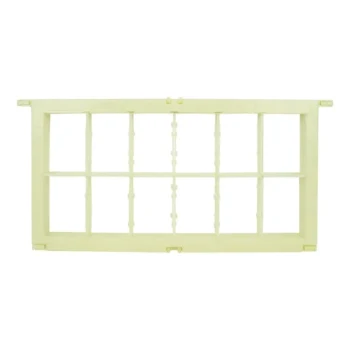
Producing comb honey requires specialized frames, typically with a wireless wax foundation or no foundation at all. This encourages bees to build a pristine, uninterrupted comb. It’s a simple change with profound implications, shifting the focus from durability for extraction to suitability for direct consumption.
This is the first critical investment in the comb honey process: providing the bees with the right environment to build a product that is both structurally sound and perfectly edible.
A Signal of Completion
Patience is a non-negotiable part of the process. A beekeeper cannot rush the harvest. The signal to proceed comes directly from the bees.
A frame is ready only when the honeycomb is fully capped and sealed with a layer of pure white beeswax. This cap is more than just a lid; it's a guarantee. It signifies that the bees have cured the honey to the correct moisture content (under 18.6%), ensuring it will not ferment or spoil.
Harvesting an uncapped comb is a critical error, compromising the shelf life and integrity of the final product. The white, pristine cap is the visual mark of quality that the entire process is built around.
The Manual Art of Preparation
While liquid honey production leans on centrifuges and pumps, preparing comb honey is a quiet, manual affair. It resembles the work of an artisan more than a factory technician.
From Frame to Block
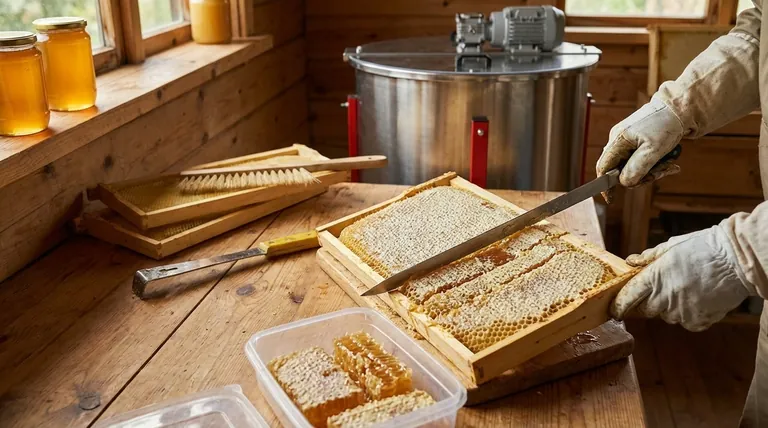
The process begins by gently brushing bees off the selected frames. The entire sheet of capped honeycomb is then carefully cut from its frame with a long, sharp knife.
This large sheet is laid on a sanitary cutting surface and methodically divided into neat, geometric portions. Every cut must be clean to preserve the delicate structure of the cells.
The Psychology of Packaging
The cut sections are placed into clear, food-safe containers. This transparency is not just for aesthetics; it is a core part of the product's value proposition. It allows the customer to see the hexagonal perfection, the glistening honey, and the pristine wax cappings. It wordlessly communicates purity and authenticity.
A small drizzle of liquid honey is often added to fill gaps and enhance the visual appeal, making the final product look like a preserved jewel.
The Inescapable Economics of Craft
Choosing to produce comb honey is an economic decision with clear trade-offs. The potential for a premium price is balanced against tangible costs in yield and labor.
The Value of Purity vs. The Cost of Labor
Consumers pay a premium for comb honey because it is perceived as honey in its purest form—untouched by heat, filtration, or even air. It’s an experience as much as a food.
However, this comes at a cost. Manually cutting and packaging each section is far more labor-intensive per pound than using a mechanical extractor. It's a scalable process for an artisan, but a serious operational consideration for a commercial apiary.
Lower Yields, Higher Effort
Bees expend tremendous energy producing beeswax. In traditional extraction, the comb is returned to the hive, giving the colony a head start on the next season. With comb honey, the entire structure is sold. This means the apiary harvests less honey by weight, as the bees must rebuild the comb from scratch each time.
This makes comb honey production highly dependent on a strong nectar flow and a robust colony, adding a layer of agricultural risk.
A Tale of Two Philosophies
| Aspect | Cut-Comb Honey | Traditional Liquid Honey |
|---|---|---|
| Production Goal | Create a flawless, edible product | Maximize the volume of extracted honey |
| Key Equipment | Wireless foundation frames, small supers | Standard frames, extractor, filters |
| Labor Intensity | High (manual cutting & packaging) | Lower (mechanical extraction) |
| Final Product | Intact honeycomb in a clear container | Liquid honey in a bottle |
| Market Position | Premium, high-value, niche product | Standard, high-volume, commodity product |
Choosing Your Operational Path
The decision to produce comb honey is a strategic one. It is a commitment to a niche, high-value market that rewards meticulous work and exceptional quality. It requires a different mindset and, crucially, different equipment.
For commercial apiaries and distributors ready to embrace this craft, having a reliable supply of specialized equipment is the foundation of success. At HONESTBEE, we supply wholesale beekeeping equipment, from the wireless frames needed for perfect combs to the packaging that showcases your final product. We empower professional beekeepers to meet the demands of the premium market.
If your operation is ready to pivot from volume to value and deliver the unprocessed ideal, we can provide the tools you need to succeed. Contact Our Experts
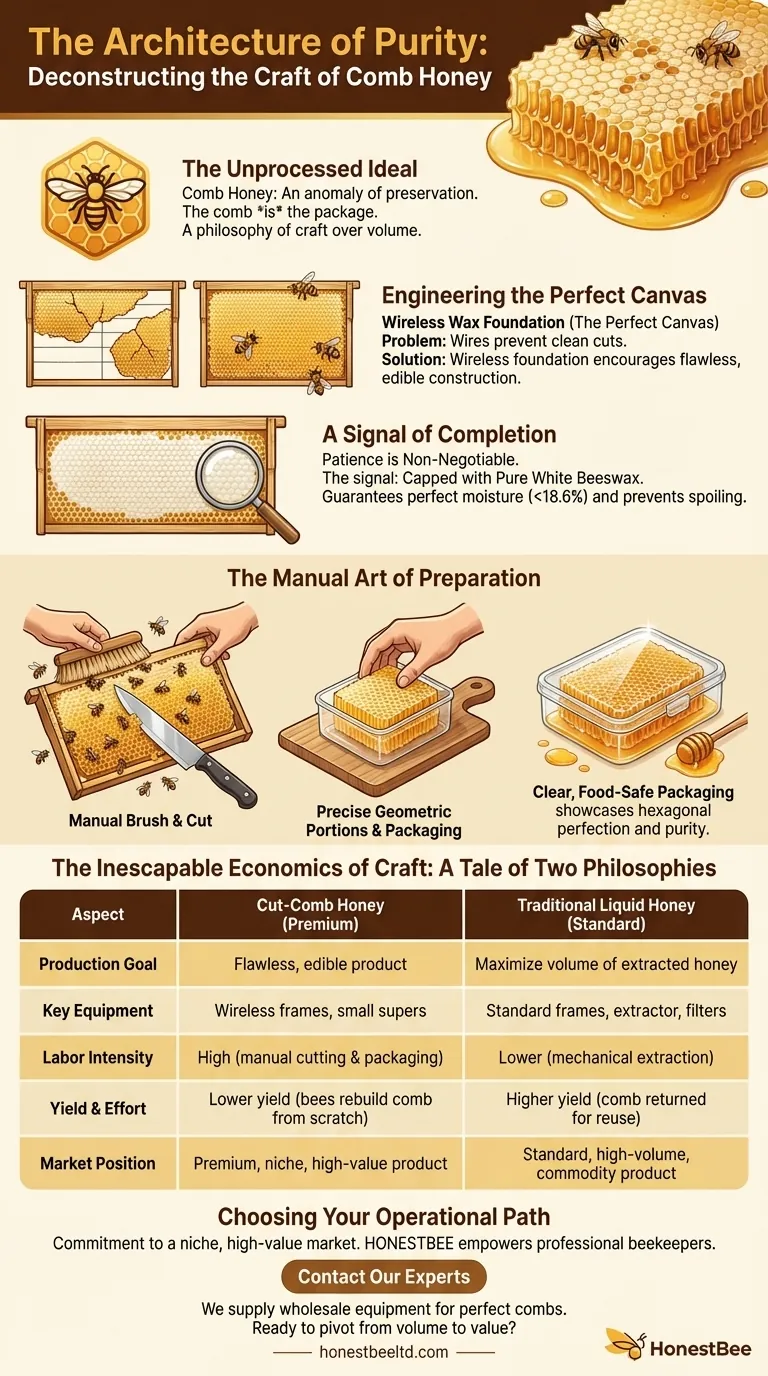
Visual Guide
Related Products
- Professional Sectional Comb Honey Frame with 250g Cassette System for Beekeeping
- Heart-Shaped Comb Honey Frame and Honeycomb Cassette
- Modern Honeycomb Pattern Wooden Honey Dipper for Stirring and Drizzling
- Plastic Honey Comb Frames Cassette Box for Honey
- Professional Wide Blade Honey Scraper for Beekeeping and Honey Processing
Related Articles
- How Stored Honey Frames Accelerate Colony Recovery: A Beekeeper’s Guide
- How Honey Frames Naturally Manage Queen Bees Without Compromising Colony Health
- The Architect's Dilemma: Choosing a Beekeeping Frame System for Longevity and Yield
- How Frame and Comb Selection Transforms Hive Health and Honey Production
- Comb Honey: Why It Commands Premium Prices and How to Verify Purity