The Architect's Dilemma
Imagine installing a new set of perfectly uniform, highly durable plastic foundations into a hive. It’s an engineer's solution: strong, reusable, and efficient. Yet, the bees—the master architects of the hive—treat it like an invisible wall. They build comb everywhere but there.
This isn't a failure of the equipment. It's a failure of translation. We provided a structure, but we failed to speak the bees' language. To solve this, we must stop thinking like human manufacturers and start thinking from the bee's perspective.
Thinking Like a Bee: The Sensory Blueprint
A beehive is not a visual space; it's a sensory one, governed by instinct, scent, and texture. Bees don't see a yellow hexagonal pattern and decide to build. They are driven by deeper, more ancient cues.
The Language of Scent
Bees navigate their world through a complex library of pheromones and familiar smells. The aroma of pure beeswax is a powerful signal. It says "home." It says "this is a safe, proper place to store honey and raise young."
Uncoated plastic is sterile. It carries the alien scent of manufacturing, not the organic scent of the colony. To a bee, this lack of the right signal is the same as a warning sign. It's an unworkable, foreign object inside their home.
The Feel of a Worksite
Bees are sculptors. They don't just fill in a pattern; they actively manipulate and draw out the wax from the embossed cells.
The hard, slick surface of raw plastic offers no purchase. It's like asking a potter to shape a rock. By applying a thin layer of real beeswax, you provide a familiar, pliable medium. You give them a starting point they instinctively know how to work with.
The Solution: A Simple Act of Translation
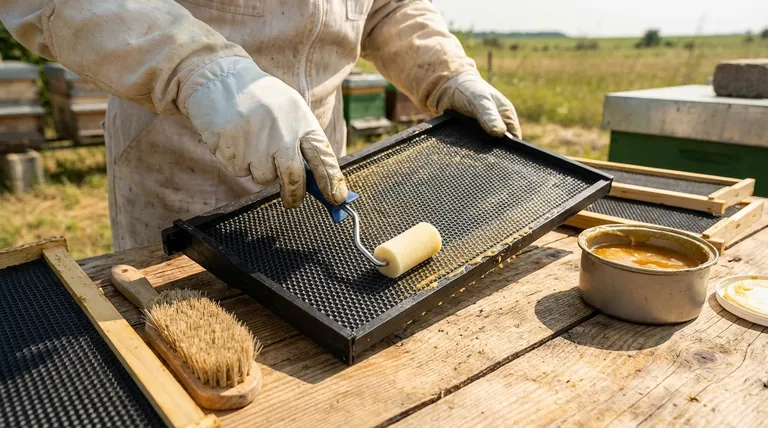
The most effective way to ensure bees accept plastic foundation is to apply a fresh, thin coat of melted beeswax. This simple act translates the foreign object into a language they understand.
Even foundations that arrive "pre-waxed" from a factory benefit immensely from this. The factory coating is often exceptionally thin and can lose its vital, attractive aroma during storage and shipping. A fresh coat restores the powerful scent signal that invites the bees to get to work.
Application: A Minimalist's Approach
You don't need sophisticated equipment.
- Melt a small amount of clean beeswax.
- Use a small foam roller or a natural-bristle paintbrush.
- Apply a thin, even coat across the entire surface.
The goal is full, consistent coverage, not a thick, drippy layer. It’s about scent and texture, not volume.
The Commercial Apiary's Calculus: Effort vs. Longevity
For a commercial beekeeper or distributor, this isn't just about one hive. It's a system-wide decision. The choice between plastic and wax foundation is a strategic trade-off.
The upfront effort of waxing frames is an investment. It takes time. But this investment pays dividends in long-term durability. Plastic frames can withstand the immense force of high-speed honey extractors and last for many seasons, unlike delicate pure wax foundations that can easily be destroyed.
| Feature | Wax-Coated Plastic Foundation | Pure Beeswax Foundation |
|---|---|---|
| Durability | High (lasts many seasons) | Low (fragile) |
| Extractor Tolerance | Excellent | Poor to Fair |
| Upfront Labor | Moderate (requires waxing) | Low |
| Long-Term ROI | High | Moderate |
This calculus makes properly prepared plastic foundation a cornerstone of modern, efficient apiaries. The initial labor is amortized over years of reliable service.
Building a More Resilient Apiary
Successfully integrating modern tools into a natural system requires understanding and respecting the instincts of the organism. By adding a simple coat of wax, we bridge the gap between human engineering and bee biology.
This small step transforms a piece of plastic from a foreign object into a productive part of the hive. For commercial operations focused on yield and equipment longevity, mastering this process is essential. Building a durable, productive apiary starts with providing your bees with equipment they are ready and willing to use.
At HONESTBEE, we provide the high-quality supplies and equipment that form the backbone of successful commercial apiaries. If you're ready to build a more resilient and efficient operation, Contact Our Experts.
Visual Guide
Related Products
- Food Grade Plastic bee Foundation for Bee Frames
- Assembled Wooden Bee Frames with Plastic Foundation for Durability and Convenience by HONESTBEE
- Plastic Bee Frame Beekeeping Hive Frames for Wholesale
- Notebook Style Beeswax Foundation Mould Wax Foundation Mold
- Colorful Silicone Beeswax Foundation Mold Mould for Beekeeping
Related Articles
- The Real Reason Your Bees Ignore Plastic Frames—And How to Fix It for Good
- The Beekeeper's Paradox: Why Durable Foundation Fails and How to Fix It
- How Commercial Beekeepers Balance Durability and Bee Behavior with Plastic Foundations
- Stop Installing Plastic Foundation Like It's Wax: The Mistake Costing Your Apiary Time and Money
- The Architect's Dilemma: Why Bees Ignore Your Plastic Foundation






