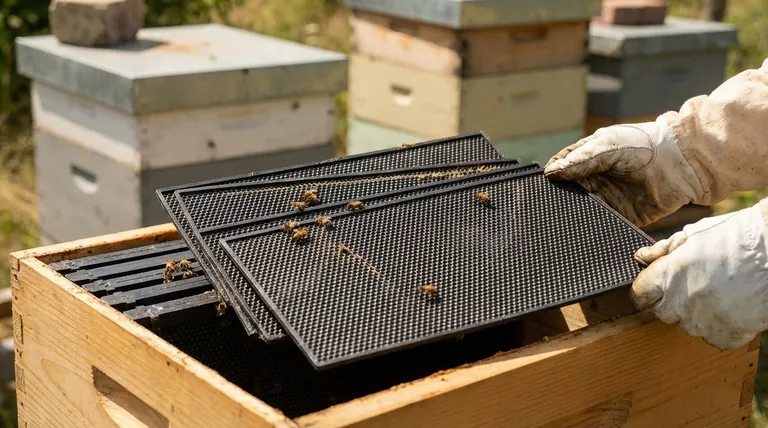
The Hidden Tax on Beekeeping
Every seasoned beekeeper understands it. It’s not a line item on a balance sheet, but a quiet, persistent drain on resources and morale.
It’s the stack of frames in the shed, discovered in spring, riddled with the silky tunnels of wax moth larvae. It’s the prized frame of drawn comb that collapses during a heatwave, drowning the queen and setting the colony back weeks. It’s the cracked corner of a brittle wax foundation sheet on a cold morning, a small failure that cascades into a lost afternoon.
This is the hidden tax of equipment degradation. It’s a force of nature and physics that, left unmanaged, erodes the very foundation of a commercial beekeeping operation. The choice of foundation, then, is not merely about giving bees a guide; it’s an architectural decision about the resilience of your entire system.
The Physics of Failure: Why Traditional Foundations Break
To engineer a better solution, we must first appreciate the forces we are fighting. For traditional beeswax foundation, the enemies are predictable, relentless, and threefold.
The Silent Sabotage of Pests
Wax moths and mice view a stack of beeswax frames as a buffet. The moths' larvae consume and destroy the wax, leaving behind a useless, webbed mess. Mice, seeking shelter and sustenance, chew through it, shattering the delicate architecture. For a commercial apiary, this isn’t just a nuisance; it’s the catastrophic loss of invested capital and future productivity.
The Tyranny of Temperature
Beeswax is a miracle of natural engineering, but it is also a slave to temperature. In the summer heat of a packed hive or a sun-baked warehouse, it can sag, warp, and even collapse under its own weight. In the cold, it becomes brittle and fragile, prone to cracking during transport or installation. Its physical state is a variable, not a constant.
The Friction of Work
Beekeeping is a physical job. Hive tools scrape and pry. Frames are dropped. Honey is extracted with centrifugal force. This necessary friction slowly degrades a material that was never designed for such rough handling. Each inspection, each harvest, chips away at the life of a beeswax foundation.
Engineered Resilience: The Plastic Foundation Advantage
Plastic foundation is not an attempt to replace wax, but to control for the variables that make wax a liability at scale. It is a strategic choice to impose order on a chaotic system.
An Impenetrable Defense
The most immediate advantage is its indifference to pests. A wax moth larva cannot consume polymer. A mouse cannot chew through it. A stack of plastic frames stored over winter will be in the exact same condition in the spring. It transforms a vulnerable asset into a secure, long-term investment.
Structural Integrity by Design
Plastic holds its plane. It is a predictable constant in a system defined by variables. It will not sag in a 100°F (38°C) heatwave or shatter on a freezing morning. This structural certainty provides a stable core for the colony, ensuring the hive's internal architecture remains sound regardless of external conditions. This is the quiet confidence that engineers build for.
Forgiveness in Handling
Plastic foundation is built to tolerate the friction of work. It withstands the scrape of a hive tool and the force of an extractor. It can be pressure-washed and sterilized, ready for reuse season after season. It forgives the small mistakes and harsh realities of daily apiary management, reducing the constant need for delicate repairs and replacements.
The Human-Honeybee Interface: A Note on Acceptance
Of course, we cannot simply impose an engineered solution on a biological system. Bees build with wax, and their instincts are powerful. This is where the crucial—and often misunderstood—detail of a wax coating comes in.
The thin layer of beeswax on a plastic foundation is a psychological bridge. It’s the handshake between a man-made structure and the bees’ ancient biological programming. It provides the scent and texture they recognize, encouraging them to accept the inert plastic beneath and begin their work.
High-quality, evenly coated foundation minimizes this acceptance gap, blending the best of human engineering with the demands of bee biology.
The Strategic Calculation: Durability as a Business Model
For commercial apiaries and beekeeping equipment distributors, the choice is clear. Durability isn't a feature; it's a business model. Every frame that survives the winter is a direct saving. Every hour not spent repairing equipment is an hour invested in hive health and expansion.
This is the operational physics that HONESTBEE understands. We supply wholesale beekeeping equipment built not just for a single season, but for the long-term economic resilience of our partners.
| Strategic Advantage | How Plastic Foundation Delivers |
|---|---|
| Reduced Capital Loss | Immune to wax moths and mice, preventing catastrophic storage failures. |
| Increased Labor Efficiency | Withstands rough handling and cleaning, saving time on repairs and replacements. |
| Operational Predictability | Maintains structural integrity in all temperatures, ensuring stable hive conditions. |
| Long-Term ROI | Reusable for many seasons, turning a consumable into a long-term asset. |
For operations built to last, the right foundation is everything. To ensure your equipment meets the demands of modern beekeeping, Contact Our Experts.
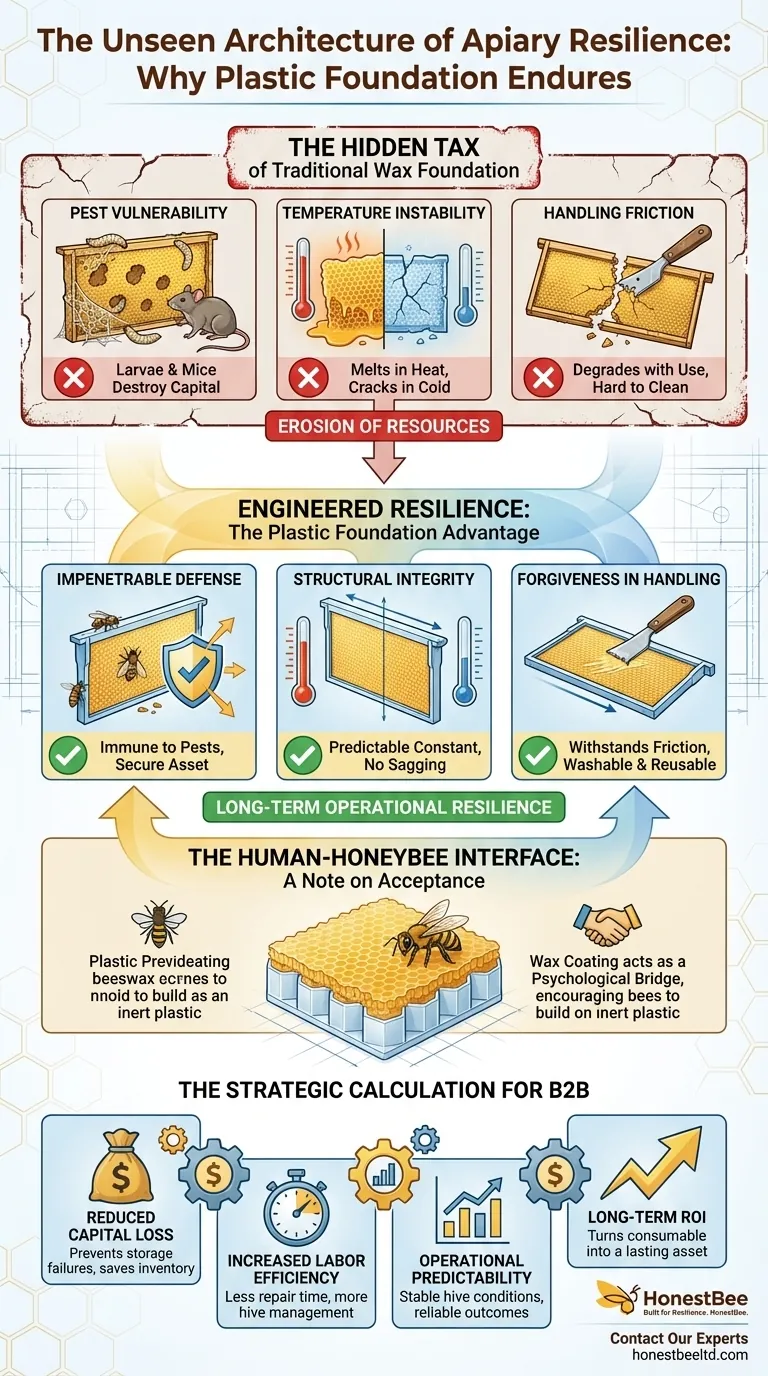
Visual Guide
Related Products
- Food Grade Plastic bee Foundation for Bee Frames
- Assembled Wooden Bee Frames with Plastic Foundation for Durability and Convenience by HONESTBEE
- Plastic Bee Frame Beekeeping Hive Frames for Wholesale
- Notebook Style Beeswax Foundation Mould Wax Foundation Mold
- Colorful Silicone Beeswax Foundation Mold Mould for Beekeeping
Related Articles
- The Real Reason Your Bees Ignore Plastic Frames—And How to Fix It for Good
- The Beekeeper's Paradox: Why Durable Foundation Fails and How to Fix It
- How Commercial Beekeepers Balance Durability and Bee Behavior with Plastic Foundations
- Stop Installing Plastic Foundation Like It's Wax: The Mistake Costing Your Apiary Time and Money
- The Architect's Dilemma: Why Bees Ignore Your Plastic Foundation






