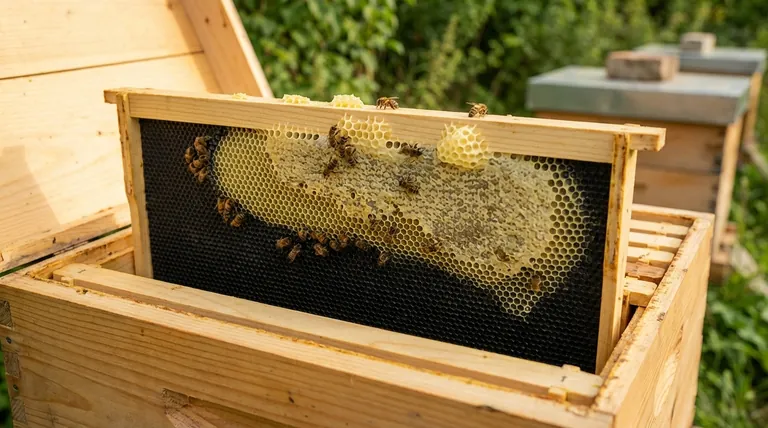
You slide a brand-new frame of plastic foundation into a bustling hive, confident that you’re giving your colony the durable, modern structure it needs to expand. You expect growth, activity, and progress.
But when you check back a week later, you’re met with a frustrating sight: the plastic frame is just as you left it—clean, untouched, and utterly ignored by the thousands of bees working around it. The colony is active, but they've chosen to build burr comb in every available space except on the equipment you provided.
This isn’t just an annoyance; for a commercial apiary, it's a significant operational bottleneck.
The Costly Cycle of Trial and Error
If this scenario sounds familiar, you’re not alone. It’s one of the most common frustrations in modern beekeeping. Many commercial beekeepers find themselves trapped in a cycle of troubleshooting:
- They blame the specific brand of foundation and switch suppliers.
- They try roughing up the surface, hoping to make it more appealing.
- They assume the pre-waxed coating was too thin and feel let down by the product.
Each failed attempt represents more than just a single untouched frame. It translates into real business consequences: delayed colony expansion, a smaller workforce for pollination contracts, and a reduced honey harvest. Every week that a colony fails to draw comb is a week of lost productivity and a direct hit to your operational efficiency and revenue.
The problem is, these common "fixes" are like trying to solve an engine problem by changing the tires. They fail because they don’t address the real issue.
The Root Cause: It's Not the Plastic, It's the Hive's Economy
The reluctance to build on plastic foundation isn't because your bees are "picky" or because the material is inherently flawed. It stems from two fundamental principles of bee biology: scent and resource abundance.
1. The Language of Wax
First, bees live in a world of scent. Their construction material—beeswax—has a distinct, familiar smell and texture. Bare plastic is an alien material. It's smooth, non-porous, and lacks the scent signature that screams "home." While most plastic foundation comes with a factory coating of wax, it's often a micro-thin layer, barely enough to provide a hint of the real thing. It’s like a faint whisper when the bees are listening for a clear command.
2. The Unbreakable Rule of Abundance
This is the most overlooked—and most critical—piece of the puzzle. Bees will not build comb, on any surface, unless they have a surplus of resources.
Drawing comb is one of the most energy-intensive activities a bee can perform. They must consume huge quantities of nectar (or honey) to fuel the glands that produce tiny flakes of wax. A colony will only invest this massive amount of energy when a strong nectar flow signals that resources are plentiful.
Without this "abundance trigger," the colony's instinct is to conserve energy at all costs. They will not build new storage space if they have nothing to store.
This is why your previous attempts failed. You could present the most perfectly designed foundation in the world, but if the colony is in conservation mode, it will be ignored. You weren't just fighting a material preference; you were fighting a core survival instinct.
The Blueprint for Success: The Right Surface, at the Right Time
To solve this problem once and for all, you need a strategy that respects both of these biological rules. The solution is a simple, two-part process:
- Make the surface undeniably familiar: Apply your own generous layer of clean, melted beeswax. This isn't just a light coating; it's about creating a thick, textured surface that provides the powerful scent and workable texture bees are hardwired to seek.
- Provide the abundance signal: Install these freshly waxed frames only when you know there is a strong nectar flow. If the natural flow is weak, you must simulate one by feeding the colony a 1:1 sugar syrup to kickstart their wax production glands.
When you combine a perfectly prepared surface with the biological trigger to build, the results are no longer left to chance. You are aligning your equipment with the bees' natural instincts, turning their hesitation into enthusiastic acceptance.
HONESTBEE: The Tools for Predictable Comb Construction
This is where having the right supply partner becomes a strategic advantage. True success with plastic foundation isn't about finding a "magic" brand; it's about having access to the components needed to implement the correct methodology at scale.
At HONESTBEE, we are a wholesale-focused supplier that understands the realities of commercial operations. We provide:
- Durable, High-Quality Plastic Foundation: Built to withstand the rigors of high-speed extractors and repeated use, maximizing the return on your investment.
- Clean, Quality Beeswax: We supply the essential component you need to properly coat your frames, ensuring you can create the perfect building surface bees desire.
Our product line is curated not just for quality, but to empower you to implement best practices efficiently across your entire apiary.
Beyond Acceptance: A New Level of Apiary Efficiency
When you master the art of getting your bees to draw comb on durable plastic foundation, you're not just solving a minor annoyance. You are fundamentally upgrading your operation.
Imagine an apiary where:
- Expansion is predictable: You can confidently add new equipment and know it will be drawn out on schedule, allowing you to plan your growth with accuracy.
- Equipment loss is minimized: Your frames no longer break apart in the extractor on a hot day, saving precious honey, comb, and the labor required to repair them.
- Your ROI is maximized: Your investment in foundation pays off for years, not just a single season, creating a more sustainable and profitable business model.
By moving past the frustrating guesswork, you free up time and resources to focus on what truly matters: growing healthier colonies, fulfilling more pollination contracts, and producing a larger honey crop.
Solving the foundation puzzle is about gaining control over a critical variable in your business. At HONESTBEE, we're dedicated to supplying the wholesale equipment and expertise that helps commercial beekeepers achieve this level of predictability and success. If you're ready to build a more resilient and productive operation, we're here to help.
Contact Our Experts to discuss your wholesale needs and how our solutions can support your apiary's goals.
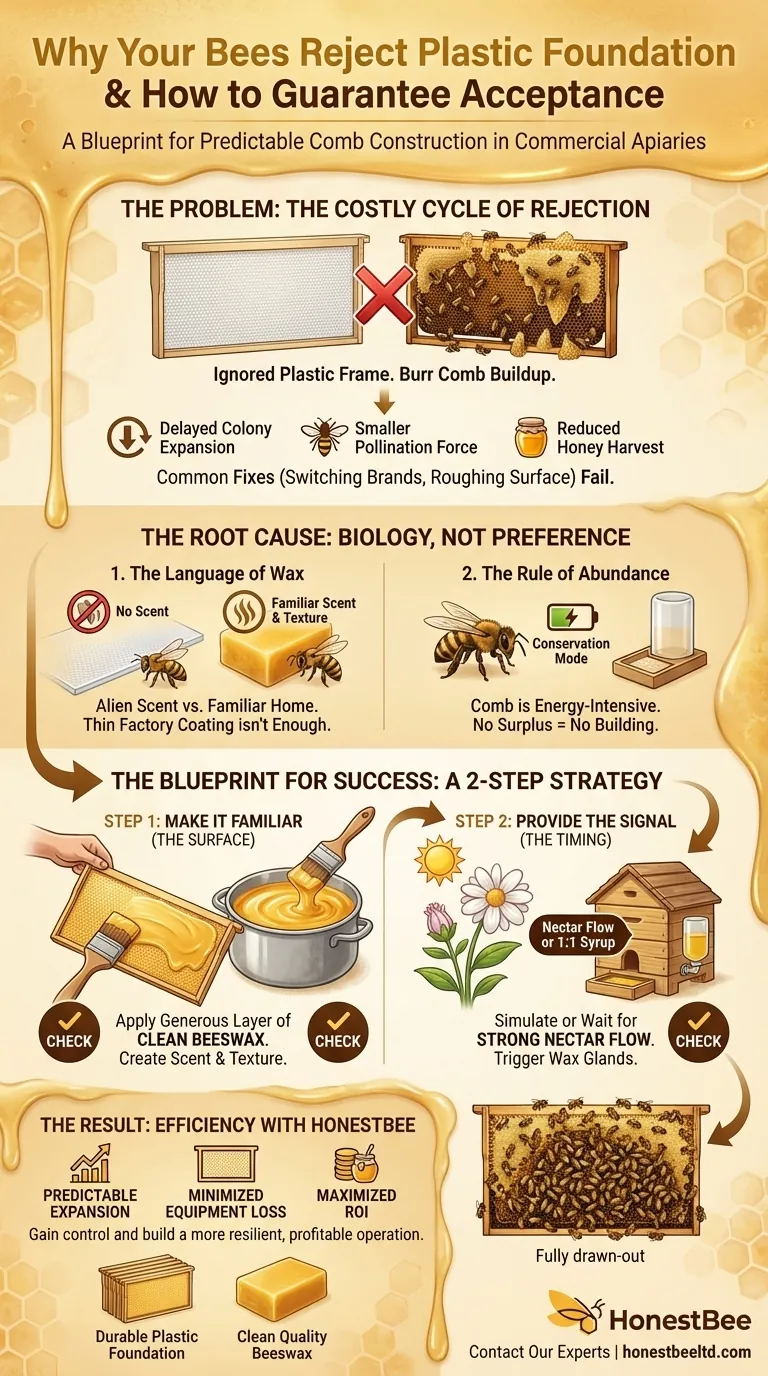
Visual Guide
Related Products
- Food Grade Plastic bee Foundation for Bee Frames
- Assembled Wooden Bee Frames with Plastic Foundation for Durability and Convenience by HONESTBEE
- Plastic Bee Frame Beekeeping Hive Frames for Wholesale
- Notebook Style Beeswax Foundation Mould Wax Foundation Mold
- Colorful Silicone Beeswax Foundation Mold Mould for Beekeeping
Related Articles
- The Real Reason Your Bees Ignore Plastic Frames—And How to Fix It for Good
- The Beekeeper's Paradox: Why Durable Foundation Fails and How to Fix It
- How Commercial Beekeepers Balance Durability and Bee Behavior with Plastic Foundations
- Stop Installing Plastic Foundation Like It's Wax: The Mistake Costing Your Apiary Time and Money
- The Architect's Dilemma: Why Bees Ignore Your Plastic Foundation






