The Psychology of the Right Tool
In any system, we have a bias for speed. We celebrate the tools that process more, faster. A faster server, a faster car, a faster uncapping knife.
But complex systems, like a beehive, don't always reward brute force. Sometimes, the most efficient path forward is one of deliberate control.
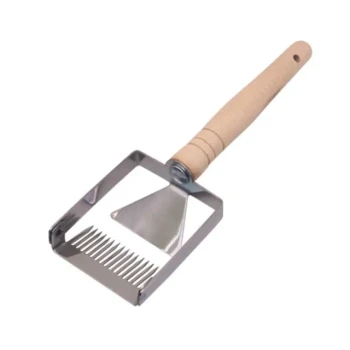
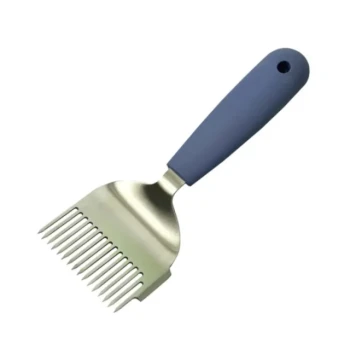
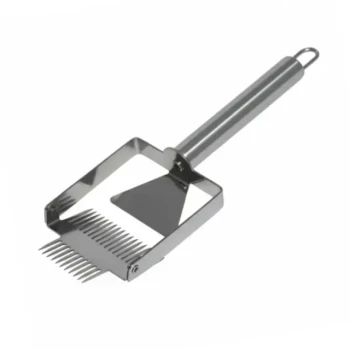
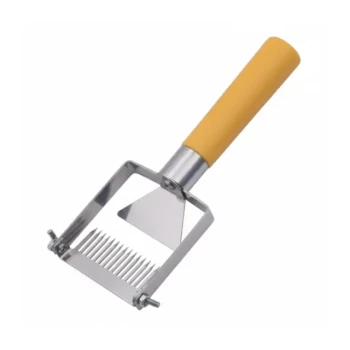
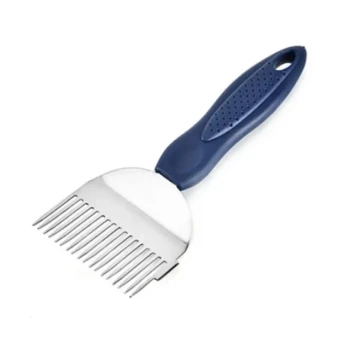
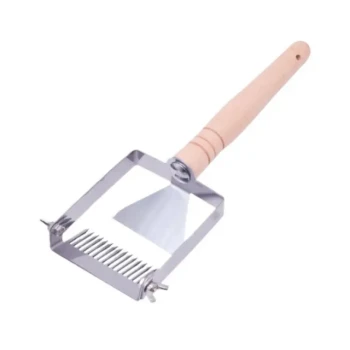
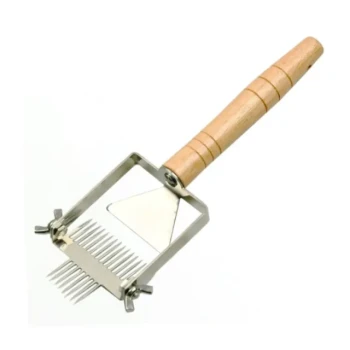
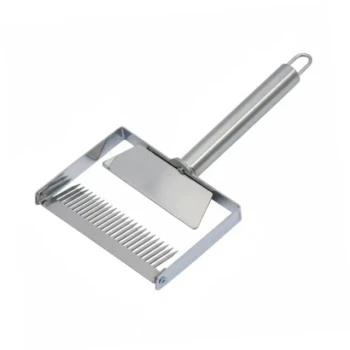
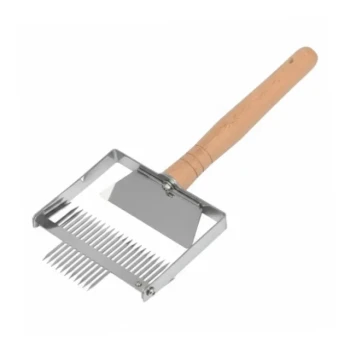
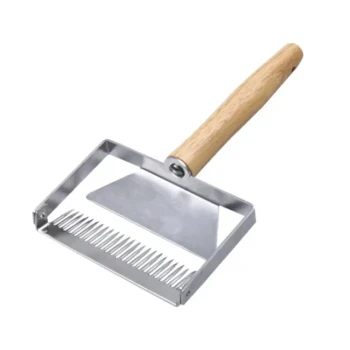
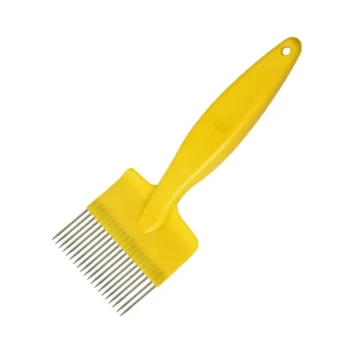
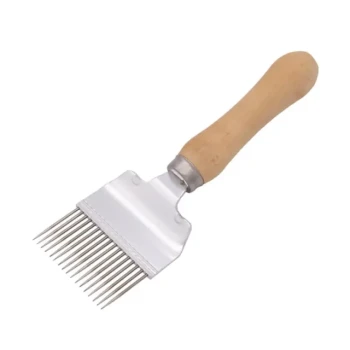
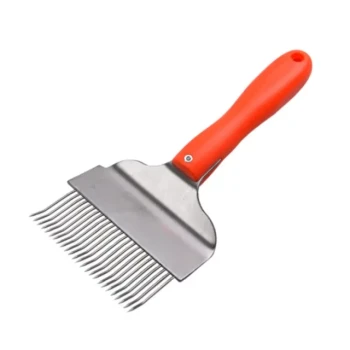
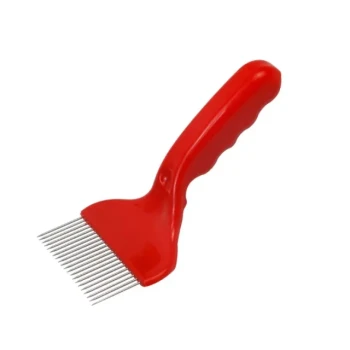
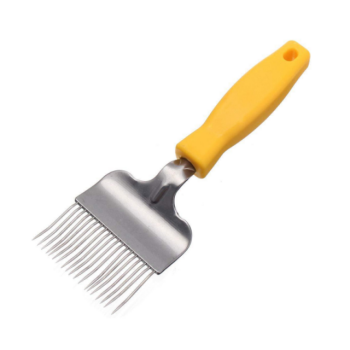
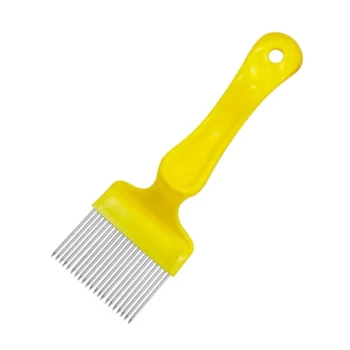
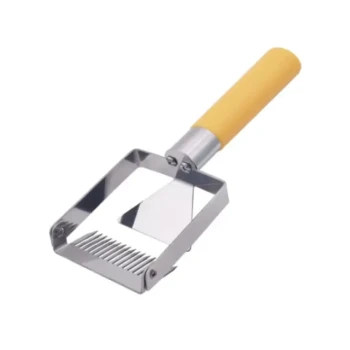
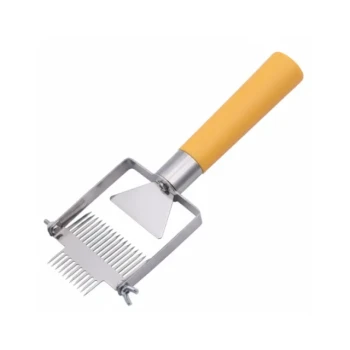
The uncapping fork is a perfect example. Often seen as a simple, low-tech tool, its true value isn't in its pace, but in its surgical precision. It represents a choice to prioritize the long-term health and productivity of the comb over the short-term metric of frames-per-hour.
The Anatomy of a Common Problem: Irregular Comb
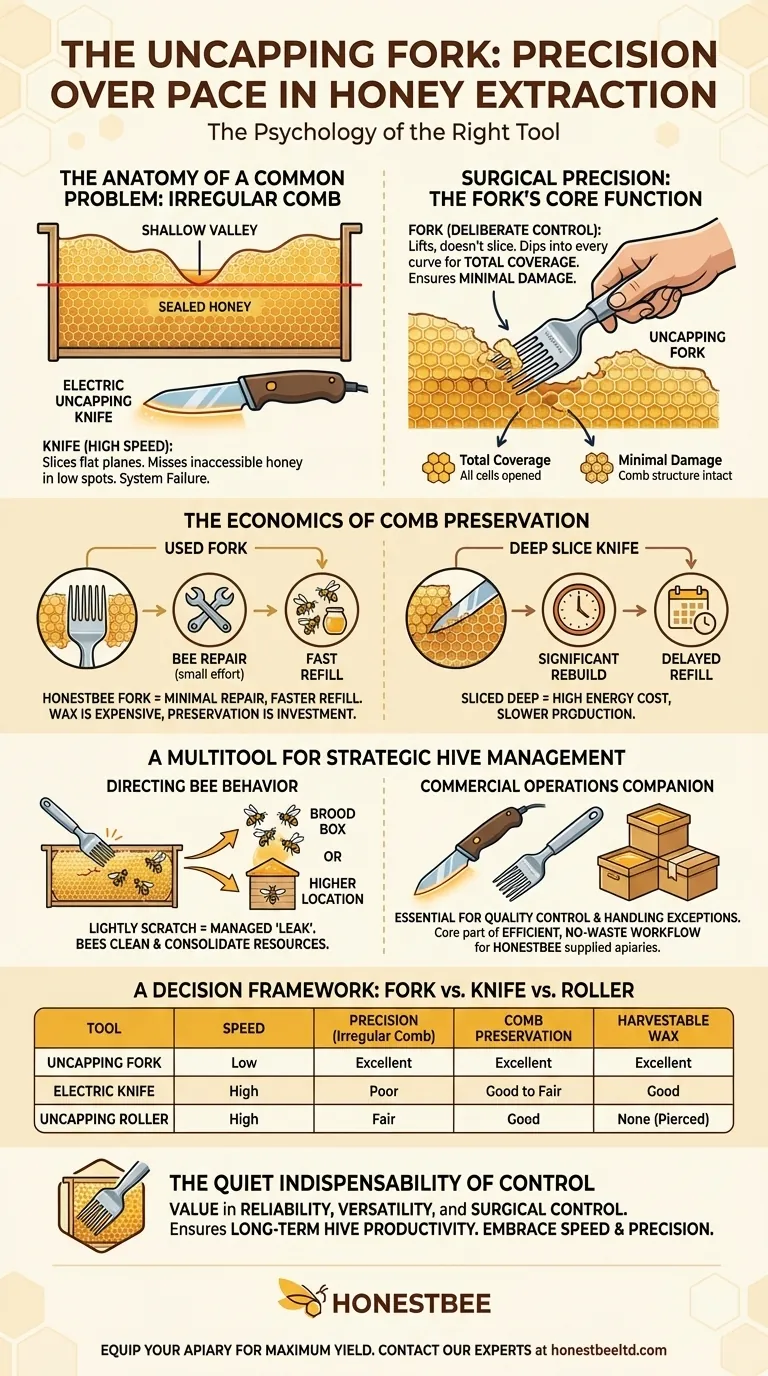
Picture this: a beekeeper pulls a frame heavy with honey. The comb is beautifully drawn out, but not perfectly flat. There's a shallow valley running through the center—a low spot the bees built organically.
An electric uncapping knife, designed for flat planes, will glide right over this depression. It slices off the high points, but the honey in that valley remains sealed, inaccessible. This isn't just a minor inconvenience; it's a system failure. The tool, optimized for uniformity, has failed in the face of natural variation.
This is precisely the scenario where the uncapping fork transforms from a simple tool into an essential instrument.
Surgical Precision: The Fork's Core Function
The fork operates on a completely different mechanical philosophy than a knife. It's less about cutting and more about careful extraction.
A Different Mechanical Philosophy
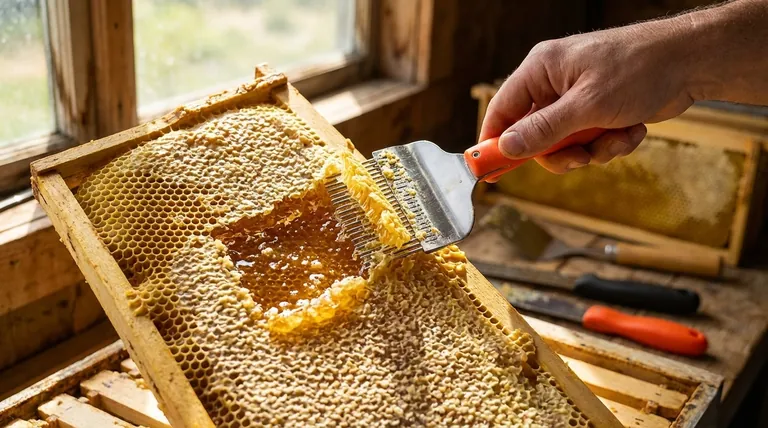
Where a knife slices, the fork lifts. Its sharp, thin tines slide just beneath the wax cappings. With a gentle prying motion, the beekeeper removes only the wax seal, leaving the underlying cell structure almost entirely intact.
This provides two critical advantages:
- Total Coverage: The fork can dip into every low spot and navigate every curve, ensuring every single cell is opened for extraction.
- Minimal Damage: It works with the comb's structure, not against it.
The Economics of Comb Preservation
For a honeybee colony, wax is a metabolically expensive resource. Preserving the drawn-out comb is a direct investment in the hive's future productivity.
When a fork is used, bees have minimal repair work to do. They can immediately begin cleaning and refilling the cells during the next nectar flow. When a knife slices too deeply, the bees must expend significant time and energy rebuilding the cell walls before they can store more honey.
The fork optimizes the hive's efficiency, not just the beekeeper's time at the uncapping tank.
A Multitool for Strategic Hive Management
The fork's utility extends far beyond the harvest. It's a communication device for directing bee behavior and a critical support tool in large-scale operations.
Directing Bee Behavior
Sometimes, a beekeeper needs the colony to move honey out of a brood box to make room for the queen to lay.
By lightly scratching the surface of capped honey with a fork, you create a managed "leak." The bees' powerful instinct to clean and consolidate resources kicks in. They will promptly uncap the cells, consume or relocate the honey to a more "secure" location higher in the hive, and clear the space. It’s a simple, elegant way to work with the colony’s natural tendencies.
The Essential Companion for Commercial Operations
In a commercial apiary, speed is paramount, and electric knives are the workhorses. But no production line is perfect. There will always be uneven frames, missed patches, and unique situations.
This is where the uncapping fork becomes indispensable. It’s the quality control instrument, the problem-solver that handles the exceptions the high-speed tools cannot. For commercial apiaries and distributors supplied by HONESTBEE, having a robust set of uncapping forks on hand isn't a backup plan; it's a core part of an efficient, no-waste workflow.
A Decision Framework: Fork vs. Knife vs. Roller
Choosing the right tool depends entirely on the job at hand. Each has a distinct profile of strengths and weaknesses.
| Tool | Speed | Precision (Irregular Comb) | Comb Preservation | Harvestable Wax |
|---|---|---|---|---|
| Uncapping Fork | Low | Excellent | Excellent | Excellent |
| Electric Knife | High | Poor | Good to Fair | Good |
| Uncapping Roller | High | Fair | Good | None (Pierced) |
The Quiet Indispensability of Control
The uncapping fork will never win a race against an electric knife. But that was never its purpose.
Its value lies in its reliability, its versatility, and the surgical control it provides. For new beekeepers, it's an affordable entry point. For seasoned professionals, it's the tool that ensures no honey is left behind and that every comb is treated with the care that promotes long-term hive productivity.
Equipping a modern apiary for maximum yield means embracing both speed and precision. It requires a supplier who understands that a complete toolkit is more than just the fastest option. For durable, high-quality uncapping forks and a full range of beekeeping equipment designed for the rigors of commercial use, Contact Our Experts
Visual Guide
Related Products
- Professional Stainless Steel Uncapping Fork with Wooden Handle
- Professional Multi-Function Uncapping Fork with Ergonomic Rubber Grip
- All Stainless Steel Double Sided Pivoting Honey Uncapping Fork
- Adjustable Stainless Steel Honey Uncapping Fork with Plastic Handle for Beekeeping
- Professional Multi-Function Uncapping Fork with Integrated Blade for Beekeeping
Related Articles
- How Uncapping Forks Protect Honeycombs and Reduce Beekeeping Costs
- Precision in the Apiary: The Unsung Virtues of the Uncapping Fork
- Precision Over Pace: The Economic Logic of the Uncapping Fork
- Precision Over Pace: The Strategic Role of the Uncapping Fork in Honey Harvesting
- Why Your Uncapping Knife Is Costing You Money—And How a Simple Fork Fixes It