Commercial apiaries can protect stored honeycomb frames without chemical contamination by combining deep-freezing, clean storage, airflow, and—where appropriate—a properly registered Bacillus thuringiensis (Bt) treatment. Freeze comb before storage to eliminate wax moth eggs and larvae, then keep the frames in a dry, ventilated, moth-resistant environment. Avoid paradichlorobenzene (PDB), sulfur fumigation, and other fumigants on frames intended for honey production unless the product is specifically approved and its label permits that use.
The lowest-residue strategy is an integrated program: clean the frames, freeze them long enough to kill all life stages, protect them from reinfestation, and use only a labeled biological treatment when additional protection is necessary.
Why Stored Honeycomb Requires Special Protection
Active colonies provide natural defense
Strong bee colonies usually control wax moth populations by removing eggs and larvae. Once supers and frames are removed from the hive, that protection disappears.
Stored comb is particularly vulnerable when it is kept in warm, dark, humid, and poorly ventilated conditions. Greater and lesser wax moth larvae tunnel through the comb, build silk galleries, and damage both wax and wooden frame components.
Damage affects more than one season
Wax moth destruction can make drawn comb unusable and reduce the value of a commercial apiary’s equipment inventory. Replacing damaged drawn comb also requires additional labor, wax, and time before the frames can return to production.
For distributors and commercial beekeepers, consistent storage protection is therefore an asset-preservation and fulfillment issue, not merely a seasonal maintenance task.
Use Temperature as the Primary Control
Freeze frames before storage
Deep-freezing is the most direct chemical-free method for treating stored comb. Place frames in a freezer at approximately 0°F (-18°C) for at least 24 to 48 hours, using the longer duration when equipment is densely packed or the freezer temperature is uncertain.
Freezing can destroy eggs, larvae, pupae, and adult moths, but the frames must remain cold long enough for the entire stack to reach the target temperature.
Use a validated cold-shock schedule
Some commercial guidance uses shorter validated schedules, such as approximately -20°C for six hours or +5°C for 20 hours, but the correct exposure depends on the equipment, load density, and temperature uniformity.
Apiaries should validate the process with temperature monitoring rather than relying only on the freezer’s displayed setting. A cold treatment is complete only when the comb itself, including the center of tightly packed stacks, has reached the required temperature for the required time.
Prevent reinfestation after thawing
After freezing, place the frames into tightly sealed, food-compatible bags or containers before they warm to room temperature. This prevents surviving insects from entering and reduces the chance that moths will lay new eggs on the treated comb.
Do not open frozen packages in an infested storage area. Move them directly into the prepared storage location.
Add Biological Protection When Appropriate
Apply a labeled Bt treatment
A biological spray containing Bacillus thuringiensis (Bt) can be applied to both sides of honeycomb frames before storage. Bt targets susceptible wax moth larvae and is useful as part of an integrated storage program.
The treatment should be used only when it is registered or approved for the intended use, and the apiary must follow the product label for concentration, application method, drying time, storage, and any restrictions concerning comb that will later hold honey.
Understand what Bt does and does not do
Bt is primarily a larval control, so it should not be treated as a complete substitute for freezing. Freezing addresses existing eggs and other life stages, while Bt can help control larvae that hatch or are introduced later.
A biological treatment also does not eliminate the need for clean storage. Silk webbing, wax debris, and old cocoons can shelter pests and reduce the effectiveness of any treatment.
Keep treated comb separate until dry
Allow treated frames to dry according to the product label before stacking or sealing them. Maintain clear lot identification so treated frames can be traced and handled according to the applicable food-safety requirements.
Avoid improvised mixtures or unapproved agricultural formulations. “Biological” does not automatically mean suitable for food-contact equipment.
Build a Moth-Resistant Storage System
Clean frames before treatment
Inspect every frame and remove:
- Wax moth webbing and cocoons
- Loose wax debris
- Dead insects and larvae
- Excess propolis or damaged material that prevents close stacking
- Cracks and gaps in boxes or storage equipment
Cleaning does not kill all pests, but it removes breeding material and makes later inspection more reliable.
Use airflow and light strategically
Store supers and frames on well-ventilated racks or in a climate-controlled enclosure. Airflow reduces humidity and makes the environment less favorable to moth development.
Where the storage design permits it, exposed, light-accessible arrangements are preferable to dark, stagnant stacks. However, airflow alone is not a reliable control method for an existing infestation; it should support, not replace, freezing and inspection.
Seal entry points without trapping moisture
Tightly fitted hive bodies, covers, and storage containers reduce moth entry. Seal gaps and cracks in the storage structure, while ensuring that the arrangement does not create condensation or persistent humidity around the comb.
The objective is a dry, inspectable, moth-resistant enclosure, not an unventilated space that traps moisture.
Maintain an inspection schedule
Inspect stored frames at regular intervals for:
- Fresh silk trails
- Frass or wax dust
- Larvae and cocoons
- Moth adults
- Condensation or mold
- Damaged packaging or storage boxes
Quarantine suspect frames immediately. Do not return them to clean inventory until they have been re-treated and inspected.
Understanding the Trade-Offs
Why PDB is a poor choice for honey supers
Paradichlorobenzene can control wax moths in sealed equipment stacks, but it presents a chemical-contamination risk for comb intended to contact honey. Residues can be absorbed by beeswax and may persist into future use.
Frames treated with PDB must not be placed back on active colonies merely because they have been aired out. For food-producing supers, the safest operational policy is to exclude PDB entirely unless the exact product label and local regulations explicitly authorize the use.
Why sulfur fumigation also requires caution
Sulfur dioxide fumigation is sometimes used for stored equipment, but it is still a chemical treatment. It can create worker-safety concerns and may be unsuitable for comb that will later be used for human honey production.
Airing a stack for a specified period does not independently prove that the comb is free of residues or safe for honey contact. Use such products only under an approved protocol with clear regulatory and food-safety controls.
Why freezing requires capacity and discipline
Freezing is clean from a residue perspective, but commercial operations must manage freezer capacity, energy use, packaging, and temperature verification. Overloading a freezer can produce an apparently cold environment while leaving the center of the stack inadequately treated.
For larger inventories, apiaries may need staged treatment, monitored cold storage, or a validated commercial cold-storage service.
Why hygiene cannot be skipped
Even correctly frozen frames can be reinfested if they are exposed to moths during thawing or storage. Dirty equipment, cracked boxes, and nearby infested comb can undermine an otherwise effective control program.
How to Apply This to Your Operation
A practical commercial workflow should combine treatment, traceability, and storage controls.
- If your primary focus is honey safety: Use validated freezing as the main treatment, seal frames after freezing, and exclude PDB and other fumigants from honey-producing supers unless explicitly approved for that use.
- If your primary focus is large-scale inventory protection: Use monitored cold storage, staged freezer capacity, ventilated racks, and sealed storage equipment supported by scheduled inspections.
- If your primary focus is chemical-free integrated control: Combine freezing with a properly labeled Bt treatment, thorough frame cleaning, dry airflow, and prompt quarantine of suspect frames.
- If your primary focus is distributor or reseller reliability: Standardize treatment records, lot identification, storage conditions, inspection dates, and order-fulfillment checks so protected frames can be supplied consistently.
- If your primary focus is preventing reinfestation: Repair storage boxes, remove nearby infested comb, seal treated frames immediately, and keep storage areas clean and inspectable.
The safest commercial approach is to make validated freezing and controlled storage the foundation, using Bt only as a labeled supplemental biological measure and keeping chemical fumigants away from comb intended for human honey production.
Summary Table:
| Method | Application | Residue Risk | Effectiveness | Best Use Case |
|---|---|---|---|---|
| Deep-freezing | Freeze at -18°C for 24-48 hours | None | Kills all life stages if done correctly | Primary control for honey supers |
| Bacillus thuringiensis (Bt) | Spray on frames before storage | Minimal if used per label | Controls larvae only | Supplemental biological control |
| Paradichlorobenzene (PDB) | Fumigate stacked equipment | Contamination risk for honey comb | Effective on adult moths and caterpillars | Not recommended for honey supers |
Protect your honeycomb frames from wax moth damage with our premium beekeeping equipment and storage solutions. At HONESTBEE, we cater to commercial apiaries and distributors, offering a full range of beekeeping tools, machinery, and hive-making equipment. Our expertise ensures you have the right supplies for integrated pest management. With rapid response, dedicated service, and ultra-fast delivery, we support your operational efficiency. Contact us today to learn how we can enhance your storage practices and secure your harvest.
Related Products
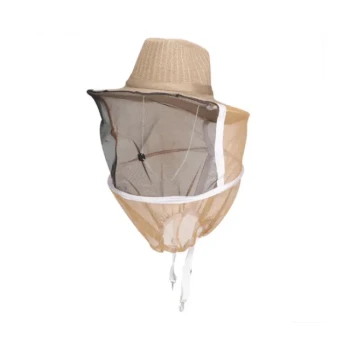
- Premium Cowboy Beekeeper Hat with Visibility Veil Outdoor Professional Beekeeping Protective Gear
- Beekeeper Cowboy Hat and Veil for Beekeeping
- Professional Bucket Style Wasp and Moth Pheromone Trap
- Metal Hive Feet Bee Hive Stand for Ant Protection
- White Cotton Beekeeping Jacket and Veil for Bee Keepers
People Also Ask
- What design features contribute to the stability and fit of the beekeeper hat? Key Features for Maximum Hive Safety
- How is the beekeeper hat designed for comfort and practicality? Explore Key Features for Enhanced Apiary Safety
- What is the general protective gear recommendation for new beekeepers? Your Essential Beginner's Safety Guide
- How does beekeeping protective gear facilitate the queen bee selection process? Enhancing Precision in Queen Breeding
- What should beekeepers consider when choosing protective gear? A Guide for Maximum Safety & Comfort