Commercial apiaries can detect Tropilaelaps mites most accurately by examining capped brood, not relying on adult-bee washes alone. Select a frame with purple-eyed or older pupae, lightly open the cappings with a capping scratcher, and sharply bump the frame over a tray or paper coated with powdered sugar. Lightly misting the sugar with water dissolves it and makes the fast-moving mites easier to see and count.
The bump method is a rapid brood-based diagnostic for Tropilaelaps. Because these mites spend relatively little time on adult bees, a standardized inspection of capped brood can reveal infestations that adult-bee sugar or alcohol washes may underestimate.
Why Brood Inspection Matters
Tropilaelaps Often Escapes Adult-Bee Sampling
Tropilaelaps mites are closely associated with developing brood and have a brief phoretic phase on adult bees. As a result, routine adult-bee sampling can produce deceptively low counts even when brood infestation is significant.
This makes the sampling location as important as the counting technique. A commercial apiary that tests only adult bees may miss an active infestation during a critical production period.
Brood Frames Expose the Relevant Life Stage
Purple-eyed or older pupae provide a practical target because the brood is capped and likely to contain mites or mite-associated damage. Opening a representative number of capped cells allows technicians to inspect the area where Tropilaelaps is most likely to be found.
Visible symptoms can provide supporting evidence, including bald brood, removed cappings, irregular brood development, and deformed wings in emerging or adult bees. These signs are not conclusive on their own, so they should trigger systematic sampling rather than replace it.
How to Perform the Bump Method
Select a Representative Brood Frame
Choose a brood frame containing capped pupae, preferably purple-eyed or older pupae. Record the colony identifier, frame location, date, and operator so results can be compared across inspections.
Sampling should follow the same procedure across colonies. Consistency is essential when managers are comparing infestation levels, evaluating treatment response, or deciding whether additional diagnostic work is required.
Scratch the Cappings Lightly
Use a capping scratcher or uncapping fork to lightly scratch and unseal the capped brood cells. The objective is to open the cappings sufficiently to release mites without unnecessarily damaging the frame or its brood.
Work methodically across the selected brood area. Excessive scraping can create debris that makes subsequent counting more difficult and can reduce the value of the frame for continued colony use.
Bump the Frame Over the Sugar Tray
Hold the prepared tray or paper surface beneath the frame and strike the frame sharply enough to dislodge mites and loose brood debris. The powdered sugar provides a contrasting collection surface and helps hinder the mites' escape.
The tray should be positioned close enough to minimize loss during transfer. A raised edge or contained sampling surface can help keep material within the counting area during field work.
Mist the Sugar Before Counting
Lightly mist the tray with water after bumping the frame. The water dissolves the powdered sugar, making the mites easier to distinguish from the remaining debris.
Avoid flooding the sample, which can spread material across the tray and make identification harder. Count the mites promptly and record the result against the colony and frame information.
How to Improve Commercial Accuracy
Standardize the Sampling Protocol
Use the same frame-selection criteria, scratching pattern, bumping force, tray preparation, and counting process throughout the apiary. A written standard operating procedure reduces variation between technicians and between inspection rounds.
Standardization also improves the value of supplier-provided inspection kits. Capping scratchers, collection trays, powdered sugar, labels, and recording materials should be available as a complete field workflow rather than as unrelated individual items.
Record Counts With Sampling Context
A raw mite count is meaningful only when its sampling context is preserved. Record the number and type of brood area inspected, the colony identifier, the date, and any visible brood symptoms.
Trending results over time is more useful than interpreting a single count in isolation. Managers can use repeated observations to identify colonies requiring closer examination and to assess whether an intervention has reduced brood-associated mite presence.
Confirm Suspicious Samples
The bump method is valuable for rapid field screening, but unusual or ambiguous specimens should be confirmed where practical. Tropilaelaps mites are small, elongated, reddish-brown, and fast-running, which can help distinguish them from other hive debris and from the generally broader appearance of Varroa mites.
Light microscopy may be required for reliable species identification. Morphological examination can support differentiation among Tropilaelaps species when regulatory, biosecurity, or treatment decisions depend on precise identification.
Understanding the Trade-offs
Adult-Bee Washes Have a Limited Role
Alcohol washes and adult-bee powdered-sugar tests are established tools for assessing Varroa on adult bees. They are less dependable as the sole test for Tropilaelaps because the mites' limited time on adult bees can lead to undercounting.
These methods can still provide supplementary information about other parasitic mites. They should not, however, displace brood-based inspection when Tropilaelaps is the target concern.
The Bump Method Is Destructive to the Sampled Cappings
Opening brood cappings disturbs the sampled cells and can damage some developing brood. The method is therefore best treated as a targeted diagnostic inspection rather than a routine action on every brood frame.
Technicians should select inspection areas deliberately and avoid unnecessary repeated disturbance of the same colony or frame.
Sugar Can Obscure Poorly Prepared Samples
An overly thick or uneven sugar layer can hide mites and debris. Insufficient sugar or an exposed tray surface can also allow mites to move away from the collection area before counting.
Preparation, lighting, tray cleanliness, and operator training all affect accuracy. A standardized tray size and consistent sugar coverage make results more comparable across apiary teams.
Field Identification Is Not Species Confirmation
Color, shape, and movement can support a field diagnosis, but they do not provide definitive species identification in every case. Where an invasive species is suspected, retain representative specimens and use an appropriate microscopy or laboratory confirmation process.
Smoke-Based Drop Boards Need Careful Interpretation
Sticky boards and smoke-induced mite drop can supplement an apiary surveillance program, but they are not equivalent to direct brood examination. Drop counts may reflect mites dislodged from adult bees and hive debris rather than the full brood-associated population.
Any supplementary drop-board procedure should be used under an approved, locally appropriate protocol. It should not be treated as a substitute for the capping-scratcher and tray-based brood test.
How to Apply This to Your Apiary
A commercial operation can make the method practical by maintaining ready-to-deploy brood inspection kits and documenting every result in a common reporting system.
- If your primary focus is rapid field screening: Use a capping scratcher, a clean powdered-sugar tray, and a standardized bump-and-count procedure on purple-eyed or older capped brood.
- If your primary focus is comparing colonies: Apply identical frame-selection, tray-preparation, bumping, misting, and recording procedures across every sampled colony.
- If your primary focus is treatment evaluation: Repeat the brood-based inspection using the same sampling conditions and compare recorded counts over time.
- If your primary focus is biosecurity or regulatory confirmation: Preserve suspicious specimens and arrange microscopy or laboratory identification rather than relying only on visual field characteristics.
- If your primary focus is efficient procurement: Source capping scratchers, sampling trays, powdered sugar, labels, and related inspection consumables as a coordinated field-sampling package with dependable replenishment.
Accurate Tropilaelaps surveillance depends on inspecting the mite where it is most likely to be found: inside capped brood.
Summary Table:
| Aspect | Key Points |
|---|---|
| Why brood inspection? | Tropilaelaps mites are rarely on adults; brood is primary site. |
| Equipment | Capping scratcher, tray, powdered sugar, water mister. |
| Procedure | Select purple-eyed brood, scratch, bump, mist, count. |
| Accuracy | Standardize sampling, record context, confirm suspicious samples. |
| Limitations | Destructive to cappings; not species confirmation; adult washes insufficient. |
Ensure your apiary is equipped with high-quality capping scratchers, sampling trays, and powdered sugar for accurate Tropilaelaps detection. HONESTBEE offers a full spectrum of beekeeping tools and consumables for commercial operations. With rapid response, dedicated service, and ultra-fast delivery, we help you streamline your inspection workflow and protect your hives. Contact us today to discuss your wholesale needs and benefit from our one-stop sourcing, OEM/ODM support, and competitive pricing.
Related Products
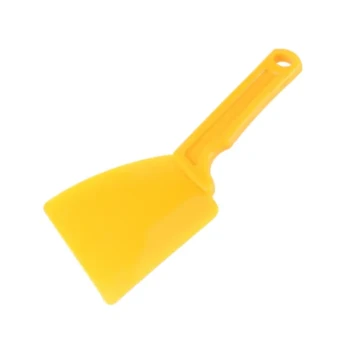
- Professional Honey Scraper for Efficient Apiary Maintenance
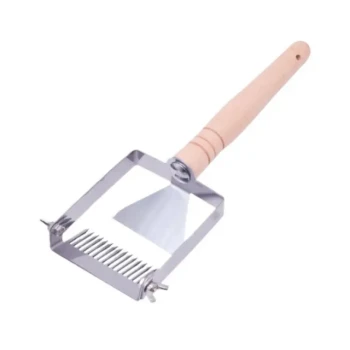
- Adjustable Stainless Steel Honey Uncapping Fork with Scraper for Beekeeping
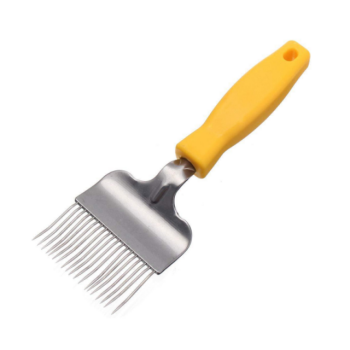
- Professional Bent Tine Honey Uncapping Fork with Ergonomic Grip
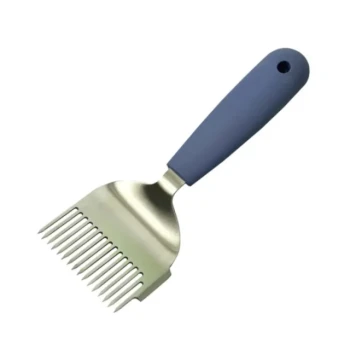
- Professional Multi-Function Uncapping Fork with Ergonomic Rubber Grip
People Also Ask
- How does environmental temperature control influence the efficiency of honey scraping equipment? Optimize Your Flow
- How to uncap a bee frame? Choose the Right Tool for a Perfect Honey Harvest
- What is the primary purpose of using professional scrapers for red propolis sampling? Maximize Purity and B2B Value
- What is the role of a professional hive scraper in honey DNA metabarcoding? Ensure Precision in Genetic Analysis
- What is uncapping honey? Unlock the Key Step to Efficient Honey Harvesting