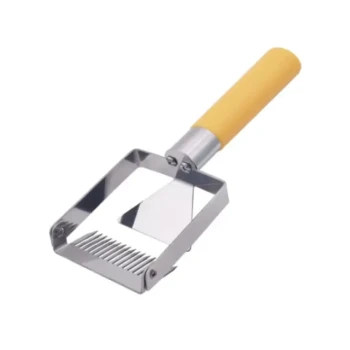
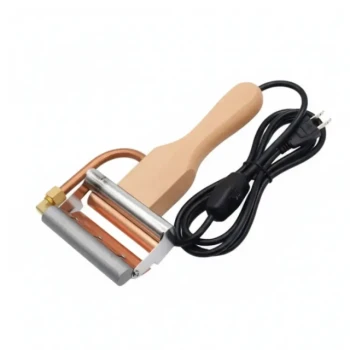
The efficiency of honey scraping equipment is directly governed by thermal dynamics. By raising the environmental temperature, you utilize thermal energy to significantly lower the dynamic viscosity of the honey. This physical transformation reduces fluid friction against the machinery, resulting in sharper cutting precision and improved flow rates throughout the extraction system.
Because honey behaves as a Newtonian fluid, its viscosity is inversely proportional to its temperature. Controlling the environment to lower this viscosity is essential for minimizing mechanical resistance and maximizing processing speed.
The Physics of Honey Extraction
Honey as a Newtonian Fluid
To understand extraction efficiency, you must first understand the fluid mechanics of honey. It is classified as a Newtonian fluid.
This classification means its viscosity—its resistance to flow—is highly sensitive to temperature changes. As thermal energy increases, the internal friction of the fluid decreases predictably.
Reducing Mechanical Resistance
When the environment is cooler, honey is thick and viscous. This creates significant drag against the scraping blades of your equipment.
By controlling the temperature to lower viscosity, you decrease this fluid resistance. The blades can move through the comb with less force, reducing the mechanical load on the motor and components.
Improving Cutting Precision
High viscosity does not just slow down the machine; it creates a messy cut. Thick honey tends to tear or drag the wax rather than shearing cleanly.
Lowering the viscosity ensures the honey yields easily to the blade. This results in improved cutting precision, ensuring the cappings are removed cleanly without damaging the comb structure.
Operational Strategies for Efficiency
Utilizing Heat Rooms
One of the most effective methods for environmental control is the use of heat rooms.
Storing frames in a temperature-controlled environment prior to extraction pre-conditions the honey. This ensures that when the frames hit the scraper, the honey is already at the optimal viscosity for processing.
Leveraging Ambient Thermal Energy
For operations without dedicated heat rooms, timing is a critical substitute for active climate control.
The primary reference suggests operating specifically between 01:30 pm and 03:30 pm. This window typically aligns with peak ambient temperatures, allowing you to utilize natural thermal energy to lower viscosity without additional energy expenditure.
Accelerating Post-Scraping Flow
Efficiency gains extend beyond the scraper itself. Once the honey is removed, it must flow into collection troughs and piping systems.
Warmer, less viscous honey travels through these systems rapidly. This prevents backups at the scraper output and maintains a continuous, high-speed workflow.
Understanding the Trade-offs
The Constraints of Passive Heating
While relying on specific operating times (like early afternoon) is energy-efficient, it introduces operational rigidity.
Your processing throughput becomes limited by the clock and daily weather patterns. If the ambient temperature fails to rise, viscosity remains high, and equipment efficiency will drop regardless of the time of day.
Precision vs. Temperature
While heat improves flow, it must be balanced. The goal is to lower viscosity enough to reduce resistance, but not so much that the comb loses structural integrity.
The objective is cutting precision, not just melting. Effective control requires finding the thermal "sweet spot" where honey flows, but the wax remains rigid enough to be scraped rather than smeared.
Optimizing Your Processing Workflow
To apply these principles effectively, you must align your temperature strategy with your operational resources.
- If your primary focus is maximum throughput: Utilize a dedicated heat room to ensure honey enters the scraper at a consistently low viscosity, regardless of the time of day.
- If your primary focus is energy efficiency: Schedule your scraping operations strictly between 01:30 pm and 03:30 pm to capitalize on natural ambient heat.
Mastering temperature control transforms viscosity from a variable obstacle into a predictable asset.
Summary Table:
| Factor | High Temperature Impact | Low Temperature Impact | Operational Benefit |
|---|---|---|---|
| Honey Viscosity | Lower (Fluid) | Higher (Thick) | Reduced mechanical drag and faster flow |
| Cutting Precision | Sharp, clean shear | Tearing or dragging | Protects comb integrity and reduces waste |
| Mechanical Load | Lower stress on motors | Higher resistance | Extends equipment lifespan and reduces maintenance |
| Workflow Speed | Continuous and rapid | Frequent backups | Increases total hourly throughput |
Maximize Your Apiary's Output with HONESTBEE
At HONESTBEE, we understand that temperature control is just one piece of the productivity puzzle. As a leading provider for commercial apiaries and distributors, we offer a comprehensive wholesale range of professional-grade beekeeping tools and industrial machinery. Whether you need high-precision honey-filling machines, robust hive-making hardware, or essential consumables, our portfolio is designed to enhance your operational efficiency.
Ready to scale your honey production? Contact our expert team today to discover how our specialized equipment and honey-themed cultural merchandise can add value to your business.
References
- M. A. Al-Rajhi. An Innovative Unit for Scraping Honeycombs. DOI: 10.21608/jssae.2019.43215
This article is also based on technical information from HonestBee Knowledge Base .
Related Products
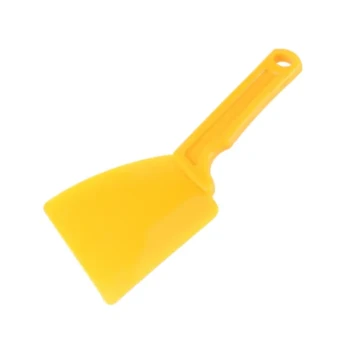
- Professional Wide Blade Honey Scraper for Beekeeping and Honey Processing
- Professional Long-Handled Silicone Honey Scraper for Beekeeping
- Professional Honey Scraper for Efficient Apiary Maintenance
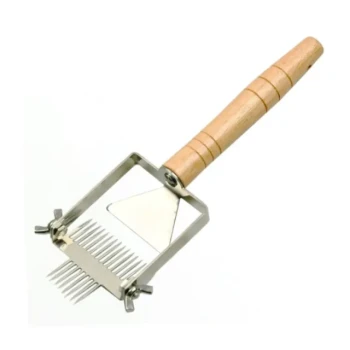
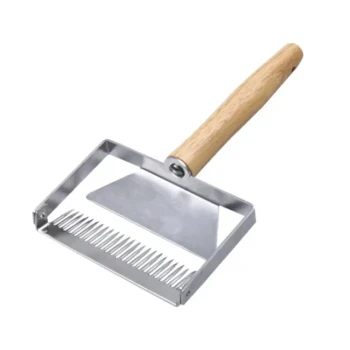
- Wide Adjustable Stainless Steel Honey Uncapping Fork with Scraper
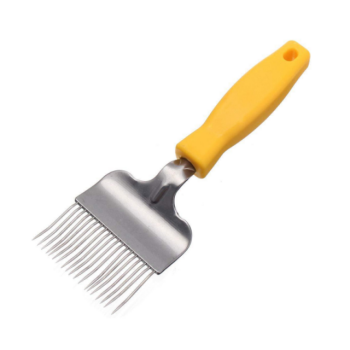
- Adjustable Stainless Steel Honey Uncapping Fork with Scraper Beekeeping Tool
People Also Ask
- What tools and machinery are essential to resolve common operational constraints such as equipment shortages and improper honey harvesting? Discover the complete honey-harvesting equipment lineup for commercial apiaries and distributors.
- What operational considerations are critical during honey harvesting, and how do specialized honey processing tools add value to the final product? Optimize Quality and Yield
- What are the core functions of a honey processor? Master Moisture Control and Purification for Quality Honey
- What are the technical requirements for beekeeping equipment used in the production of comb honey compared to filtered honey?
- Why is the utilization of professional beekeeping tools essential? Boost Honey Production and Efficiency