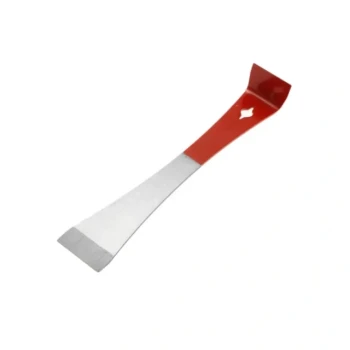
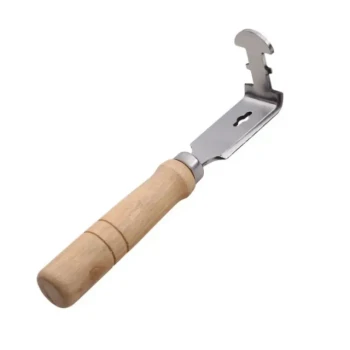
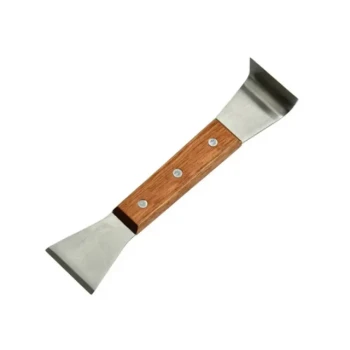
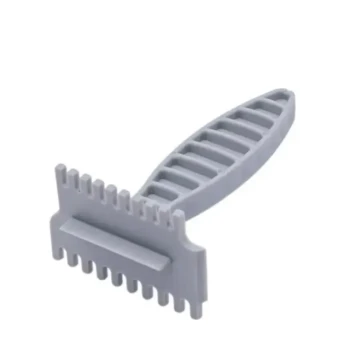
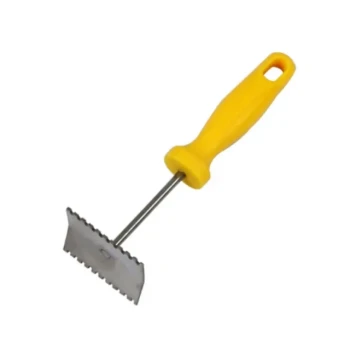
A professional hive scraper is a precision tool utilized to extract honey specifically from the edges of newly filled storage cells, rather than randomly from the hive. When combined with standardized sampling procedures, this technique isolates active pollen to ensure the sample reflects recent foraging activity, effectively filtering out data noise from older honey reserves.
Precision in sampling is the foundation of accurate DNA metabarcoding. By strictly targeting newly filled cells, researchers ensure the biological data represents the colony's current diet and environment, rather than a historical average.
The Strategic Role of the Hive Scraper
Targeting Recent Activity
The primary function of the hive scraper is to access specific areas of the honeycomb. It is used to extract honey from the edges of newly filled storage cells.
Excluding Historical Data
Hives often contain honey stores accumulated over long periods. Using a scraper to target new cells minimizes interference from older honey reserves, which would distort the timeline of the analysis.
Capturing Active Pollen
The material collected by the scraper is rich in active pollen. This provides a clear snapshot of the bees' most recent foraging behaviors and botanical interactions.
The Value of Standardized Procedures
Ensuring Representative Samples
Standardization ensures that every sample collected provides representative raw material. This consistency is vital for comparing data across different hives or time periods.
Assessing Dietary Diversity
By isolating recent honey, researchers can accurately analyze the current dietary diversity of the bee colony. This reveals exactly what plants the bees are visiting right now.
Monitoring Environmental Risks
Standardized collection is crucial for assessing pesticide exposure risks. It allows scientists to correlate specific chemical traces with current agricultural or environmental conditions.
Managing Quality and Contamination
The Necessity of Sterility
While the scraper ensures the correct location is sampled, the tools themselves must be managed carefully. Sterile sampling tools, including the scraper, tweezers, and centrifuge tubes, are essential.
Preventing Environmental Cross-Contamination
Non-sterile equipment introduces environmental DNA, which can confuse the analysis. To ensure the genetic information corresponds strictly to the specific bee colony, all cross-contamination vectors must be eliminated.
Maintaining Analytical Accuracy
The accuracy of DNA metabarcoding relies on the purity of the source. Any deviation from sterile, standardized procedures compromises the accuracy of the analysis results.
Making the Right Choice for Your Goal
To ensure your DNA metabarcoding yields actionable data, apply these sampling principles based on your specific objectives:
- If your primary focus is analyzing current bee diet: Use the hive scraper to target only the edges of newly filled cells to capture recent foraging data.
- If your primary focus is data integrity: Ensure all scrapers and collection tubes are sterile to prevent environmental DNA from skewing your results.
Strict adherence to these sampling protocols transforms raw honey into a reliable biological record.
Summary Table:
| Feature | Role in DNA Metabarcoding | Benefit to Analysis |
|---|---|---|
| Hive Scraper Precision | Targets edges of newly filled cells | Captures recent foraging activity only |
| Standardized Procedure | Filters out older honey reserves | Eliminates historical data noise |
| Sterile Toolset | Prevents environmental cross-contamination | Ensures genetic purity of the sample |
| Selective Sampling | Isolates active pollen grains | Accurately maps current dietary diversity |
Elevate Your Apiary Operations with HONESTBEE
At HONESTBEE, we understand that precision in beekeeping leads to superior honey quality and actionable environmental insights. Whether you are a commercial apiary or a distributor, we provide the full spectrum of professional tools needed for advanced research and efficient production.
Our value to you:
- Comprehensive Wholesale Offering: A one-stop shop for all beekeeping tools, machinery, and essential consumables.
- Precision Engineering: From specialized hive-making machines to honey-filling systems designed for accuracy.
- Industry Expertise: We cater to the high-volume needs of the global beekeeping industry with reliable hardware and cultural merchandise.
Ready to upgrade your equipment or stock your distribution line? Contact us today to explore how our tailored solutions can grow your business!
References
- Ben A. Woodcock, Richard F. Pywell. Citizen science monitoring reveals links between honeybee health, pesticide exposure and seasonal availability of floral resources. DOI: 10.1038/s41598-022-18672-0
This article is also based on technical information from HonestBee Knowledge Base .
Related Products
- Professional Steel Pry-Bar Hive Tool with Painted Grip
- HONESTBEE Professional Multi-Functional Hive Tool with Ergonomic Wood Handle
- Professional Multi-Function Stainless Steel Hive Tool
- Professional Honey Scraper for Efficient Apiary Maintenance
- Professional Dual Action Queen Excluder Scraper for Beekeeping
People Also Ask
- What is the specific design and purpose of a frame lifter hive tool? Master Gentle Hive Inspections
- How does the frame lifter hive tool function? Master Safe and Gentle Frame Removal
- What is the primary purpose of using professional scrapers for red propolis sampling? Maximize Purity and B2B Value
- What specific sanitation issues do beehive scrapers resolve? Master Spring Hive Maintenance and Pest Control
- Why are specialized measuring tapes and rulers necessary for documenting bee hive structures? Precision Tools for Scale