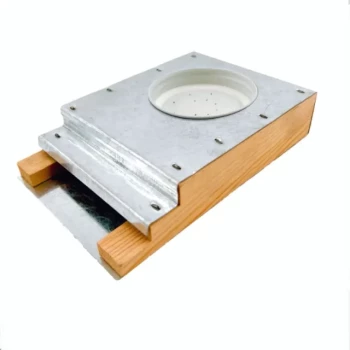
Bee feeders serve as the primary bridge between environmental scarcity and colony readiness in commercial beekeeping. During the maintenance phase, specifically when natural resources are scarce (dearth periods), these tools provide the supplemental nutrition—such as sugar syrup or pollen substitutes—required to prevent colony contraction.
Core Takeaway Bee feeders are not merely survival tools; they are production accelerators. By sustaining the queen's egg-laying momentum during resource gaps, feeders ensure a peak population of adult workers is ready the moment the honey flow begins, rather than recovering colony strength after the flow has started.
The Strategic Role of Supplemental Nutrition
Countering Dearth Periods
In a commercial setting, reliance on natural forage alone is a vulnerability. Dearth periods—times when nectar or pollen are unavailable—can halt colony growth.
Feeders eliminate this variable by supplying consistent nutrition. This artificial input stabilizes the colony's energy intake regardless of external weather or botanical conditions.
Sustaining Queen Activity
The biological engine of the hive is the queen's egg-laying capability. If nutritional intake drops, the queen will naturally reduce or stop laying eggs to conserve resources.
Feeders override this biological trigger. By simulating resource abundance, they ensure the queen continues egg-laying activity without interruption, maintaining the brood cycle even in the off-season.
Optimizing for Production Capacity
Preparing for the Honey Flow
The ultimate goal of the maintenance phase is not just survival, but transition readiness. A colony must have a massive population of adult workers before the main honey flow arrives.
Feeders facilitate this by building the population early. This ensures that when natural nectar becomes available, the colony has the workforce required to harvest it immediately.
Enabling Advanced Hive Configurations
High-production beekeeping often utilizes specific hardware setups, such as queen excluders, to separate brood from honey stores.
Effective use of these configurations requires a strong, dense population. Feeders ensure the colony is robust enough to occupy these expanded setups, maximizing the efficiency of honey production infrastructure.
Operational Considerations
The Cost of Inaction
Neglecting the use of feeders during maintenance phases results in a reactive approach. Without supplemental feeding, colonies enter the honey flow in a recovery state, spending valuable time rebuilding their numbers rather than producing honey.
Maintenance as an Active Process
While standardized hives provide physical protection, feeders represent the nutritional safeguard. They require active monitoring to ensure the colony receives exactly what it needs to bridge the gap to the next flowering season.
Making the Right Choice for Your Goal
To effectively utilize bee feeders in your maintenance strategy, consider your specific production objectives:
- If your primary focus is Maximum Honey Production: Prioritize feeding schedules that ramp up population density immediately before the expected honey flow to leverage queen excluders effectively.
- If your primary focus is Colony Survival: Use feeders primarily during dearth periods to maintain a baseline population and prevent the queen from halting egg production.
The strategic application of bee feeders transforms the maintenance phase from a period of dormancy into a period of preparatory growth.
Summary Table:
| Strategic Function | Benefit to Commercial Beekeeping | Impact on Production |
|---|---|---|
| Countering Dearth | Eliminates vulnerability to nectar/pollen scarcity | Prevents colony contraction |
| Sustaining Queen | Maintains egg-laying momentum regardless of forage | Ensures continuous brood cycles |
| Honey Flow Prep | Builds a massive workforce before the nectar flow starts | Maximizes harvest efficiency |
| Operational Scaling | Supports dense populations for advanced hive setups | Optimizes queen excluder usage |
Elevate Your Commercial Production with HONESTBEE
At HONESTBEE, we understand that in commercial beekeeping, time is honey. As a dedicated partner to commercial apiaries and distributors, we provide the industrial-grade tools and machinery you need to transform maintenance phases into growth opportunities.
From high-capacity bee feeders and precision hive-making equipment to automated honey-filling machines and specialized consumables, our comprehensive wholesale portfolio is designed to maximize your colony readiness and operational throughput.
Ready to scale your output and secure your colonies? Contact HONESTBEE Today for Wholesale Solutions
References
- Desta Gemedi. Effect of Queen Excluder Placing on Honey Yield and Honeybee Colony Performance in Selected Beekeeping Areas of East Shewa and West Arsi Zones of Oromia, Ethiopia. DOI: 10.7176/jbah/13-10-01
This article is also based on technical information from HonestBee Knowledge Base .
Related Products
- Rapid Bee Feeder White Plastic 2L Round Top Feeder for 8 or 10-Frame Bee Hives
- White Plastic 0.5L Beekeeping Entrance Feeder for Bees
- HONESTBEE Entrance Bee Feeder Professional Hive Nutrition Solution for Beekeeping
- HONESTBEE Professional Entrance Bee Feeder Hive Nutrition Solution
- Boardman Entrance Bee Feeder Durable Galvanized Steel and Wood Construction for Beekeeping
People Also Ask
- What should be done with feeders and equipment after feeding bees? Essential Steps for Apiary Health
- What should be done if feed in a feeder is not consumed by the bees? Prevent Hive Mold with Prompt Feed Management
- What is the necessity of specialized internal or entrance feeders? Secure Your Hive with Professional Feeding Tools
- How do bee feeders work to preserve colony health during nectar shortages? Essential Guide for Beekeepers
- How quickly does a medium to strong colony usually empty a feeder? A Beekeeper's Guide to Hive Health