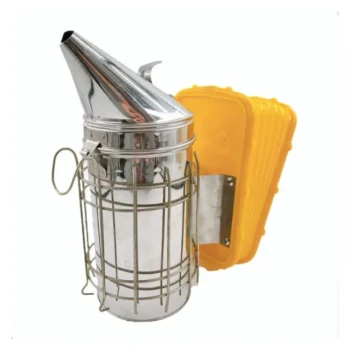
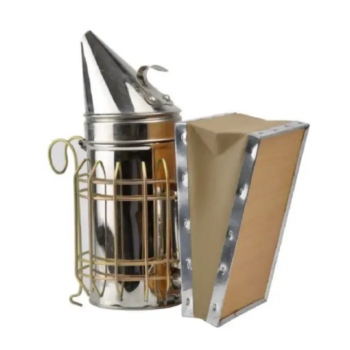
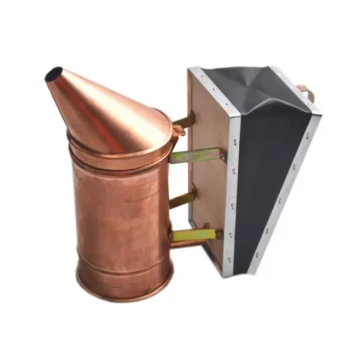
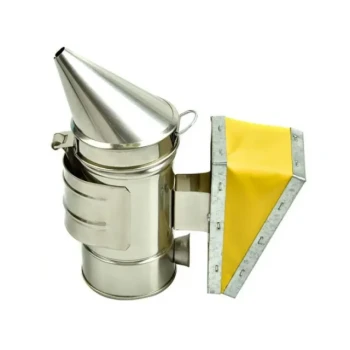
Bee smokers calm colonies through cool smoke, while fine-mist sprayers keep bees occupied and less defensive. Smoke masks alarm pheromones and triggers a temporary honey-feeding response, making bees less likely to sting. Fine-mist sugar-water sprayers promote self-grooming and mutual grooming; plain water mist can also dampen bees and reduce flight during short tasks. For commercial apiaries, both tools improve worker safety, reduce disruption and bee mortality, and support faster inspections and honey extraction.
The practical choice is not simply smoke versus spray. Commercial operators should match the method to the task, site conditions, colony temperament, and safety requirements while using durable, reliable equipment that supports consistent hive-side work.
How Bee Smokers Calm Honeybees
Cool smoke triggers a feeding response
When exposed to smoke, honeybees respond as though a threat such as fire may require relocation. They consume stored honey in preparation, becoming temporarily less reactive and less inclined to sting.
This response is most effective when the smoker produces cool, clean smoke rather than excessive heat or dense, irritating smoke.
Smoke interferes with alarm communication
Disturbed bees release alarm pheromones that recruit other workers to defend the colony and identify a target. Smoke disrupts the bees’ ability to detect and respond to these chemical signals, reducing the chance of defensive behavior spreading through the hive.
The effect is temporary. Smoke suppresses alarm communication during the task; it does not permanently change colony behavior.
Controlled application supports hive work
Beekeepers typically apply a small amount of smoke near the entrance and under the hive cover, then add limited amounts as needed during the inspection. The objective is to calm the colony without saturating the hive or unnecessarily disturbing the bees.
How Fine-Mist Sprayers Calm or Control Bees
Sugar-water mist encourages grooming
A fine mist of sugar water gives bees a surface to clean from their bodies. This promotes self-grooming and mutual grooming, occupying the bees while the beekeeper performs a short management task.
Grooming can reduce immediate defensive activity without introducing smoke, making the method useful where smoke is undesirable.
Water mist reduces flight activity
A plain water mist lightly dampens bees and can make them less likely to take flight from the frames. This keeps more bees stationary during quick inspections and frame handling.
The spray should be fine and controlled. Heavy wetting can chill or stress bees, particularly in cool conditions, so misting is not a substitute for careful handling.
Spraying is a smoke-free option
Fine-mist sprayers avoid combustion, fuel storage, embers, and smoke exposure. This can be valuable in urban apiaries, enclosed work areas, or locations with smoke detectors and strict fire controls.
Operational Benefits for Commercial Apiaries
Safer working conditions
Both tools reduce defensive stinging during inspections, frame management, hive maintenance, and honey harvesting. Lower sting exposure supports safer work for experienced technicians and seasonal or newly trained staff.
Neither method eliminates risk. Protective clothing, controlled movements, appropriate training, and an exit plan remain essential.
Lower colony disruption and bee mortality
Calmer bees are less likely to be crushed during frame removal or box handling. Reduced defensive activity can therefore help protect workers while lowering avoidable bee mortality caused by rushed or disorderly manipulation.
The benefit depends on using the tool correctly. Excessive smoke, rough handling, or overly forceful spraying can create additional stress.
Faster inspections and extraction
A manageable colony allows technicians to open hives, inspect frames, remove honey supers, and complete maintenance with fewer interruptions. Across a large apiary, small time savings per hive can improve overall labor productivity.
Consistent calming procedures also make work more predictable, which helps supervisors plan crews and daily hive routes.
More consistent commercial operations
Standardized use of smokers and sprayers gives technicians a repeatable method for handling colonies with different defensive responses. This supports consistent operating procedures across multiple apiary sites and work teams.
For distributors and commercial buyers, equipment durability, easy maintenance, comfortable handling, and reliable availability are as important as the basic calming mechanism.
Choosing Between a Smoker and a Fine-Mist Sprayer
Use a smoker for intensive hive manipulation
A smoker is generally the more versatile option for inspections involving substantial frame movement, colony transfers, aggressive colonies, or extended honey extraction. Its ability to disrupt alarm pheromone communication is particularly useful when colony defense has already begun to escalate.
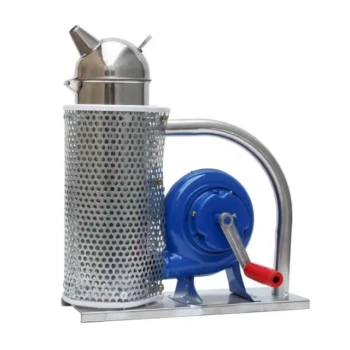
Commercial users should prioritize stable bellows operation, a secure firebox, effective heat shielding, and the ability to produce cool smoke consistently.
Use a sprayer for short, smoke-sensitive tasks
A fine-mist sprayer is well suited to quick inspections and locations where fire, embers, or smoke are unacceptable. Sugar-water mist can occupy bees through grooming, while water mist can help keep them on the frames.
Sprayers are not always a complete replacement for smokers during prolonged or high-intensity hive work. Their effectiveness depends on the colony, weather, task duration, and whether the bees are already highly defensive.
Maintain both tools when flexibility matters
Many commercial apiaries benefit from keeping both methods available. A smoker provides broad control for demanding work, while a sprayer offers a clean alternative for routine or smoke-restricted operations.
This dual-tool approach reduces dependence on one technique and allows crews to adapt without delaying hive work.
Understanding the Trade-offs
Smokers require fuel and fire controls
Smokers need suitable wood-based fuel, lighting, airflow management, and safe extinguishing procedures. They also create fire risks and may be unsuitable near dry vegetation, buildings, smoke detectors, or regulated urban sites.
Fuel quality matters. Poorly selected or damp fuel can produce excessive heat, irritating smoke, or inconsistent output.
Smoke can be overused
Too much smoke may unnecessarily disturb the colony, contaminate the work environment, or make it harder for technicians to assess normal bee behavior. Smoke should be applied in measured amounts rather than used continuously.
The goal is temporary behavioral control, not complete immobilization.
Sprayers require controlled application
A sprayer must produce a fine, even mist rather than large droplets or a concentrated stream. Excess moisture can chill bees, wet equipment, and interfere with hive conditions.
Sugar-water sprayers also require cleaning and appropriate handling to prevent residue buildup and maintain hygienic operation.
Neither tool replaces good management
Calming equipment cannot compensate for poor timing, rough frame handling, inadequate protective equipment, or weak technician training. Colony temperament, weather, nectar flow, and hive conditions can all affect defensive behavior.
The strongest operational results come from combining the right tool with disciplined procedures.
How to Apply This to a Commercial Apiary
Select equipment as part of a repeatable hive-management system rather than as isolated accessories.
- If your primary focus is worker safety: Use a reliable smoker for demanding hive interventions, with fine-mist sprayers available where smoke or fire creates additional risk.
- If your primary focus is labor efficiency: Standardize calming procedures and equip crews with durable, easy-to-operate tools that reduce interruptions during inspections and extraction.
- If your primary focus is smoke-free operation: Use a fine-mist sprayer for short inspections or restricted locations, while retaining smokers for tasks requiring stronger defensive control.
- If your primary focus is procurement reliability: Source smokers, sprayers, replacement parts, and related protective equipment through a supplier capable of responsive service, consolidated ordering, and dependable fulfillment.
- If your primary focus is colony protection: Apply only the minimum effective smoke or mist and prioritize smooth, deliberate frame handling to reduce crushing and unnecessary stress.
With the right equipment, training, and supply support, commercial apiaries can make hive management safer, faster, and more consistent without losing sight of colony welfare.
Summary Table:
| Factor | Bee Smoker | Fine-Mist Sprayer |
|---|---|---|
| Mechanism | Cool smoke masks alarm pheromones, triggers feeding response | Sugar-water mist promotes grooming; water mist reduces flight |
| Best For | Intensive inspections, aggressive colonies, honey extraction | Short tasks, smoke-sensitive areas, urban apiaries |
| Pros | Strong calming effect, versatile, disrupts alarm communication | Smoke-free, no fire risk, easy to use, minimal colony disturbance |
| Cons | Requires fuel, fire risk, can overuse, smoke may be irritating | Less effective for high-intensity work, may chill bees if overused |
| Maintenance | Clean firebox, manage airflow, replace fuel | Clean nozzles, prevent residue, handle sugar-water hygiene |
Equip your apiary with top-quality bee smokers and fine-mist sprayers from HONESTBEE. We provide durable, commercial-grade equipment for beekeepers and distributors, backed by fast delivery and expert support. For tailored wholesale solutions and exclusive distributor benefits, contact our team today.
Related Products
- Professional Bee Smoker with Elongated Spout and Durable Bellows for Beekeeping
- Stainless Steel Honey Bee Smoker Hive and Honeycomb Smoker for Beekeeping
- European Stainless Steel Bee Smoker for Honey Bee Hive
- Premium Traditional Copper Bee Smoker with Bellows
- Heavy-Duty Bee Smoker with Durable Plastic Bellows for Beekeeping
People Also Ask
- What roles do bee smokers and precision tools play in honey harvesting? Master Safety and Quality Control
- Why is a professional bee smoker considered an essential tool for hive management and safety? Master Colony Control.
- Why is the use of professional bee smokers and specialized fuel essential? Protect Honey Purity & Colony Safety
- What is the mechanism by which a professional bee smoker assists in colony management? Boost Hive Safety and Efficiency
- Why is a professional bee smoker essential for hive maintenance? Master Colony Control & Safety