The right uncapping equipment depends primarily on processing volume. Heated uncapping knives offer an accessible, flexible solution for small and medium apiaries, while motorized uncapping machines are designed to deliver faster, more consistent processing in commercial operations. The choice also depends on comb condition, labor availability, infrastructure, hygiene requirements, and the need to preserve comb for reuse.
Heated knives suit lower frame counts and variable workloads; motorized machines become the stronger choice as throughput, consistency, and labor efficiency become critical. A practical operation may also pair a heated knife with an uncapping fork and uncapping tank to improve recovery and cleanliness.
How Each Equipment Option Works
Heated Uncapping Knives
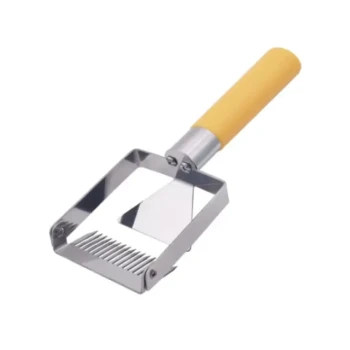
Heated uncapping knives use electricity, steam, or hot water to warm the blade. The heat allows the knife to glide through the wax cappings rather than tearing them from the comb.
This makes them considerably more efficient than standard unheated scrapers or manually heated tools. They are also relatively simple to operate, clean, and integrate into smaller harvesting setups.
Motorized Uncapping Machines
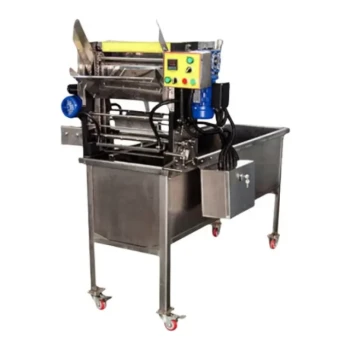
Motorized uncapping machines automate the cutting or removal process. Depending on the design, they may use automated commercial blades, high-speed revolving nylon brushes, or mechanized frame feeding systems.
The principal advantage is throughput. These machines reduce repetitive manual cutting and provide a more standardized process across large numbers of frames.
Supporting Equipment
An uncapping tank provides a stable platform for frames while collecting removed wax cappings. It can also support preliminary drainage or filtration, allowing residual honey and beeswax to be recovered before centrifugal extraction.
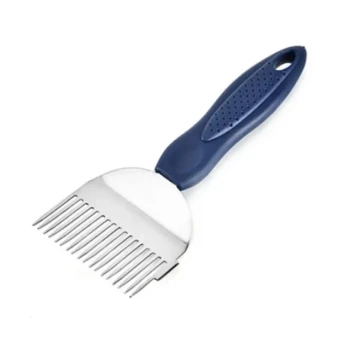
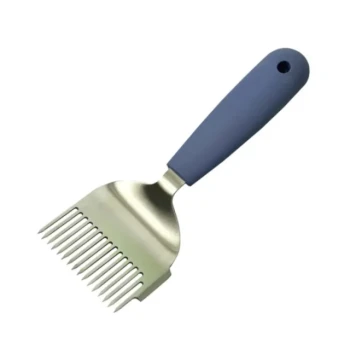
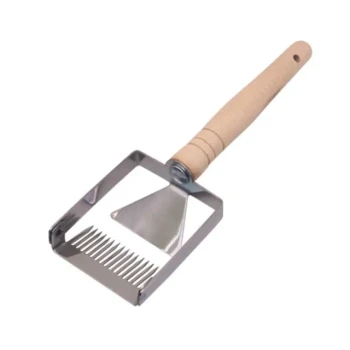
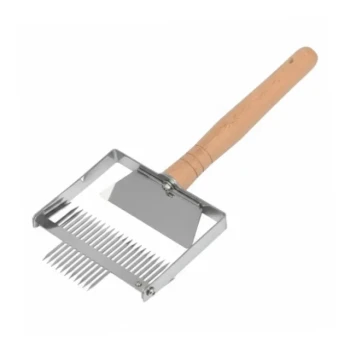
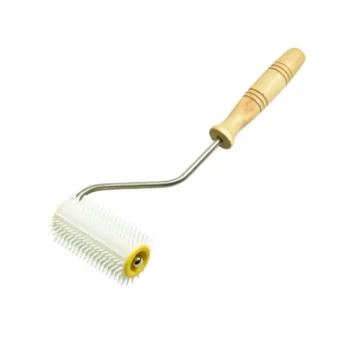
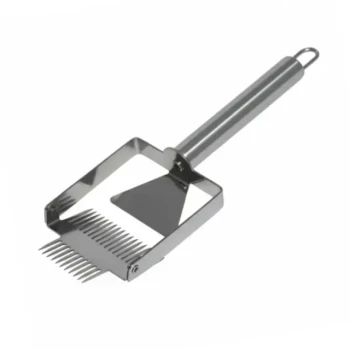
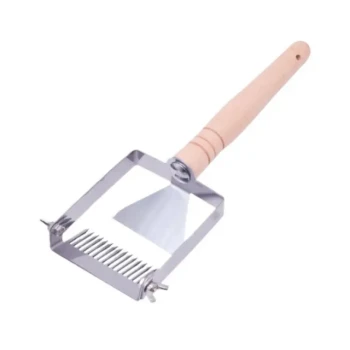
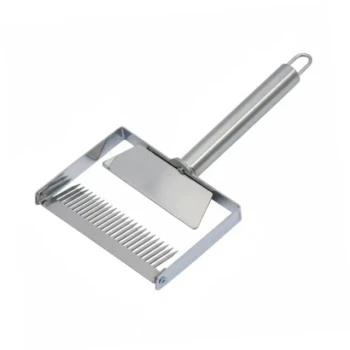
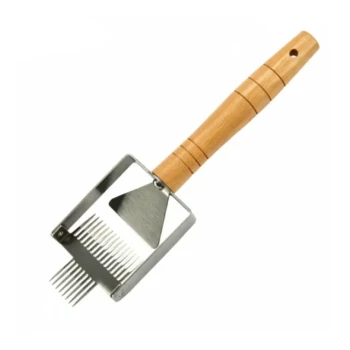
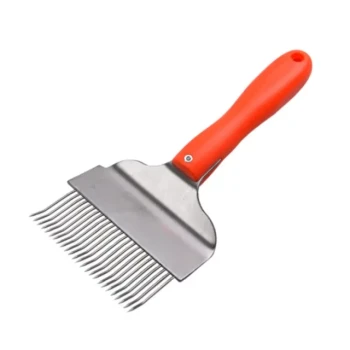
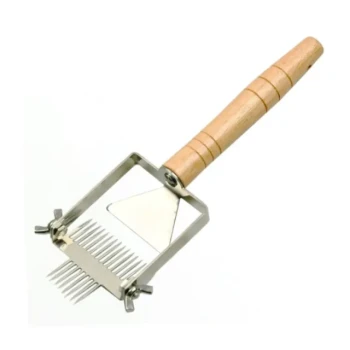
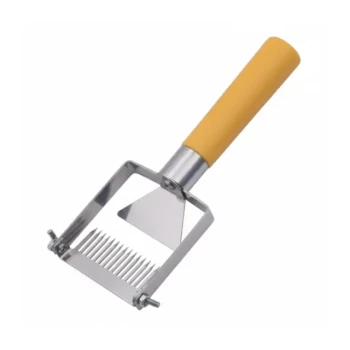
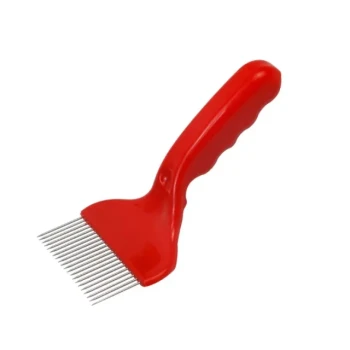
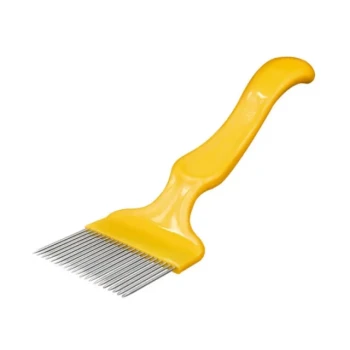
An uncapping fork remains useful even when a heated knife is used. It can lift wax from uneven, recessed, or low-lying cells that a straight blade may miss.
Comparing Performance Across Key Criteria
Processing Capacity
Heated knives are well suited to lower frame counts, seasonal harvesting, and operations where processing speed is important but not continuous. They provide a meaningful improvement over basic manual tools without requiring a fully mechanized line.
Motorized machines are more appropriate for commercial processing volumes. Their automated cutting or brushing action reduces the time required per frame and supports a more continuous workflow.
Cutting Consistency
A heated knife can produce a clean, smooth cut when the operator maintains the correct angle, speed, and blade temperature. Performance may vary, however, with operator technique and irregular comb surfaces.
Motorized equipment generally offers greater process consistency through controlled movement and constant-speed feeding. This can reduce variation between operators and help standardize the preparation of frames for extraction.
Comb Preservation
Both equipment categories are intended to expose the honey while preserving the underlying comb. Well-maintained comb can then be returned to the hive, reducing the energy bees must spend rebuilding wax.
A heated knife requires careful temperature and handling control. Excessive heat or aggressive cutting can damage the comb, while a properly adjusted motorized system can reduce mechanical disruption through more consistent operation.
Labor Requirements
Heated knives still depend heavily on an operator to position, cut, inspect, and correct each frame. This makes them practical where labor is available and the operation values flexibility.
Motorized systems reduce repetitive manual work and can improve labor productivity. They also reduce direct hand contact with the product and may lower the physical strain associated with repeated cutting.
Honey and Beeswax Recovery
A clean uncapping process exposes the cells for centrifugation while allowing removed cappings to be collected separately. The wax cappings may retain valuable honey, so collection and drainage are important parts of the workflow.
Using an uncapping tank alongside either a knife or machine helps recover residual honey and collect beeswax. This turns uncapping from a simple cutting step into a more efficient material-recovery process.
When a Heated Knife Is the Better Choice
Small and Medium Apiaries
For lower frame counts, a heated knife often provides the best balance of cost, simplicity, and performance. It avoids the capital commitment and space requirements of a motorized system.
This option is especially suitable for beekeepers who harvest periodically rather than operating a continuous commercial processing line.
Variable or Specialized Work
Manual control is useful when combs vary significantly in size, condition, or capping depth. The operator can adjust the cutting angle and speed for each frame.
That flexibility can be valuable when processing non-uniform frames or handling comb that requires more visual inspection.
Lower Infrastructure Requirements
Electric knives require access to a suitable power source, while steam- or hot-water-heated models require their own heating arrangement. Even so, these systems generally require less infrastructure than a complete motorized line.
For distributors and resellers, heated knives can also serve as an accessible entry-level product within a broader honey-processing portfolio.
When a Motorized Machine Is the Better Choice
Commercial Throughput
Motorized equipment becomes essential when frame volumes make manual uncapping a bottleneck. Higher processing speed allows the uncapping stage to keep pace with extraction and downstream handling.
This is particularly important when harvest windows are short or when labor availability limits manual processing capacity.
Consistent Output
Automated blades, brushes, and frame-feeding systems can deliver more repeatable results than operator-dependent cutting. Consistency supports smoother centrifugal extraction and helps reduce avoidable comb damage.
The benefit is greatest when the operation processes large numbers of frames under standardized conditions.
Labor and Hygiene Efficiency
Mechanized systems reduce repetitive manual cutting and minimize direct human contact with the honey-processing area. This can support cleaner workflows and improve workplace ergonomics.
They are not maintenance-free, however. Operators still need to manage cleaning, inspection, adjustment, and safe operating procedures.
Understanding the Trade-offs
Initial Cost and Ownership
Heated knives generally involve a lower initial investment than motorized uncapping machines. Their simpler design can also make them easier to deploy across smaller or distributed operations.
Motorized systems require greater capital expenditure and may need more floor space, power, maintenance, and operator training. Their value depends on whether the additional throughput and labor savings justify those requirements.
Operator Skill Versus Equipment Complexity
A heated knife is simple in concept but still depends on operator skill. Temperature control, cutting technique, and attention to irregular cells affect both speed and comb preservation.
A motorized machine reduces some manual variability but introduces mechanical complexity. Poor adjustment, inadequate cleaning, or unsuitable settings can affect performance just as incorrect knife handling can.
Missed Cappings and Comb Variation
Even a heated knife may miss cappings in recessed or uneven cells. An uncapping fork should be available for corrective work rather than forcing the blade into the comb.
Motorized machines can improve consistency, but they must still be matched to the frame dimensions and comb conditions being processed. Automation does not eliminate the need for inspection.
Workflow and Safety
Only frames scheduled for immediate extraction should be uncapped. This reduces honey spills, contamination risk, and unnecessary exposure of the comb.
Heated blades also require appropriate handling because electricity, steam, hot water, and heated metal introduce burn or electrical hazards. Motorized systems add moving parts that require guarding, training, and controlled cleaning procedures.
How to Apply This to Your Operation
The best equipment decision should reflect both current volume and the direction of the business.
- If your primary focus is small-scale or seasonal harvesting: Choose a heated uncapping knife, supported by an uncapping fork and tank for missed cells, wax collection, and honey recovery.
- If your primary focus is commercial throughput: Select a motorized uncapping machine capable of maintaining a consistent flow of frames through the extraction process.
- If your primary focus is flexibility across varied comb conditions: Use a heated knife for operator control and retain manual correction tools for recessed or uneven cappings.
- If your primary focus is labor productivity and process consistency: Favor motorized equipment with controlled cutting or brushing and mechanized frame feeding.
- If your primary focus is portfolio sourcing or resale: Offer both heated knives and motorized systems, matching product configuration, technical support, fulfillment speed, and replacement needs to different customer segments.
Choose the simplest equipment that reliably meets your required throughput today while allowing a practical path to scale tomorrow.
Summary Table:
| Criteria | Heated Uncapping Knife | Motorized Uncapping Machine |
|---|---|---|
| Processing Capacity | Low to medium frame counts; suitable for small/medium apiaries | High volume; designed for commercial/semi-commercial operations |
| Cutting Consistency | Dependent on operator skill; can be clean but variable | More consistent due to automated operation |
| Comb Preservation | Good if temperature and technique are controlled; risk of damage | Generally good with proper adjustment; reduces mechanical disruption |
| Labor Requirements | High manual labor; operator-dependent | Low manual labor; reduces physical strain and improves productivity |
| Honey & Wax Recovery | Needs supporting tools (uncapping fork, tank) for efficiency | Often integrated with collection systems; efficient recovery |
| Initial Cost | Low to moderate | High |
| Maintenance & Infrastructure | Simple, low infrastructure | Requires more space, power, and maintenance |
| Ideal Use Case | Small/medium apiaries, variable comb sizes, seasonal harvesting | Commercial operations, consistent throughput, labor efficiency |
Find Your Ideal Uncapping Solution with HONESTBEE
Whether you're a small beekeeper or a commercial distributor, HONESTBEE offers a full spectrum of uncapping equipment and beekeeping supplies. Our experts help you choose the right tools to maximize efficiency, preserve comb quality, and boost profitability. With rapid response, dedicated service, and ultra-fast delivery, we're your reliable partner in honey harvesting success.
Contact us today to discuss your needs and get a tailored quote!
Related Products
- Professional Multi-Function Uncapping Fork with Integrated Blade for Beekeeping
- Professional Multi-Function Uncapping Fork with Ergonomic Rubber Grip
- Professional Stainless Steel Uncapping Fork with Wooden Handle
- Stainless Steel Double Sided Honey Uncapping Fork with Scraper
- Lightweight Plastic Uncapping Roller with Tines
People Also Ask
- What is the primary use of an uncapping fork in beekeeping? A Guide to Precision Honey Harvesting
- How is an uncapping fork used to uncap honey frames? Precision Techniques for Perfect Honey Extraction
- What are the disadvantages of using an uncapping fork? Overcoming Manual Limits for Better Honey Extraction
- What is the original purpose of an uncapping fork? Mastering Precision Honey Extraction and Comb Preservation
- What are the benefits and drawbacks of using an uncapping fork? Maximize Comb Preservation in Your Apiary