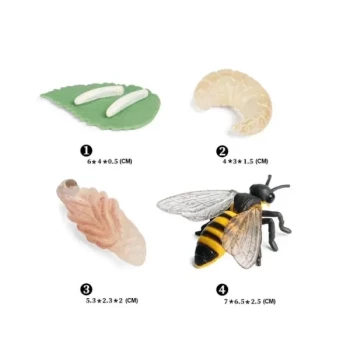
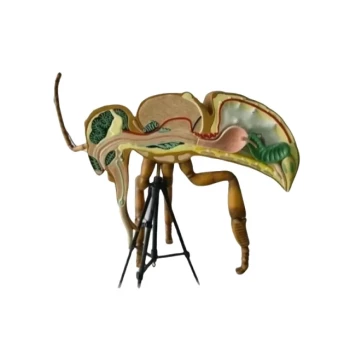
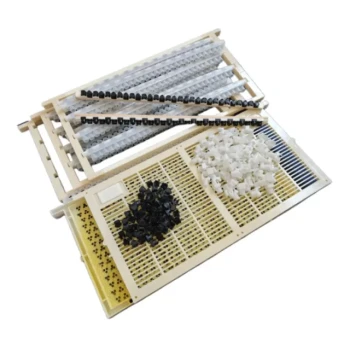
Digital photography combined with automated analysis fundamentally transforms how researchers evaluate honeybee colonies by replacing slow, disruptive manual checks with high-speed precision. This technology captures high-resolution images of thousands of honeycomb cells and uses specialized software to instantly identify and count eggs, larvae, and pupae without physically disturbing the bees.
By coupling high-resolution imaging with algorithmic processing, this method delivers precise population metrics while completely eliminating the physiological stress that manual inspections impose on the hive.
Solving the Precision Challenge
Automated Brood Recognition
The core technical advantage is the software's ability to process thousands of honeycomb cells rapidly. Unlike human observers who may fatigue or miscount, automated systems maintain consistent attention across the entire frame.
Distinguishing Developmental Stages
Accuracy depends on granularity. The software does not just see full or empty cells; it specifically differentiates between eggs, larvae, and pupae. This allows for a detailed breakdown of the colony's demographic distribution.
Solving the Biological Challenge
Non-Invasive Data Collection
Traditional evaluation methods are inherently disruptive. This technological approach is non-invasive, allowing researchers to gather data without disassembling the hive structure or handling individual bees.
Eliminating Inspection Stress
Manual counting triggers defense mechanisms and stress in the colony, which can skew data on health and behavior. By using photography, you eliminate the stress caused by physical inspections, ensuring that the population dynamics observed are natural and undisturbed.
Understanding the Trade-offs
Reliance on Input Resolution
The accuracy of the software is strictly limited by the quality of the photography. To identify minute details like eggs, the system requires high-resolution images; low-quality or poorly lit photos will render the analysis ineffective.
Shift in Workflow
While this method saves time at the hive, it shifts the workload to data processing. You are trading physical labor for a reliance on specialized image analysis software that must be trusted to interpret the visual data correctly.
Making the Right Choice for Your Goal
To maximize the value of this technology, consider your primary objectives:
- If your primary focus is Data Accuracy: Utilize automated image analysis to remove human error and fatigue from the process of counting thousands of cells.
- If your primary focus is Colony Welfare: Adopt high-resolution photography to monitor population dynamics without inducing stress or altering the colony's natural behavior.
This technology offers a definitive path toward rigorous, humane, and statistically significant honeybee research.
Summary Table:
| Feature | Manual Inspection | Digital & Automated Analysis |
|---|---|---|
| Accuracy | High risk of human error/fatigue | High-speed precision with consistent results |
| Colony Stress | Invasive; triggers defense behavior | Non-invasive; zero physical disturbance |
| Data Granularity | General estimates | Detailed counts of eggs, larvae, and pupae |
| Time Efficiency | Labor-intensive hive-side work | Efficient processing; shift to data analysis |
| Main Requirement | Skilled personnel | High-resolution imaging & specialized software |
Scale Your Apiary Operations with HONESTBEE Precision
Optimizing colony health requires the right tools. At HONESTBEE, we empower commercial apiaries and distributors with a comprehensive range of professional beekeeping machinery and equipment. Whether you are looking to streamline your production with honey-filling machines, expand your infrastructure with specialized hive-making hardware, or source essential consumables at wholesale, we provide the industrial-grade solutions you need.
Maximize your productivity and ensure colony welfare with our expert-tier supplies.
Contact HONESTBEE Today to Discuss Your Wholesale Needs
References
- Simon J. More, Agnès Rortais. A systems‐based approach to the environmental risk assessment of multiple stressors in honey bees. DOI: 10.2903/j.efsa.2021.6607
This article is also based on technical information from HonestBee Knowledge Base .
Related Products
- Honey Bee Lifecycle Model: A Detailed Honeycomb Display of Bee Development
- Honey Bee Life Cycle Model 4 Stage Educational Set for Kids Learning
- HONESTBEE Entrance Bee Feeder Efficient Hive Front Liquid Feeding Solution for Beekeeping
- HONESTBEE Wired and Assembled Wooden Bee Frames Foundation for a Thriving Hive
- HONESTBEE Anatomy Bee Model Detailed Anatomical Display for Education and Study
People Also Ask
- Are honey bees good to have around? The Essential Role and Ecological Impact of Bees
- Why does standardized equipment lower honey bee winter loss? Master Large-Scale Beekeeping Success
- Do honey bees leave their hives? Understanding the Critical Role of Swarming
- What activities require a lot of energy for honey bees? Understanding the Colony's Energy Budget
- How do honey bees develop from egg to adult? The Complete 4-Stage Metamorphosis Guide